

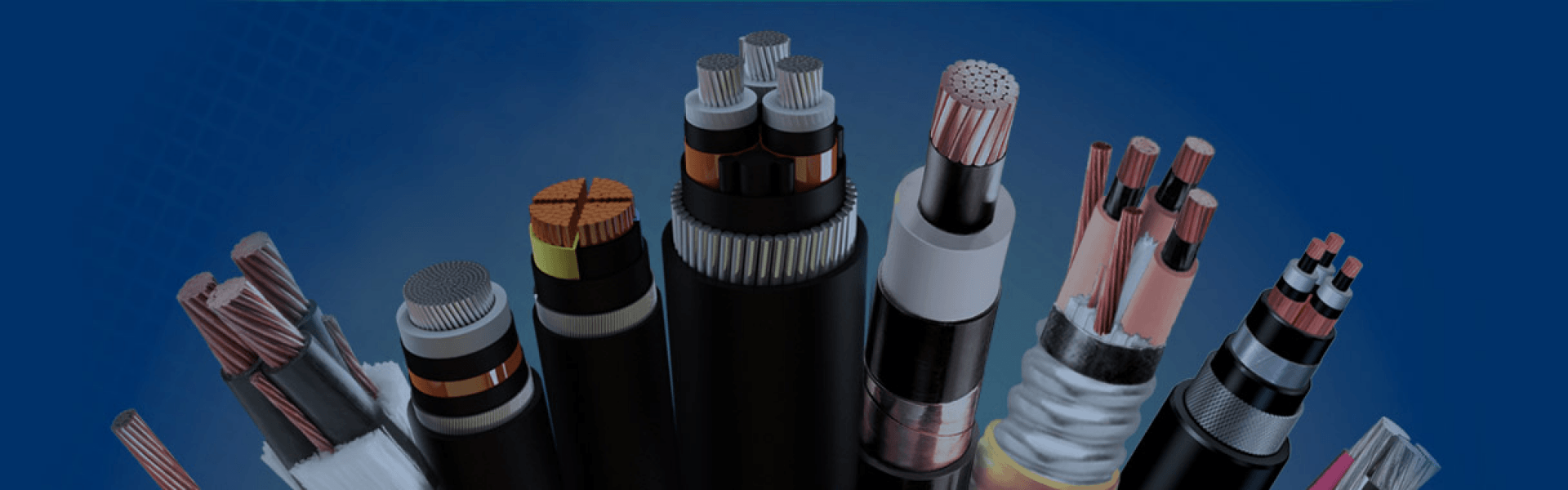
3 core cable
We supply a complete range of 3 Core Cable solutions designed for reliable power transmission in residential, commercial, and industrial applications. As a professional cable supplier, we focus on providing practical, standards-compliant products that support safe and stable electrical distribution across building wiring systems, infrastructure projects, and power networks. Our 3 core cable range is developed to meet real installation needs, combining electrical performance with durability for long-term service in different working environments.
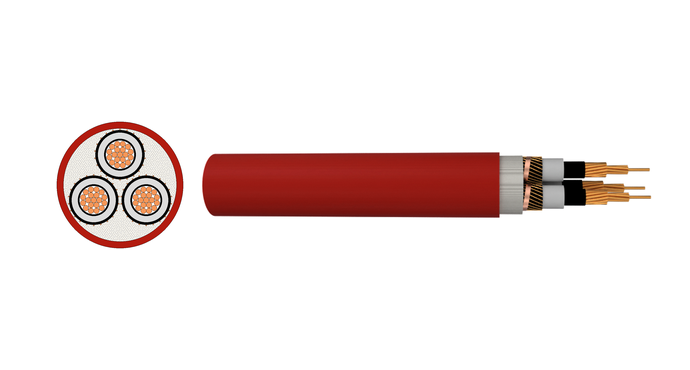
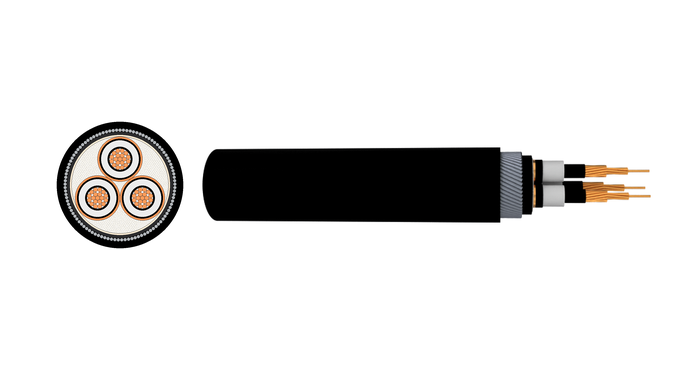
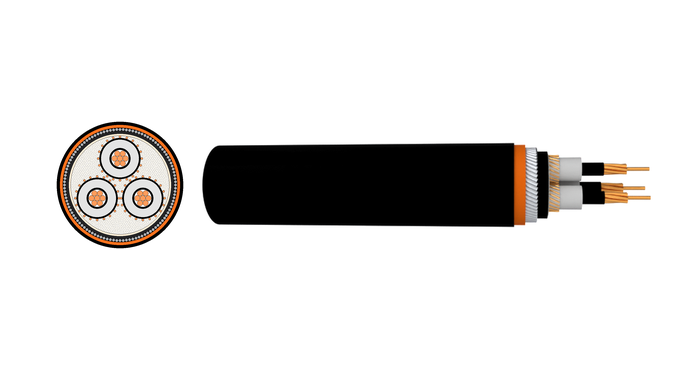
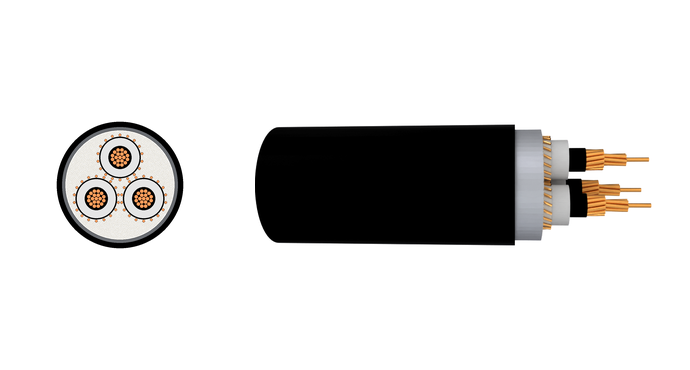
A 3 core cable is an electrical cable made up of three individually insulated conductors enclosed within a single outer sheath. In most low voltage applications, these three cores are typically used for live, neutral, and earth connections, while in medium voltage systems they can be configured for three-phase power transmission. This structure makes 3 core cable a widely used and versatile solution in modern electrical installations, suitable for both building wiring and power distribution systems.
Structurally, a 3 core cable generally consists of copper or aluminum conductors, insulation materials such as PVC or XLPE, and an outer protective sheath that provides mechanical strength and environmental resistance. Depending on the application requirements, the cable may also include additional elements such as shielding or armouring to improve electrical stability and enhance protection against mechanical stress, moisture, and other external conditions.
The main advantage of using a 3 core cable lies in its balanced combination of safety, efficiency, and installation convenience. By integrating three conductors into a single cable design, it helps ensure stable electrical performance while simplifying cable routing and improving overall system reliability in both low and medium voltage applications.
How to Choose the Right 3 Core Medium Voltage Cable
| Selection Factor | What to Consider | Our Product Options |
| Armour Type | STA – light protection, direct burial, low tensile demand. SWA – heavy protection, high tensile, vertical runs/tunnels. Unarmoured – conduit/indoor, flexible, lightweight. | STA: N2XSEBY/NA2XSEBY (YJV22/YJLV22) SWA: N2XSERY/NA2XSERY (YJV32/YJLV32) Unarmoured: N2XSEY/NA2XSEY (YJSV/YJLSV) |
| Metallic Screen | Tape – standard fault current, common in IEC cables. Wire (CWS) – higher fault rating, better flexibility. Individual – each core screened, superior anti-interference. | Tape: IEC armoured types CWS: YJSV/YJLSV Individual: AS/NZS individual screen & Triplex |
| Conductor Material | Copper – higher conductivity, corrosion resistance, durability. Aluminium – lighter, more economical for large projects. | Copper: N2XSEBY, N2XSERY, N2XSEY, BS/AS/NZS Aluminium: NA2XSEBY, NA2XSERY, NA2XSEY, AS/NZS URD |
| Applicable Standard | IEC 60502-2 – globally accepted. AS/NZS 1429.1 – Australia/NZ, strict waterproof test. BS 6622/7835 – UK/Europe; BS7835 = LSOH for fire safety. | IEC, AS/NZS 1429.1, BS 6622 & BS 7835 series all available |
| Outer Sheath | PVC – durable, cost-effective, standard environments. LSOH – low smoke, zero halogen, mandatory for public/enclosed spaces. | PVC: IEC, BS 6622, AS/NZS LSOH: BS 7835 |
| Voltage Rating | Match U₀/U to your system (e.g. 6.35/11kV, 12.7/22kV). Always choose rating ≥ system requirement. | All standard MV ratings available |
3 core cable
Get A Free Quote
Need Help?
Your Trusted Business Partner for Professional Cable Solutions
/ AMG FAQ /
Frequently Asked Questions
3 core cable is used wherever an electrical circuit needs a live, neutral, and earth connection within a single cable. In homes, it powers appliances that require earthing – washing machines, refrigerators, kettles, vacuum cleaners, and toasters. It is also the standard choice for lighting circuits, socket outlets, and fixed wiring. In commercial settings, it runs office equipment, computer systems, and general power distribution. Light industrial applications include machinery, switchgear, and control panels. Armoured versions (with steel tape or wire) are used outdoors – for garden lighting, external power feeds, and utility networks where mechanical protection is essential.
For Low-Voltage Systems: Connection involves matching the color-coded cores to their corresponding terminals: Brown to Live (L), Blue to Neutral (N), and the bare or Green/Yellow wire to the Earth terminal (E). If using a third insulated core (like grey or black) for switching, it must be properly sleeved to indicate its function.
For industrial medium-voltage systems: connecting 3-core cables requires a special termination or connector kit. The three phase conductors are connected to the busbars or equipment terminals, while the inner metallic copper screens (CTS/CWS) and the external steel armor (SWA/STA) must be securely bonded and connected to the main substation grounding/earth network to safely discharge fault currents.
Choosing the correct size depends on three things: the current it will carry (amps), the length of the run (voltage drop), and how it is installed (whether it is clipped, buried, or enclosed in conduit, which affects heat dissipation). As a rough guide for domestic use:
- 75mm² or 1.0mm² – suitable for low‑power lighting and small appliances.
- 5mm² – standard for 13A socket circuits and medium appliances (e.g. kettles, heaters).
- 5mm² – for high‑power appliances like ovens, immersion heaters, or showers.
For medium voltage distribution (e.g. 6.35/11kV or 12.7/22kV), sizing must be calculated based on system load, fault current, and installation conditions – this requires professional engineering tables. In all cases, choose a cable with a current rating that meets or exceeds your expected load, and always check voltage drop limits for longer runs.
In modern 3‑core and earth cable (to the harmonised colour code), the grey core is one of the three insulated conductors. The three cores are brown, black, and grey – they correspond to the three phases in a three‑phase system. However, when used in a single‑phase circuit, the grey core is typically used as the neutral conductor and should be identified with blue sleeving at both ends. The outer sheath of the cable is often grey as well, which helps distinguish it from other cable types like 2‑core (which may have a white or black sheath).
- Insulation Breakdown: Often caused by long-term overheating due to overloading or high ambient temperatures, leading to phase-to-phase short circuits.
- Water Ingress & Treeing: If the outer sheath is damaged during installation, moisture may seep into the medium-voltage XLPE insulation.Over time, high electrical stress causes “water treeing,” which eventually leads to cable failure.
- Mechanical Damage: Accidental impact during excavation or excessive tension during cable pulling can crush the cores or snap the armoring.
- Improper handling of terminals: Improper handling of connectors or terminals can lead to localized high resistance, causing hot spots, electrical tracking, and catastrophic flashovers.
| Feature | Single Core Cable | 3 Core Cable |
| Structure | Contains one insulated conductor within its sheath. | Contains three separately insulated conductors bundled in one sheath. |
| Installation & Footprint | Requires laying three separate cables for a 3-phase system; takes up more trench space. | Consolidates all three phases into a single pull; faster installation and smaller footprint. |
| Flexibility | Highly flexible and much easier to bend and terminate in tight spaces. | Stiffer and heavier, with a larger minimum bending radius. |
| Magnetic Performance | Creates an alternating magnetic field that induces currents in steel armor. Must use Aluminum Armor (AWA). | The magnetic fields of the three phases naturally cancel each other out, allowing the use of rugged Steel Armor (SWA/STA). |
Stripping a heavy-duty or medium-voltage 3 core cable requires a systematic, layered approach using professional cable tools:
- Outer Sheath: Use a rotary sheath stripper or utility knife to score and remove the outer PVC/PE jacket without nicking the underlying armor.
- Armoring Layer: For steel tape (STA), score and snap the tapes. For steel wire (SWA), use an armor cutter or hacksaw to cut cleanly through the wire strands at the designated termination line.
- Inner Bedding & Fillers: Cut away the inner bedding layer and any internal non-hygroscopic fillers to expose the individual cores.
- Insulation & Screens: Use specialized scoring tools to peel back the semi-conductive screen and XLPE insulation, revealing the bare copper or aluminum conductors ready for crimping.
- Visual Inspection: Looking at a clean cross-section of the cable will reveal exactly three distinct, individually insulated color-coded or numbered conductor cores packed inside the protective bedding and outer jacket.
- Sheath Markings: Check the text printed along the outer jacket. Manufacturers explicitly print the core count and sizing on the cable—look for notations like 3G1.5mm², 3C x 120mm², or 3-Core.
- Part Numbers: Technical model prefixes indicate multi-core designs; for instance, the European code N2XSEBY represents an individually screened, steel tape armored 3-core cable variant by standard specification.

Have Questions?
Get in Touch with Us.
AMG Cable Group support 24*7 service and technical assistance.
Phone /Whatsapp / Wechat
+86 188 3803 6118Address
High-Tech Industrial Development Zone,Zhengzhou City,Henan Province,ChinaSend Us a Message
Please feel free to leave a message. We will reply in 24 hours.
/ AMG WIRE&CABLE /
Your trusted partner in high- performance wire and cables
Our team stands by 24/7, responding promptly to
inquiries and providing most quotations within 24 hours.