

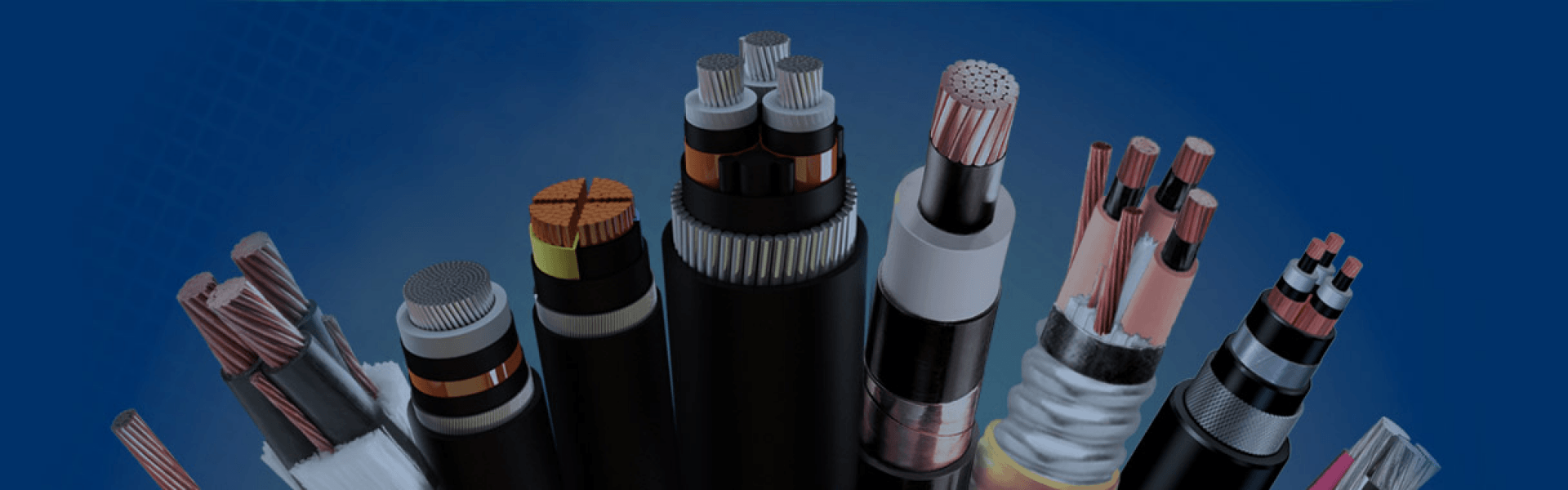
4 Core Cable
4 Core Cable (Four Core Cable) is a type of electrical power cable that contains four individually insulated conductors within a single cable structure. Each core is designed to carry electrical current, allowing the cable to provide a complete power transmission solution for low voltage electrical systems. The most common configurations are 3 Phase + Neutral (3P+N) for power distribution and 3 Phase + Earth (3C+E) for equipment and building applications.
Unlike using multiple separate cables, 4 Core Cable integrates all required conductors into one compact cable, helping simplify installation, reduce wiring complexity, and improve the reliability of electrical systems. It is widely used in industrial plants, commercial buildings, infrastructure projects, renewable energy systems, underground power networks, and low voltage distribution networks.
4 Core Cable is available in different constructions to meet various installation conditions. PVC insulated cables provide an economical solution for general power applications, while XLPE insulated cables offer higher temperature resistance and improved current carrying capacity for demanding environments. For locations requiring additional protection, armoured 4 Core Cable provides enhanced mechanical strength for underground and industrial installations. LSZH 4 Core Cable is suitable for areas where low smoke and halogen-free properties are required, such as airports, hospitals, and public buildings. 4 Core ABC Cable (Aerial Bundled Cable) is commonly used for overhead low voltage distribution systems.
The performance and safety requirements of 4 Core Cable depend on the applicable manufacturing standards, such as IEC 60502-1, AS/NZS 5000.1, NF C33-209, and SANS 1418. These standards define key requirements including conductor size, insulation performance, voltage rating, mechanical properties, and environmental resistance.
In short, 4 Core Cable is not a specific cable standard but a cable configuration designed for efficient and reliable power distribution. With flexible structure options and wide application coverage, it provides a practical solution for modern electrical installations.
Core Functions of 4 Core Cable
The core purpose of 4 Core Cable is to provide a standardized and reliable power transmission path for specific electrical systems. Through a four-conductor structure, it integrates power transmission, neutral connection, or grounding protection into one cable, helping electrical systems achieve safer and more efficient operation.
| Core Function | Description |
| Three-Phase Power Transmission | 4 Core Cable is mainly designed for low voltage three-phase power systems. The four cores are commonly configured as 3 Phase + Neutral (3P+N) or 3 Phase + Earth (3C+E) to provide a complete power supply circuit. |
| Integrated Power Distribution Solution | By combining four conductors into one cable, 4 Core Cable reduces the need for multiple separate cables, simplifying installation, saving space, and improving wiring efficiency. |
| Reliable Electrical Protection | The neutral or earth core helps maintain system stability and provides a safe current return path or grounding connection, improving electrical safety during operation. |
| Adaptation to Different Environments | Different constructions allow 4 Core Cable to meet various application needs. XLPE cables provide higher temperature resistance, armoured cables offer mechanical protection, LSZH cables improve fire safety, and ABC cables support overhead distribution systems. |
| Standardized Performance Requirements | 4 Core Cable is manufactured according to relevant international standards, which define requirements for conductor size, insulation performance, voltage rating, current capacity, and environmental resistance. Common standards include IEC 60502-1, AS/NZS 5000.1, NF C33-209, and SANS 1418. |
| Wide Application Coverage | With different conductor materials, insulation types, and protection structures, 4 Core Cable can be used in industrial facilities, commercial buildings, underground power networks, renewable energy projects, and utility distribution systems. |
4 Core Cable
Get A Free Quote
Need Help?
Your Trusted Business Partner for Professional Cable Solutions
/ AMG FAQ /
Frequently Asked Questions
A 4 core cable is mainly used for low voltage power distribution and electrical connections where four conductors are required in one cable. It is commonly used for three-phase power systems, industrial equipment, commercial buildings, underground power networks, and utility distribution applications.
The four cores are typically arranged as 3 Phase + Neutral (3P+N) for power supply systems or 3 Phase + Earth (3C+E) for equipment grounding protection. Different constructions, such as XLPE insulated, armoured, LSZH, and ABC types, allow 4 core cables to be used in various indoor, outdoor, and industrial environments.
The main difference is the number of conductors and the electrical system they support.
A 3 core cable contains three conductors and is commonly used for three-phase power transmission where a separate neutral or earth conductor is not required.
A 4 core cable contains four conductors and provides an additional core for either a neutral connection or earth protection. It is commonly used in low voltage distribution systems where a complete three-phase circuit requires three phase conductors plus neutral (3P+N) or three phase conductors plus earth (3C+E).
| Cable Type | Common Configuration | Typical Application |
|---|---|---|
| 3 Core Cable | L1 + L2 + L3 | Three-phase power transmission |
| 4 Core Cable | L1 + L2 + L3 + N / PE | Three-phase distribution with neutral or grounding |
Yes, 4 core cable is commonly used for three-phase electrical systems, but the fourth core provides an additional function.
The most common configurations are:
- 3 Phase + Neutral (3P+N)
Three cores carry the three-phase power supply, and the fourth core carries the neutral current. - 3 Phase + Earth (3C+E)
Three cores carry power, and the fourth core provides an earth connection for safety protection.
Therefore, a 4 core cable is not a separate phase system by itself; it is a four-conductor cable designed to support three-phase power systems with neutral or grounding requirements.

Have Questions?
Get in Touch with Us.
AMG Cable Group support 24*7 service and technical assistance.
Phone /Whatsapp / Wechat
+86 188 3803 6118Address
High-Tech Industrial Development Zone,Zhengzhou City,Henan Province,ChinaSend Us a Message
Please feel free to leave a message. We will reply in 24 hours.
/ AMG WIRE&CABLE /
Your trusted partner in high- performance wire and cables
Our team stands by 24/7, responding promptly to
inquiries and providing most quotations within 24 hours.