

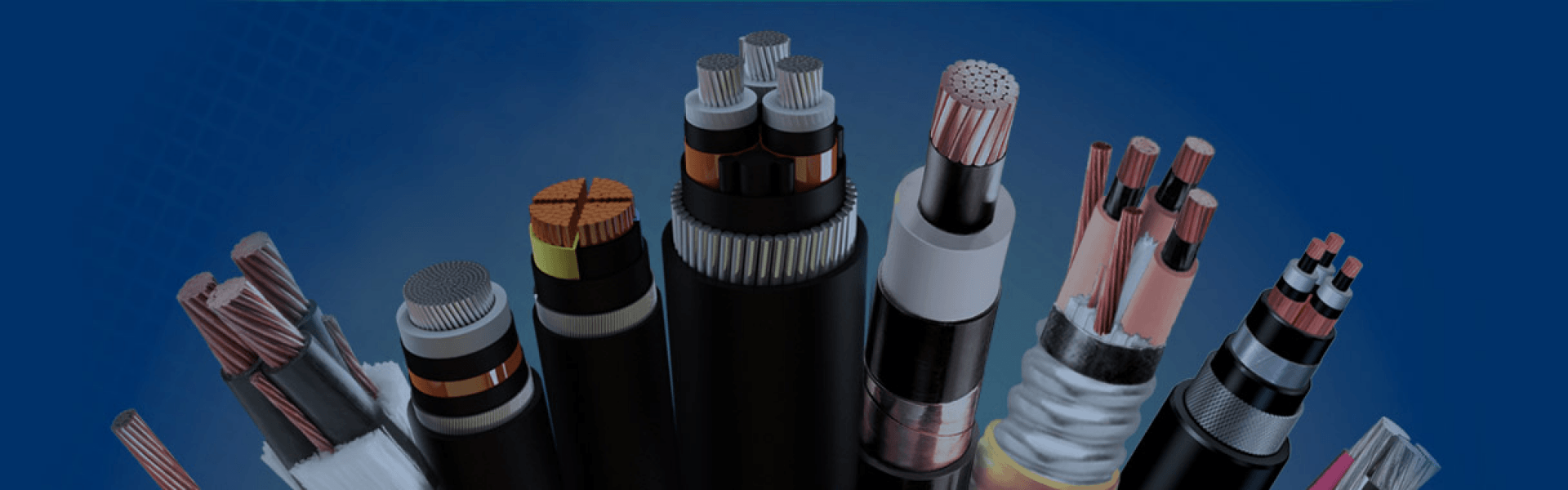
Airport Cable
Airport cable is a specialized category of electrical cable designed for use in airport and airfield electrical systems. It is widely used in applications such as runway lighting, taxiway lighting, approach lighting, airport signs, underground electrical circuits, pavement installations, grounding, and other critical airfield infrastructure.
Unlike general-purpose power cables, airport cables are designed to meet the specific electrical and installation requirements of airport environments. Depending on the application, they are available in different constructions, voltage ratings, insulation systems, and protection levels. Common options include 600V and 5kV cables, as well as shielded, unshielded, and sheathed constructions. Products manufactured to specifications such as FAA L-824 are widely used in underground airfield lighting circuits.
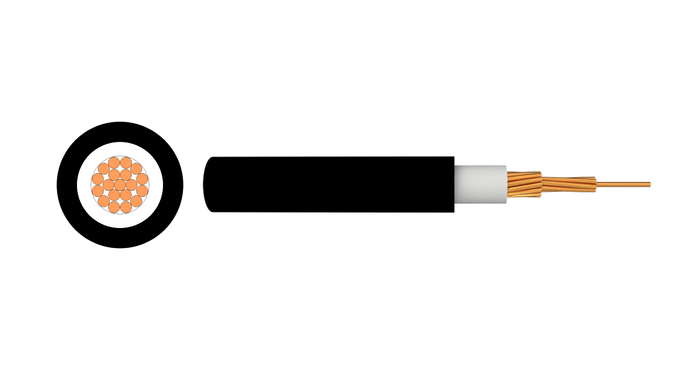
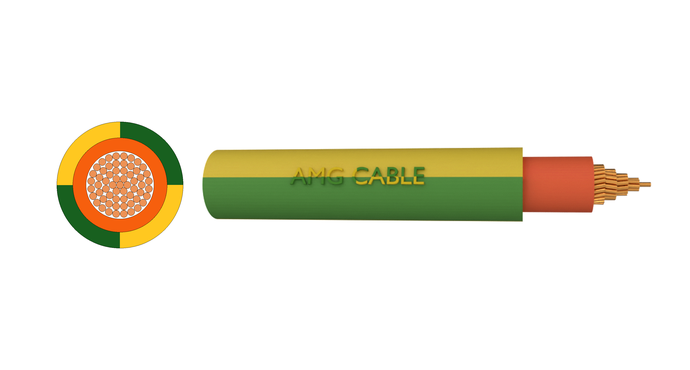
Our Airport Cable range includes FAA L-824 Type B and Type C cables, airport pavement cables, grounding cables, and other specialized airport cable constructions. Different products are available with EPR or XLPE insulation and can be selected according to system voltage, installation conditions, shielding requirements, and project specifications.
Reliable cable selection is important for airport infrastructure because runway and taxiway lighting systems operate in demanding environments and play an essential role in airfield operations. Choosing the right airport cable helps ensure that the electrical system is properly matched to its intended application, whether for underground lighting circuits, pavement installations, or airport grounding systems.
With multiple product types and construction options available, we help customers find airport cable solutions that meet their technical requirements and project specifications.
Key Features of Airport Cable
- Aviation Standard Compliance: Manufactured strictly to international aviation specifications, including FAA AC 150/5345-7E (L-824 Type B and Type C), ICAO Annex 14, and NF C 33-224/225 standards for global airport acceptance.
- High Dielectric Strength & Voltage Stability: Utilizes high-grade EPR (Ethylene Propylene Rubber) and XLPE (Cross-linked Polyethylene) insulation to ensure continuous, reliable performance in 5kV primary airfield lighting series circuits and 600V secondary links.
- Extreme Chemical & Fuel Resistance: Outfitted with robust outer jackets (CPE, PE, or heavy-duty polymers) that resist degradation from Jet A-1 fuel, hydraulic fluids, lubricating oils, and runway deicing chemicals like potassium acetate.
- Direct Burial & Heavy Mechanical Resistance: Designed with high crush resistance and physical toughness, allowing for safe, long-term installation via direct burial in acidic or wet soil, as well as duct installation under asphalt and concrete runway pavements.
- Electromagnetic Interference (EMI) Protection: Shielded variants feature copper tape or tinned copper braid layers to contain high-voltage surges and prevent signal interference with airport radar, ILS (Instrument Landing Systems), and radio communications.
- Optimized 400Hz High-Frequency Efficiency: Incorporates specialized conductor stranding to minimize skin effect losses and heat buildup in 400Hz aircraft ground power unit (GPU) circuits, ensuring efficient power delivery to parked aircraft.
- All-Weather & Environmental Resilience: Maintains flexibility and structural integrity across wide temperature ranges (-40°C to +90°C), with built-in resistance to UV radiation, ozone, moisture ingress, and underground fungal growth.
Airport Cable
Get A Free Quote
Need Help?
Your Trusted Business Partner for Professional Cable Solutions
/ AMG FAQ /
Frequently Asked Questions
The primary difference between 600V and 5kV airport cable comes down to where the cable is used in the airfield lighting system and how it is constructed.
Application: Primary vs. Secondary Circuits
5kV cables are used in primary circuits – the connection between the constant current regulator (the power source) and the isolation transformers located out on the runway. This is the “main line” that carries power from the electrical room out to the airfield.
600V cables are used in secondary circuits – the connection between the isolation transformers and the individual runway or taxiway lamps themselves. Once the transformer steps the voltage down, the lower-voltage cable takes over to feed each light.
Think of it this way: the 5kV cable is the highway that brings power to the airfield, and the 600V cable is the local road that delivers it to each individual light fixture.
Construction Differences
The physical construction of these two cable types is also different:
| Feature | 600V Cable | 5kV Cable |
|---|---|---|
| Insulation thickness | 60 mils | 110 mils |
| Conductor shield | None | Extruded semi-conducting cross-linked conductor shield |
| Track resistance | Standard | 20-mil track resistant insulation |
The thicker insulation and semi-conducting shield on 5kV cable are necessary because higher voltages require more electrical protection to prevent arcing, corona discharge, and insulation breakdown. The 20-mil track resistance layer also helps prevent electrical tracking (surface leakage current) that can occur at higher voltages.
Voltage Rating Options
FAA L-824 cables are available in 600V, 2kV, or 5kV ratings depending on the specific application. Both Type B (EPR insulation) and Type C (XLPE insulation) cables are available in 600V and 5,000V configurations.
Temperature Ratings
Both 600V and 5kV airport cables are rated for continuous operation at 90°C, with 130°C emergency overload capability and 250°C short-circuit tolerance.
Shielded airport cable is cable that includes a metallic shielding layer – typically tinned copper tape – wrapped around the insulated conductor. This shielding serves several critical purposes in airfield lighting applications.
What the shield does:
-
Contains the electrical field – The shield helps confine the electric field within the cable, preventing interference with nearby systems
-
Protects against electromagnetic interference – Shields the cable from external electrical noise that could disrupt the lighting system
-
Provides a path for fault currents – In the event of insulation damage, the shield can carry fault current to ground
When is shielding required?
Shielded cables are most commonly specified for 5kV primary circuits. The higher voltage creates a stronger electric field, and shielding helps manage that field safely. Shielded options are available for both FAA L-824 Type B (EPR insulation) and Type C (XLPE insulation) cables.
Shielded vs. Unshielded
| Feature | Shielded Cable | Unshielded Cable |
|---|---|---|
| Metallic shield | Yes (tinned copper tape) | No |
| Installation | Conduit, duct, aerial, direct burial | Conduit, duct, aerial, direct burial |
| Best for | 5kV primary circuits, areas with electromagnetic interference | Lower voltage applications, simpler installations |
Not all airport cables require shielding. For 600V secondary circuits and certain lower-risk installations, unshielded cables are perfectly adequate and more cost-effective.
Yes – absolutely. In fact, underground installation is exactly what FAA L-824 cables are designed for.
The FAA specification for L-824 is officially titled “Specification for L-824 Underground Electrical Cable for Airport Lighting Circuits”. This is not an optional feature – it is the core purpose of the cable.
Installation methods supported:
FAA L-824 cables are suitable for multiple installation methods:
-
Direct burial – Buried directly in the ground without additional mechanical protection
-
Conduit – Installed inside protective conduits
-
Duct – Pulled through underground duct banks
-
Aerial – Installed overhead where required
Key features that enable underground installation:
-
Moisture resistance – Rated for continuous operation at 90°C in wet or dry conditions
-
Durable outer sheathing – Materials like CPE (Chlorinated Polyethylene) provide extra protection against moisture, de-icing fluids, and soil chemicals
-
Abrasion resistance – Sheathing withstands the mechanical stress of burial and ground movement
-
UV resistance – Important for portions of cable that may emerge from the ground
FAA requirements:
For airport projects receiving FAA-administered federal funds, the use of L-824 cable is mandatory. The cable must be qualified and listed in FAA AC 150/5345-53, Airport Lighting Equipment Certification Program.
In short: underground installation is not just possible – it is the primary application for which airport cable was designed.

Have Questions?
Get in Touch with Us.
AMG Cable Group support 24*7 service and technical assistance.
Phone /Whatsapp / Wechat
+86 188 3803 6118Address
High-Tech Industrial Development Zone,Zhengzhou City,Henan Province,ChinaSend Us a Message
Please feel free to leave a message. We will reply in 24 hours.
/ AMG WIRE&CABLE /
Your trusted partner in high- performance wire and cables
Our team stands by 24/7, responding promptly to
inquiries and providing most quotations within 24 hours.