

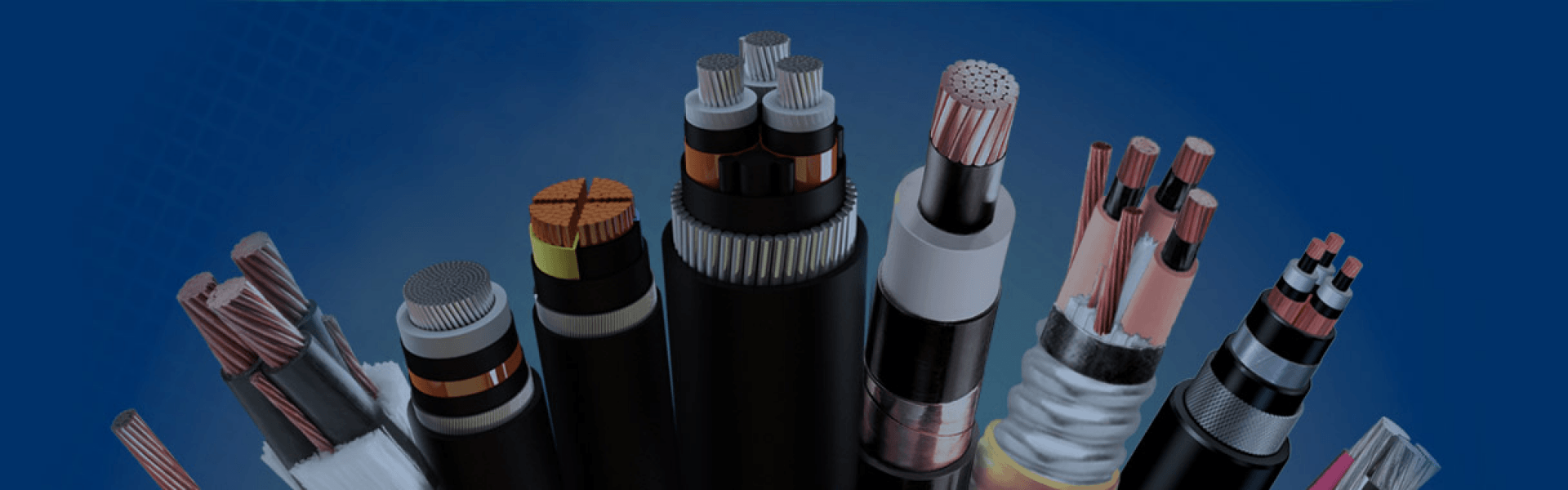
Flexible Cable
Flexible cable is designed for electrical connections where easy bending, convenient routing, and reliable power transmission are important. Compared with cables designed primarily for fixed installations, flexible cables typically use stranded conductors to make installation easier in confined spaces, around bends, and near connected equipment. They are widely used in industrial machinery, motor connections, electrical equipment, portable devices, and other applications where cable routing and handling are important.
AMG Cable offers a range of flexible cable solutions for different voltage ratings, installation conditions, and operating requirements. The product range includes 0.6/1kV RZ1-K LSZH Flexible Cable, RV-K PVC Flexible Cable, VSD EMC Cable, heavy-duty rubber cables, harmonized flexible cables, and flexible submersible cables. These options help buyers identify suitable cable constructions for applications ranging from general power connections to industrial equipment and specialized operating environments.
The main advantage of flexible cable is its adaptability. Its conductor construction helps simplify cable routing and installation, while the insulation and outer sheath materials influence its electrical, mechanical, and environmental performance. Depending on the cable design, features such as low-smoke, halogen-free materials, rubber sheathing, or electromagnetic shielding may be available to meet specific project requirements.
However, a flexible cable is not automatically suitable for every moving, outdoor, or wet application. Some types are intended mainly for fixed installation, while others are designed for portable equipment, demanding industrial conditions, or particular wet environments. Before selecting a cable, buyers should consider the rated voltage, conductor cross-sectional area, insulation and sheath materials, movement requirements, exposure to moisture or chemicals, mechanical stress, and applicable standards.
Choosing the right flexible cable helps simplify installation and supports safe, reliable electrical connections throughout the intended service life. By comparing cable construction and technical specifications against actual operating conditions, engineers, contractors, and distributors can select a solution that meets their project needs without paying for features they do not require.
How to Choose the Right Flexible Cable
Choosing the right flexible cable requires more than checking its voltage rating. Buyers should consider the electrical requirements, installation environment, cable movement, mechanical conditions, and applicable standards. Different cable constructions are designed for different purposes, from general power connections to heavy-duty industrial equipment and submersible pump systems. The following factors can help you select a suitable flexible cable for your application.
| Selection Factor | What to Consider | Recommended AMG Flexible Cables |
| 1. Application Requirements | Identify the equipment and purpose of the cable, such as power distribution, motor connections, household appliances, industrial machinery, or water pumps. | RV-K, RZ1-K, H05VV-F, H07RN-F, NSSHOEU, NTSCGERLWOEU |
| 2. Rated Voltage | Check the system voltage and equipment requirements. Available cable types cover different voltage ratings, from 300/500V and 450/750V to 0.6/1kV and 3.6/6kV. | H05VV-F, H07RN-F, RV-K, RZ1-K, NTSCGERLWOEU |
| 3. Conductor Size and Core Number | Select the conductor cross-section and number of cores according to current load, voltage drop, grounding requirements, and equipment connections. | All applicable AMG flexible cable types |
| 4. Insulation and Sheath Materials | Choose materials according to electrical, thermal, environmental, and fire-safety requirements. PVC is commonly used for general applications, XLPE for power cable insulation, EPR for rubber cables, and LSZH where low-smoke and halogen-free properties are required. | RV-K, RZ1-K, H05VV-F, H05RN-F, H07RN-F, NSSHOEU |
| 5. Operating Environment | Consider whether the cable will be installed indoors, outdoors, in damp areas, or underwater. Check requirements for temperature, moisture, UV exposure, oil, and other environmental conditions. | RZ1-K, H07RN-F, H07RN8-F, NSSHOEU, NTSCGERLWOEU |
| 6. Mechanical Requirements | Determine whether the cable is fixed, moved occasionally, or subject to repeated bending, abrasion, vibration, or pulling forces. Continuous movement requires a cable specifically designed for that purpose. | NSSHOEU, NSSHOEU …/3E + ST, NSSHOEU-OJ, H07RN-F |
| 7. Electromagnetic Compatibility | For inverter-driven motors and variable speed drive systems, consider whether electromagnetic shielding is required to reduce interference with nearby electrical and control equipment. | 0.6/1KV Flexible VSD EMC Cable |
| 8. Applicable Standards | Check the required cable standards, certifications, and project specifications in the destination market. Confirm that the selected cable construction and ratings meet the relevant requirements. | Select according to the individual product datasheet and project specifications |
| Application | Suggested Cable Type | Main Consideration |
| General low-voltage power installations | RZ1-K / RV-K | Select according to LSZH or PVC sheath requirements |
| Variable speed drives and motor connections | VSD EMC Cable | Electromagnetic shielding requirements |
| Mining and heavy industrial equipment | NSSHOEU Series | Mechanical stress and equipment movement |
| Industrial equipment requiring power and control cores | NSSHOEU …/3E + ST | Confirm core configuration and control requirements |
| Household appliances and indoor equipment | H05VV-F / H05VVH2-F | Equipment requirements and installation conditions |
| Portable electrical equipment | H05RN-F / H07RN-F | Voltage rating and mechanical conditions |
| Submersible pump connections | H07RN8-F | Confirm permitted water exposure and operating conditions |
| Medium-voltage submersible equipment | NTSCGERLWOEU 3.6/6kV | Voltage rating and specific submersible requirements |
| Electrical panel and equipment wiring | H07Z1-K | Conductor configuration and installation requirements |
Flexible Cable
Get A Free Quote
Need Help?
Your Trusted Business Partner for Professional Cable Solutions
/ AMG FAQ /
Frequently Asked Questions
Flexible cables are available in different types depending on their conductor construction, insulation materials, sheath materials, and intended applications. Common types include PVC flexible cables, LSZH flexible cables, rubber flexible cables, shielded VSD/EMC cables, heavy-duty industrial cables, and submersible cables. For example, RV-K and H05VV-F are commonly used for general electrical connections, RZ1-K cables offer low-smoke and halogen-free properties, H07RN-F and NSSHOEU are designed for demanding industrial applications, and VSD EMC cables provide shielding for variable speed drive systems. The right type depends on the electrical and environmental requirements of the installation.
Flexible cables should not be used to connect equipment when their voltage rating, current-carrying capacity, conductor size, or environmental protection is insufficient for the application. Light-duty appliance cables should not be used for heavy industrial machinery requiring greater mechanical protection. Similarly, equipment requiring a protective earth connection must not be connected using a cable without the required grounding conductor. Cables not designed for continuous movement should also not be used in applications involving repeated bending or torsion. Always check the equipment requirements and cable specifications before making a connection.
Flexible cords designed for portable equipment should generally not be used as a substitute for permanent building wiring. Under US OSHA requirements, they are restricted from being run through holes in walls, ceilings, or floors, concealed behind building surfaces, or attached to building surfaces, except where specifically permitted. They should also be protected from sharp edges, crushing, excessive heat, and other conditions that could damage the insulation or outer sheath. However, certain flexible power cables, such as appropriately rated RZ1-K and RV-K types, are designed for fixed installations. Always follow the applicable local electrical regulations and the manufacturer’s installation instructions.
Yes. Some flexible cables are suitable for outdoor installations, provided their construction and ratings meet the environmental requirements. Important factors include UV and sunlight resistance, moisture protection, temperature range, oil resistance, and mechanical durability. Heavy-duty rubber cables such as H07RN-F are commonly used for outdoor industrial equipment, while suitable RZ1-K variants can also be used for outdoor power installations. H07RN8-F is designed for compatible submersible pump applications under specified water conditions. However, not all flexible cables are suitable for outdoor use. For example, H05VV-F is generally intended for indoor appliance connections. Always check the product datasheet for outdoor, wet-location, direct-burial, or submersion approval before installation.

Have Questions?
Get in Touch with Us.
AMG Cable Group support 24*7 service and technical assistance.
Phone /Whatsapp / Wechat
+86 188 3803 6118Address
High-Tech Industrial Development Zone,Zhengzhou City,Henan Province,ChinaSend Us a Message
Please feel free to leave a message. We will reply in 24 hours.
/ AMG WIRE&CABLE /
Your trusted partner in high- performance wire and cables
Our team stands by 24/7, responding promptly to
inquiries and providing most quotations within 24 hours.