

Fire Resistant Cable
Fire-resistant cables are designed for circuits that must continue to operate for a period of time during a fire.Unlike ordinary cables, which can quickly lose insulation and fail under high heat, fire resistant cables are built to maintain circuit integrity so that critical systems such as fire alarms, emergency lighting, smoke control, and evacuation equipment can keep working when they are needed most. In projects where life safety and emergency operation are part of the design requirement, choosing the right fire resistant cable is not only about meeting a specification, but also about reducing risk when a real fire event occurs.
AMG provides fire-resistant cable solutions for customers who need reliable performance in safety-critical cabling systems.These cables are used in commercial buildings, public infrastructure, industrial facilities, and other installations where continued power or signal transmission during a fire is important. In practical terms, fire resistant cable helps keep essential circuits alive long enough for alarms to activate, emergency lighting to guide evacuation, smoke extraction systems to operate, and key control systems to remain functional during the early stages of a fire.
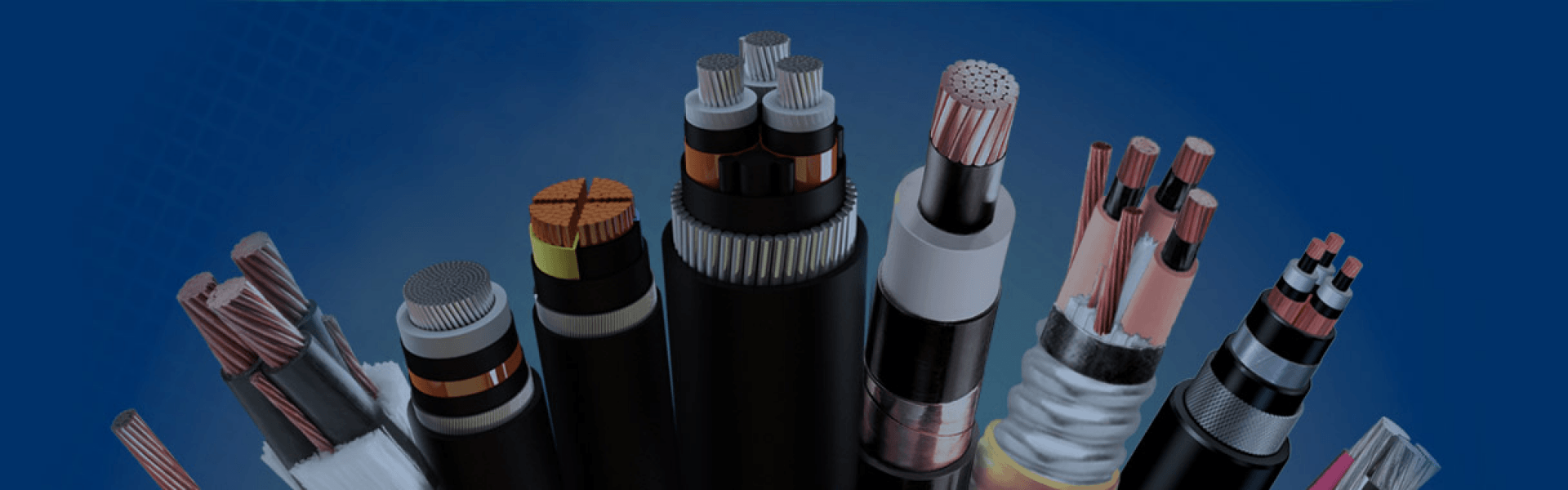
The construction of a fire resistant cable is what makes this possible. While designs vary depending on application and cable type, the cable is generally built with a conductor, fire-resistant insulation system, and an outer protective sheath. Many fire resistant cables also include a fire barrier layer, such as mica tape, which helps protect the conductor and preserve insulation performance when exposed to flame. Heat-resistant insulation materials and low-smoke sheath compounds are often used to improve fire survival performance while also reducing smoke and corrosive gas release in enclosed spaces.
The working principle is straightforward: a fire resistant cable is engineered to continue carrying power or signals even when exposed to fire for a specified time. It does not mean the cable is unaffected by fire, but it is designed to delay circuit failure long enough for emergency systems to operate. This is the key difference between fire resistant cables and standard cables. A standard cable is mainly designed for normal electrical service, while a fire resistant cable adds an extra level of protection for emergency conditions, making it a more suitable choice wherever uninterrupted operation during a fire is essential.
Fire Resistant Cable Standards
| International Standard | Fire Classification | Test Conditions & Methodology | Circuit Integrity Duration | Practical Engineering Applications |
| BS 6387 / BS 7629-1 | Category CWZ | C: 950℃ Fire alone. W: 650℃ Fire with water spray. Z: 950℃ Fire with mechanical hammer shock. | 180 minutes Fire alone / 30 minutes Fire with Water / 15 minutes Mechanical Shock | Standard fire detection loops, basic voice alarms, and emergency exit lighting routes. |
| AS/NZS 3013 | WS52-W | 1050℃ High-temperature Fire, severe mechanical impact, and intense post-fire water spraying. | 120 minutes (2-Hour Fire Rated) | Critical safety and evacuation circuits in Australian and New Zealand infrastructure and tunneling projects. |
| IEC 60331-21 / EN 50200 / VDE 0276 | FE180 / E90 | 750℃ Direct Fire insulation test and complete system functional test. | 180 minutes Insulation Integrity / 90 minutes System Functional Integrity | Heavy-duty main power distribution, power plants, subways, and large-scale industrial plants under European regulations. |
Fire Resistant Cable
Get A Free Quote
Need Help?
Your Trusted Business Partner for Professional Cable Solutions
/ AMG FAQ /
Frequently Asked Questions
Choosing the right fire-resistant cable comes down to understanding three things: what you are protecting, how long it needs to stay running, and what your local regulations require. There is no single “best” cable for every job. The right cable depends on your building type, its occupancy, the criticality of the systems you are wiring, and the fire safety standards that apply in your region.
Start with the application. If you are wiring general power sockets, standard lighting, or office equipment in a non-emergency circuit, a flame-retardant cable is usually sufficient. But if you are wiring anything that must keep working during a fire—fire alarms, emergency lighting, fire pumps, smoke extraction fans, or stairwell pressurisation systems—you need a fire-resistant cable. This is not optional; it is a regulatory requirement for life-safety systems.
Next, consider the fire rating you need. Fire-resistant cables are rated by how long they can maintain circuit integrity under fire conditions. Common durations are 30, 60, 90, 120, and 180 minutes. The rating you choose should match the evacuation time and firefighting requirements of your building. A small office might only need a 30-minute rating (Standard 30). A large hospital or high-rise building will typically require 120-minute (Enhanced) cables.
You also need to check which standard applies to your project. In the UK and many other markets, the key standards are BS 7629-1 for fire alarm and emergency lighting cables, BS 7846 for armoured fire-resistant power cables, and BS 6387 for the most demanding circuit integrity tests. Each standard defines different test temperatures, durations, and conditions—some include water spray and mechanical impact, others do not. Make sure the cable you choose is tested to the standard your project specification requires.
Finally, consider the sheath material. Most modern fire-resistant cables use a Low Smoke Zero Halogen (LSZH) outer sheath. This is important because in a fire, LSZH produces very little smoke and no toxic halogen gases. That means better visibility for people evacuating and less damage to sensitive equipment. But remember: LSZH describes the sheath material, not the cable’s fire resistance. A cable can be LSZH without being fire-resistant. If you need circuit integrity during a fire, you must specify a fire-performance cable, not just an LSZH cable.
In short: identify the life-safety systems that must stay operational, check your local fire safety regulations, select the appropriate fire rating and standard, and confirm the cable uses LSZH sheathing for smoke and toxicity control. If you are unsure, consult your project’s fire engineer or your cable supplier’s technical team.
Fire-resistant cables are designed to maintain circuit integrity during a fire, continuing to transmit power or signals for a specified time. The main types include:
- Mineral Insulated Copper Cable (MICC): Uses a copper conductor, magnesium oxide insulation, and a copper sheath. It has excellent fire resistance and can burn continuously for 3 hours at temperatures up to 950°
- Mica Tape Cables: Feature a fire-resisting mica tape wrapped around the conductor. A common example is the 6491B or 6491F single-core cable, which is tested to the rigorous BS 6387 CWZ standard.
- Silicone Rubber Cables: Use a silicone rubber insulation that provides excellent thermal resistance and fire resistance.
- Armoured Fire-Resistant Cables: Combine fire-resistant materials with a steel wire armour for mechanical protection. These typically comply with BS 7846 F2, ensuring survival at 950°C for up to three hours, withstanding fire, water, and mechanical shock.
- Fire alarm and emergency lighting cables: designed specifically for life safety systems. They often meet BS 7629-1 with ratings like Standard 30 (30 min), Standard 60 (60 min), or Enhanced 120 (120 min).
In short, if a cable is built with mica tape, magnesium oxide, or silicone rubber, and is tested to a standard like BS 6387, BS 7846, or BS EN 50200, it is a genuine fire-resistant cable.
Fire-resistant cables are used to maintain power and signal transmission in critical systems during a fire. Their job isn’t to stop fires—that’s the job of flame-retardant cables and passive fire protection measures. Their job is to keep essential systems running for long enough that people can evacuate safely and firefighters can do their work.
Typical uses include:
- Fire alarm systems – keeping detection and warning systems functional so occupants are alerted and can begin evacuating
- Emergency lighting – maintaining illumination along escape routes so people can see where they are going
- Fire pumps and sprinkler systems – ensuring a continuous flow of water to the fire scene
- Smoke control systems – keeping extraction fans and pressurisation fans running to clear escape routes
- Voice evacuation systems – allowing clear instructions to be broadcast to occupants
- Firefighter lifts and communication systems – supporting the equipment firefighters depend on
- Critical control circuits in industrial facilities, tunnels, metro lines, and high-rise buildings – wherever circuit integrity is essential for safety
Fire-resistant cables are installed in a wide range of buildings and facilities: high-rise residential and commercial buildings, hospitals, schools, universities, airports, data centres, tunnels, and metro systems.
This is one of the most common points of confusion, and the difference is fundamental.
Flame-retardant cables are designed to slow down or stop the spread of fire along a cable route. They are made with materials that self-extinguish once the ignition source is removed. They do not propagate fire, and they release limited amounts of smoke and acid gases. But they are not designed to function during a fire—they will fail. Think of flame-retardant cables as fire containment: they stop the fire from travelling through the building via the cable installation.
Fire-resistant cables (also called fire-rated or circuit integrity cables) are designed to maintain circuit integrity and continue working for a specified period of time under defined fire conditions. They are constructed with special fire barriers—typically mica tape or ceramic layers—that allow the conductors to keep transmitting power and signals even while the cable is burning. Think of fire-resistant cables as system survival: they keep critical equipment running through the fire.
In practice: use flame-retardant cables for general wiring where you only need to prevent fire spread. Use fire-resistant cables for emergency and life-safety systems that must stay operational during a fire. They serve different purposes, and they are not interchangeable.
Fire-resistant cables are rated by how long they can maintain circuit integrity under fire conditions. The duration depends on the standard they are tested to and the rating they carry.
Common durations include:
| Duration | Typical Rating | Standard |
| 30 minutes | Standard 30, PH30 | BS 7629-1, BS EN 50200 |
| 60 minutes | Standard 60, PH60 | BS 7629-1, BS EN 50200 |
| 90 minutes | PH90, E90 | BS EN 50200, IEC 60331 |
| 120 minutes | Enhanced 120, PH120 | BS 7629-1, BS EN 50200, BS 8434-2 |
| 180 minutes | F2, CWZ | BS 7846, BS 6387 |
The required duration depends on the application and the building’s fire strategy. A small building with a short evacuation time might only need 30-minute cables. A large hospital or high-rise building typically requires 120-minute cables. Fire-fighting systems—such as fire pumps and smoke extraction—often require the highest ratings, such as 180 minutes under BS 7846 F2 or BS 6387 CWZ.
Some cables are tested to survive even longer. Mineral-insulated cables, for example, can withstand temperatures up to 1010°C and maintain circuit integrity for two hours or more. The key point is that the survival time is clearly defined by the standard and rating, so you can match the cable to the specific requirements of your project.

Have Questions?
Get in Touch with Us.
AMG Cable Group support 24*7 service and technical assistance.
Phone /Whatsapp / Wechat
+86 188 3803 6118Address
High-Tech Industrial Development Zone,Zhengzhou City,Henan Province,ChinaSend Us a Message
Please feel free to leave a message. We will reply in 24 hours.
/ AMG WIRE&CABLE /
Your trusted partner in high- performance wire and cables
Our team stands by 24/7, responding promptly to
inquiries and providing most quotations within 24 hours.