

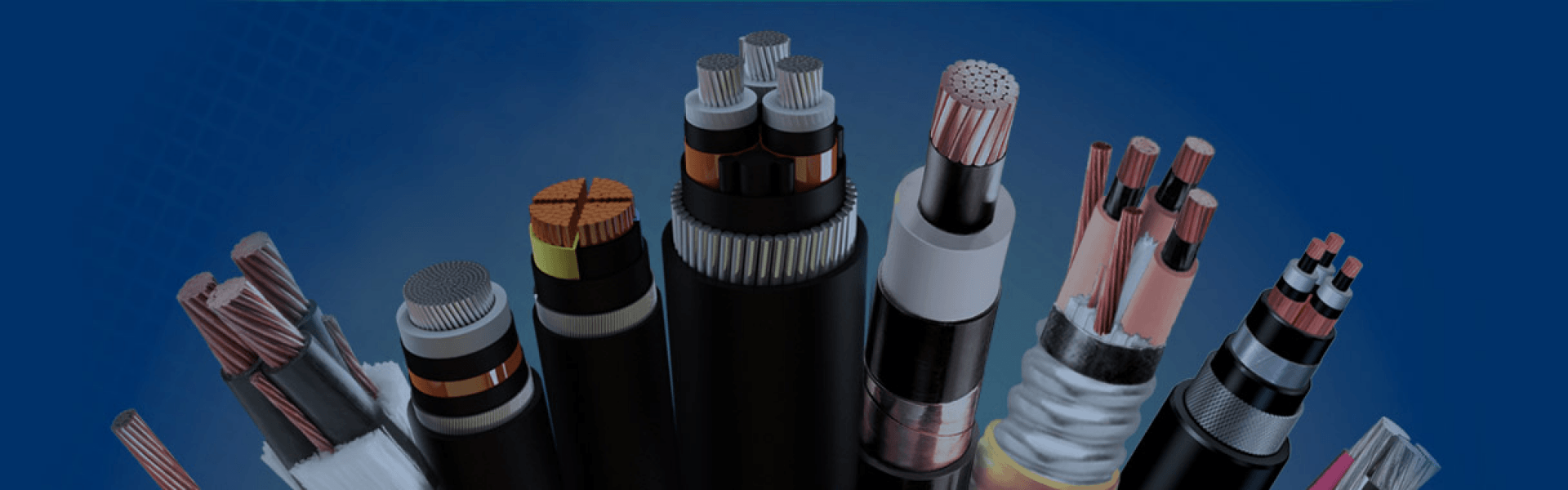
IEC 60332-1-2 Cable
IEC 60332-1-2 is an international fire performance standard used to evaluate the flame retardant behavior of electrical cables and optical fibre cables under fire conditions. Its official title is “Tests on electric and optical fibre cables under fire conditions–Part 1-2: Test for vertical flame propagation for a single insulated wire or cable–Procedure for 1 kW pre-mixed flame.” Within the IEC fire testing system, it is one of the most widely specified standards for single cable flame propagation testing and is commonly applied to low-voltage power cables, control cables, flexible cables, LSZH cables, building wires, and communication cables.
The purpose of IEC 60332-1-2 is to determine whether a cable can limit flame spread and self-extinguish after direct exposure to fire. During the test, a finished cable specimen approximately 600 mm long is mounted vertically inside a metal chamber. A standardized 1 kW pre-mixed propane flame is applied to the cable surface at a 45-degree angle for a specified period based on cable diameter and weight, typically between 20 and 480 seconds. After the flame source is removed, the cable is evaluated according to the extent of charring and flame propagation. To pass the test, the upper charred portion must remain at least 50 mm below the upper fixing clamp, while downward flame spread must remain within the specified limit. The core objective is to ensure the cable does not continue spreading fire through the installation after ignition.
IEC 60332-1-2 is generally suitable for insulated cables and optical fibre cables with conductor cross-sectional areas of 0.5 mm² and above. For smaller cables below 0.5 mm², IEC 60332-2-2 is normally used because it is designed specifically for fine wire testing. It is also important to understand that this standard evaluates the flame retardant performance of a single cable only. Compliance with IEC 60332-1-2 does not automatically guarantee fire performance in bundled cable installations where multiple cables are grouped together. For cable bunch flame propagation testing, the IEC 60332-3 series standards are typically required.
Because of its practical fire safety focus and broad industry acceptance, IEC 60332-1-2 compliant cables are widely used in commercial buildings, industrial plants, transportation systems, public infrastructure, data centers, and power distribution projects where reducing flame spread and improving installation safety are important requirements.
Applications
| Industry | Typical Application | Main Benefit |
| Commercial Buildings | Power, lighting, HVAC wiring | Limits vertical fire spread inside risers and shafts |
| Hospitals | Low-smoke circuits, patient areas | Adds passive fire safety; often combined with LSZH jackets |
| Data Centres | Rack power, under-floor cabling | Baseline flame retardance for densely wired areas |
| Industrial Plants | Equipment, control, instrumentation wiring | Stops flame travelling along a single cable to control gear |
| Public Infrastructure | Tunnels, stations, emergency lighting | Meets mandatory single-cable flame-retardance for life-safety circuits |
| Residential Buildings | Fixed wiring in walls, ceilings, ducts | Passive fire protection in hollow spaces |
| Transportation Hubs | Signalling, power supply | Keeps evacuation routes free of single-cable flame spread |
| Renewable Energy | Solar interconnects, wind turbine wiring | Basic vertical flame resistance on exposed outdoor runs |
| Telecommunications | Backbone cabling, FTTH risers | Entry-level flame test before assessing bunched-fire performance |
Advantages of IEC 60332-1-2 Cable
- Reduced Flame Spread
IEC 60332-1-2 cables are designed to limit vertical flame propagation and help reduce the risk of fire spreading through cable installations. - Improved Fire Safety
Widely used in buildings, industrial facilities, and public infrastructure where safer electrical installations are required. - Self-Extinguishing Performance
After the flame source is removed, compliant cables are designed to stop burning within a limited area instead of continuously supporting combustion. - Better Evacuation Safety
LSZH and low smoke versions help reduce smoke emission and improve visibility during fire emergencies. - Suitable for Public Buildings
Commonly used in hospitals, schools, airports, shopping malls, office buildings, and other public facilities with higher fire safety requirements. - Compatible with IEC Projects
IEC 60332-1-2 is an internationally recognized standard widely specified in global electrical and infrastructure projects. - Available in LSZH, PVC, and XLPE Types
The standard can be applied to different cable constructions and insulation materials for various installation environments.
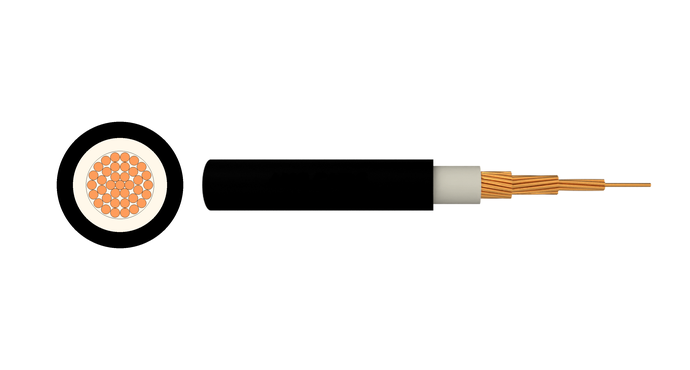
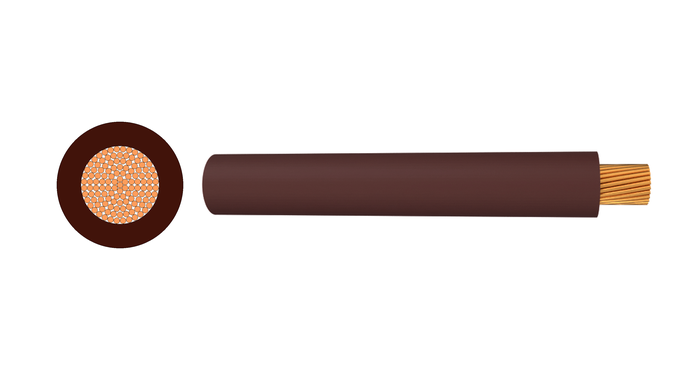
IEC 60332-1-2 Cable
Get A Free Quote
Need Help?
Your Trusted Business Partner for Professional Cable Solutions
/ AMG FAQ /
Frequently Asked Questions
The IEC 60332 series is a set of internationally recognised test methods for measuring the flame propagation characteristics of electric cables and optical fibre cables under fire conditions. In practice, when an engineer writes “IEC 60332” into a specification, they are requiring the cable to resist fire spread – it must not become a path that carries flames along a cable run.
The series simulates real-world fire exposure in two distinct installation scenarios:
- Single cable testing (Parts 1 and 2) – evaluates one insulated wire or cable at a time, using controlled flame sources to measure how far a flame travels upward on a single vertical or inclined sample.
- Bunched cable testing (Part 3) – evaluates multiple cables mounted together on a vertical ladder tray, replicating the behaviour of a real cable bundle in a riser or tray.
IEC 60332 does not measure smoke density or gas toxicity. It purely assesses flame spread. This is why many projects combine it with other standards such as IEC 60754 (halogen content) and IEC 61034 (smoke density) when low-smoke zero-halogen performance is also required.
Both parts test a single, isolated cable suspended vertically, but they split based on the physical thickness of the cable’s conductor:
- IEC 60332-1 (specifically 1-2): This is the standard procedure for regular-sized cables with a conductor cross-section of 0.5 mm² or greater. It uses a powerful 1 kW pre-mixed propane burner to simulate a substantial localized heat source.
- IEC 60332-2 (specifically 2-2): This part is dedicated to small or thin conductors with a cross-section less than 0.5 mm² (such as delicate instrument wires or telecom lines). Because thin wires melt quickly and cannot absorb much heat, a 1 kW flame would instantly destroy them without accurately measuring the material’s properties. Therefore, IEC 60332-2 uses a much smaller, lower-intensity diffusion flame.
The critical difference comes down to installation density: Single Cable vs. Bundled Cables. This is the most vital distinction for engineering and procurement.
| Feature | IEC 60332-1-2 | IEC 60332-3 (Series) |
| Test Setup | A single isolated cable run. | Bundled (multiple) cables mounted closely together on a vertical ladder. |
| Fire Hazard Level | Low to moderate localized heat load. | High chimney-effect heat load (simulating real, packed cable trays). |
| Burner Power | 1 kW burner. | 70 kW heavy-duty ribbon burner (much more intense). |
| Passing Criteria | Charcoal damage restricted to a small designated middle portion of a 600mm sample. | Total burn damage cannot exceed 2.5 meters from the bottom of a 3.5-meter ladder. |
| Application | Isolated lines, point-to-point machine wiring. | High-density cable trays in data centers, metro systems, and refineries. |
The key difference is that IEC 60332-1-2 tests a single cable, while IEC 60332-3 assesses cables in a bundle. This distinction is crucial for real-world installations.
- IEC 60332-1-2: Tests the flame resistance of a single, vertically-mounted wire or cable using a 1 kW pre-mixed flame. It confirms the cable will self-extinguish and not propagate fire upward when installed alone.
- IEC 60332-3: Evaluates the vertical flame spread of bunched cables—a group of wires lashed together to simulate a real cable tray or duct. The test is far more demanding because cables packed closely together generate much higher fire loads. A cable passing the single-cable test does not guarantee it will pass the bunched-cable test.
A cable’s “reaction to fire” under IEC 60332-1-2 refers to how the jacket and insulation materials interact with an active flame. It evaluates three specific flammability characteristics:
- Ignition Resistance: The cable’s ability to resist catching fire when exposed to a direct 1 kW heat source for up to 8 minutes.
- Flame Propagation Interruption: The material is formulated with flame retardants (such as PVC additives, XLPE matrices, or LSZH compounds) that actively slow down chemical combustion. The flame is restricted from rapidly traveling up the vertical cable run.
- Self-Extinguishing Behavior: This is the ultimate metric. The moment the external 1 kW burner is removed, the cable materials must starve the flame of energy, causing the fire to die out on its own without leaving an excessive path of charred destruction.

Have Questions?
Get in Touch with Us.
AMG Cable Group support 24*7 service and technical assistance.
Phone /Whatsapp / Wechat
+86 188 3803 6118Address
High-Tech Industrial Development Zone,Zhengzhou City,Henan Province,ChinaSend Us a Message
Please feel free to leave a message. We will reply in 24 hours.
/ AMG WIRE&CABLE /
Your trusted partner in high- performance wire and cables
Our team stands by 24/7, responding promptly to
inquiries and providing most quotations within 24 hours.