

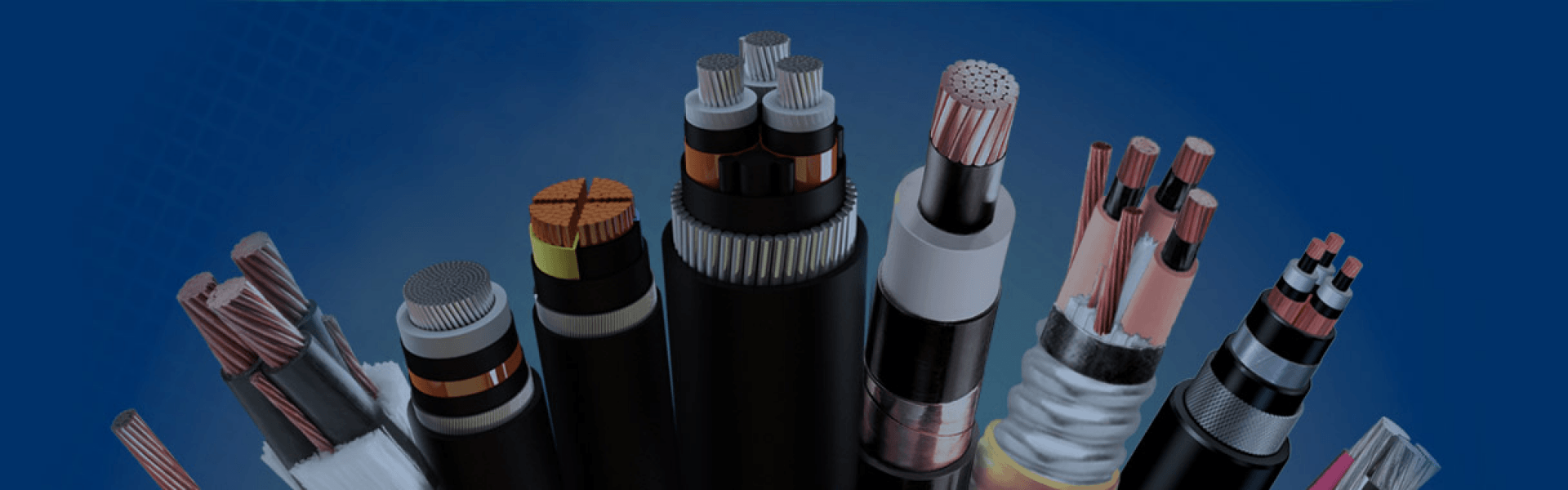
IEC 61158 Cable
We supply IEC 61158 cables for industrial communication, fieldbus, and process control systems where stable signal transmission is essential. Our range is designed for connecting PLCs, DCS systems, remote I/O, sensors, transmitters, actuators, and other field devices in demanding industrial environments. With options including overall screened, individually and overall screened, and armoured constructions, we help customers build communication links that are more resistant to interference, better protected in harsh installations, and more reliable over long operating periods.
IEC 61158 is a series of standards for industrial communication networks, particularly fieldbus systems used in automation and process control. In practical terms, IEC 61158 Cable generally refers to communication cables used to carry control signals and process data between controller-level equipment and distributed field devices. Its core function is to allow one control point to communicate with large numbers of digital or analogue devices for data exchange, monitoring, and process control across an industrial network.
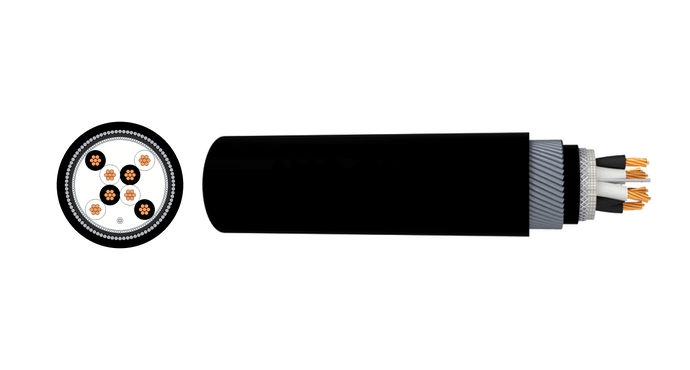
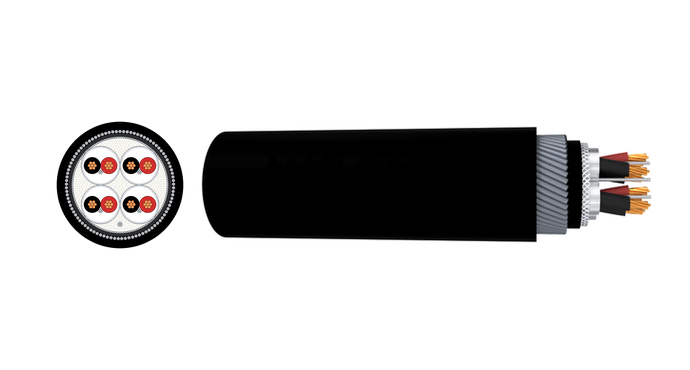
From a construction point of view, IEC 61158 cables are closer to fieldbus and instrumentation cables than to power cables. They are typically built with copper conductors, twisted pairs, PE or XLPE insulation, and shielding structures such as overall screen or individual and overall screen to improve resistance to electromagnetic interference and crosstalk. Where extra mechanical protection is needed, armoured versions are often selected for more demanding plant environments. The IEC 61158 series itself includes Part 1 for overview and guidance, Part 2 for physical layer specification and service definition, and Parts 3 to 6 for data link and application layer functions, with the physical layer requirements being especially relevant to cable design and communication performance.
In real applications, IEC 61158 cables are used wherever reliable communication between control systems and field devices is required, including oil and gas, chemical processing, water treatment, power generation, and factory automation. Their value is not simply in connecting two points, but in supporting stable data transmission across large control systems, reducing signal interference, and helping maintain accurate process communication in environments where uptime and system reliability matter.
IEC 61158 Protocol
| Protocol Type | Commercial Network | Cable Medium & Electrical Profile | Practical Guidance |
| Type 1 | Foundation Fieldbus H1 / TS61158 | Twisted pair, 31.25 kbit/s, 100 Ω ±20% @ 31.25 kHz, single pair + overall shield (≥90% coverage) | Use Type A (18 AWG / 0.8 mm²). Max trunk: 1,900 m. Intrinsic safety (Ex) compatible. |
| Type 2 | ControlNet / Ethernet/IP | RG-6 coaxial, quad-shield, BNC, up to 5 Mbit/s | Max segment: 1,000 m. Use terminators. Not twisted-pair – different infrastructure. |
| Type 3 | PROFIBUS DP / PA | DP: 135–165 Ω @ 3–20 MHz, 0.34 mm² min. PA: 100 Ω @ 31.25 kHz, 0.8 mm² (Type A) | DP: length depends on baud (up to 1,200 m @ 93.75 kbit/s). PA: trunk up to 1,900 m, carries power. |
| Type 4 | P-NET | Shielded twisted pair, 76.8 kbit/s, 100–120 Ω, 24 AWG min. | Max segment: 1.2 km (RS-485). Multi-master; common in food/beverage. |
| Type 5 | FF HSE (High-Speed Ethernet) | Cat5e or better (copper) or fibre, 100 Mbit/s full-duplex | Standard Ethernet limits: 100 m copper, fibre for longer runs. Backbone only, not H1. |
| Type 6 | SwiftNet | Obsolete – deleted in later editions | Not used in new installations. Historical reference only. |
| Type 7 | WorldFIP | Twisted pair or fibre, rates: 31.25 kbit/s, 1 Mbit/s, 2.5 Mbit/s | Max distances: 5 km @31.25k, 1 km @1M, 500 m @2.5M. 32 nodes/segment. |
| Type 8 | INTERBUS | Twisted pair, AWG 24/7, PE insulation, 500 kbit/s | Max remote bus: 400 m. Ring topology. Complies with IEC 60332-1-2. |
| Type 9 | FF Application Layer | Physical layer same as Type 1 (H1) – this type defines higher-layer services only | For cabling, refer to Type 1 specifications. |
| Type 10 | PROFINET | Industrial Ethernet: Cat5e+ (4-pair) or fibre, 100 Mbit/s | Max copper: 100 m between devices. Fibre: several km. Fixed installation: green sheath, 4-wire shielded. |
IEC 61158 Cable
Get A Free Quote
Need Help?
Your Trusted Business Partner for Professional Cable Solutions
/ AMG FAQ /
Frequently Asked Questions
Selecting the right IEC 61158 cable for your fieldbus network is straightforward if you follow a few practical steps. The decision hinges on your protocol, environment, and mechanical protection needs.
Start with your protocol. For 31.25 kbit/s systems like PROFIBUS PA or Foundation Fieldbus H1, always choose Type A – a single twisted pair with overall shield, 100 Ω ±20% impedance, 0.8 mm² conductors, and a maximum trunk length of 1,900 m. Type B (multi‑pair, 0.32 mm²) is only for legacy replacements or if you absolutely need multiple pairs in one cable, but it limits length to 1,200 m and has looser impedance tolerance. For PROFIBUS DP, use a 135–165 Ω (at 3–20 MHz) shielded pair. For PROFINET or FF HSE, go with industrial Cat5e/6 or fibre.
Next, decide on shielding and armour. An overall screen works well for single‑pair cables. When running multiple pairs together, choose individual+overall screening to prevent crosstalk. Add steel wire armour (SWA) if the cable will be direct‑buried, laid in outdoor trays, or exposed to impact or rodent damage.
Consider the environment. Check your operating temperature range (standard –40°C to +80°C; high‑temp options available). For chemical or oil exposure, select PUR or special compound jackets. Outdoor runs need UV‑stable black sheaths. For fire‑safe areas, specify LSZH (Low Smoke Zero Halogen). In hazardous zones, ensure Ex‑certification and appropriate blue sheaths.
Always verify key electrical parameters against IEC 61158‑2: impedance, capacitance (low values favour longer distances), conductor resistance, and attenuation. Request the manufacturer’s test report to confirm compliance.
Finally, plan for expansion. Type A gives you the best performance and longest reach – it is the preferred choice for all new installations. If you are unsure, consult your cable supplier with your specific application details, and they can recommend the exact part number that matches your network topology and site conditions.
An IEC 61158 cable is the physical transmission medium used in industrial fieldbus networks—the actual copper or fibre-optic cable that carries digital communication signals between controllers (PLCs, DCSs, or PCs) and field devices such as pressure transmitters, temperature sensors, valve positioners, flow meters, and actuators.
The cable serves two critical functions in modern industrial automation:
- Data communication – It enables high-speed, reliable digital data exchange between the control system and distributed field devices. For example, in a PROFIBUS PA segment, a single two-wire cable can transmit process values, diagnostic information, and control signals simultaneously.
- Power delivery – The physical layer defined in IEC 61158-2 allows power to be delivered over the same bus cable to field instruments, eliminating the need for separate power wiring. This is particularly valuable in process automation where field devices are spread across large plants.
Common applications include:
- PROFIBUS PA – Process automation systems, particularly in hazardous areas (Zone 1 and Zone 2)
- PROFIBUS DP – Factory automation, connecting controllers to remote I/O stations, drives, and actuators
- Foundation Fieldbus H1 – Process control systems, using the 31.25 kbit/s MBP physical layer
- ControlNet – Industrial automation networks using coaxial cable
In short, if you are building or maintaining a fieldbus-based automation system, the IEC 61158 cable is the backbone that makes communication between your controller and field devices possible.
IEC 61158-2 defines four cable types (A, B, C, and D) for the 31.25 kbit/s bus used in PROFIBUS PA and Foundation Fieldbus H1. However, only Types A and B are shielded and suitable for reliable fieldbus installations. Types C and D are unshielded, have severely restricted performance, and should be avoided in new installations.
Here is a direct comparison based on the IEC 61158-2 specification:
| Parameter | Type A | Type B |
| Construction | Single twisted pair with overall shield | Multiple twisted pairs with overall shield |
| Nominal conductor cross-section | 0.8 mm² (AWG 18) | 0.32 mm² (AWG 22) |
| Max. conductor resistance | 24 Ω/km | 56 Ω/km |
| Impedance at 31.25 kHz | 100 Ω ± 20% | 100 Ω ± 30% |
| Max. attenuation at 39 kHz | 3.0 dB/km | 5.0 dB/km |
| Min. shield coverage | 90% | Not specified |
| Max. usable length (including spurs) | 1,900 m | 1,200 m |
Quick Selection Summary
| Your Situation | Recommended Cable |
| New fieldbus installation (PROFIBUS PA, FF H1) | Type A – always |
| Replacing cable in an existing Type B system | Type B (for replacement only) |
| Need maximum trunk length (>1,200 m) | Type A (up to 1,900 m) |
| Operating in high-EMI environment | Type A (90% shield coverage guaranteed) |
| Multi-pair requirement in a single cable | Type B (but understand the limitations) |
| PROFIBUS DP (high-speed, 135–165 Ω) | Type A (135–165 Ω at 3–20 MHz) |
Final practical advice: Always verify that the cable’s impedance matches your fieldbus protocol. Using the wrong impedance will cause signal reflections and communication errors. For PROFIBUS PA and Foundation Fieldbus H1, that means 100 Ω ± 20% at 31.25 kHz—which is exactly what Type A delivers.
IEC 61158-2 is the physical layer specification of the IEC 61158 fieldbus standard series. In simple terms, it defines the actual physical medium—the cable, connectors, and electrical signalling—that carries data between field devices and control systems in industrial automation networks.
The physical layer conforms to Layer 1 of the OSI 7-layer model and specifies the media and network configuration requirements necessary to ensure data integrity before error checking at the data-link layer, as well as interoperability between devices at the physical level.
For cable specifiers and engineers, IEC 61158-2 is the most practically relevant part of the standard because it contains the pass/fail criteria for cable performance—impedance, attenuation, conductor resistance, capacitance unbalance, and maximum usable lengths. If your cable does not meet these parameters, your fieldbus network will suffer from signal reflections, data errors, and reduced segment lengths.
The standard covers multiple transmission media, including twisted-pair copper cables (the most common), coaxial cables, and fibre optic cables (multi-mode 62.5/125 µm, single-mode 9–10/125 µm, and plastic fibre 980/1000 µm).

Have Questions?
Get in Touch with Us.
AMG Cable Group support 24*7 service and technical assistance.
Phone /Whatsapp / Wechat
+86 188 3803 6118Address
High-Tech Industrial Development Zone,Zhengzhou City,Henan Province,ChinaSend Us a Message
Please feel free to leave a message. We will reply in 24 hours.
/ AMG WIRE&CABLE /
Your trusted partner in high- performance wire and cables
Our team stands by 24/7, responding promptly to
inquiries and providing most quotations within 24 hours.