

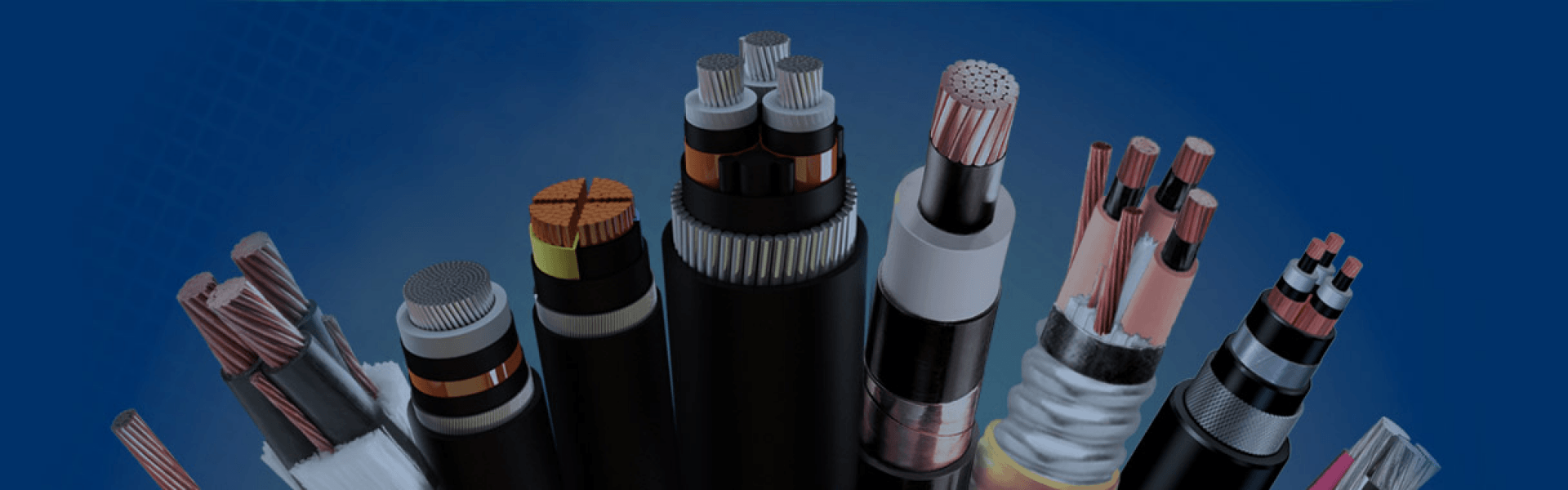
Special Cable
Special Cables are engineered electrical cables designed for environments where standard cables cannot reliably perform. In many industrial projects, the challenge is not simply transmitting power or signals, but ensuring stable operation under conditions such as moisture, corrosion, chemical exposure, mechanical stress, or long-term underground and offshore installation. This is where special cables become essential.
We are a supplier of industrial Special Cables and customized cable solutions for demanding applications. Our product range is designed to support industries such as oil and gas, marine engineering, power generation, petrochemical plants, water treatment, and infrastructure projects. In addition to standard special cable types, we also provide engineered and hybrid cable solutions tailored to specific project requirements.
Special cables matter because industrial environments are often unpredictable and harsh. Ordinary cables are usually designed for general indoor or protected outdoor use, where temperature, humidity, and mechanical impact are controlled. However, in real-world industrial sites, cables are exposed to aggressive conditions that can quickly lead to insulation failure, signal loss, or safety risks if the wrong cable is used.
The main problems special cables solve include resistance to corrosion in underground and marine environments, protection against chemical and oil exposure, stable performance under high or low temperatures, and improved mechanical durability against pulling, bending, or vibration. In many cases, they also ensure long-term electrical reliability for critical systems where downtime is not acceptable.
Difference between special cable and power cable
| Aspect | Standard Power Cable | Special Cable |
| Primary Purpose | Power transmission and distribution – delivering electrical energy from source to load | Dedicated function in harsh or unusual conditions – corrosion protection, continuous flexing, extreme temperatures, or explosion-proof areas |
| Design Philosophy | Standardized construction following common national standards (conductor, insulation, armour, sheath) | Custom-engineered with unique structures, materials, and designs to meet specific performance requirements not covered by standard specifications |
| Insulation & Sheath Materials | PVC, XLPE, EPR – suitable for normal ambient temperatures (-15°C to +70°C) and moderate conditions | Special polymers – HMWPE, fluoropolymers (PVDF, FEP), silicone rubber, or LSZH compounds – designed for extreme heat (up to +250°C), cold (-60°C), oils, acids, or UV radiation |
| Environmental Tolerance | Indoor, outdoor sheltered, or underground duct – limited moisture and chemical resistance | Extreme environments – underwater, direct burial, chemical spills, continuous flexing, high vibration, or explosive atmospheres |
| Special Functions | None beyond power delivery | Flame retardant, low-smoke halogen-free, fire resistant, water resistant, anti-corrosion, explosion-proof, rodent-proof and termite-proof |
| Mechanical Performance | Static installation – basic tensile strength and abrasion resistance; not designed for repeated movement | Built for dynamic applications – high-flex, torsion-resistant, impact-resistant, and capable of withstanding high tensile loads |
| Batch Size | Large-scale, mass production | Smaller quantities, often custom-made |
Special Cable
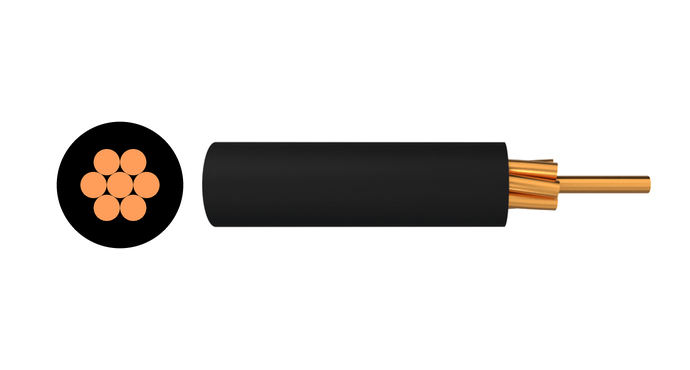
Get A Free Quote
Need Help?
Your Trusted Business Partner for Professional Cable Solutions
/ AMG FAQ /
Frequently Asked Questions
Special cables are used across virtually every industry where standard cables cannot meet the demands of the environment or application. Key industries include:
- Oil and Gas – Onshore and Offshore Platforms, Refineries, Pipelines and Subsea Operations
- Marine and Offshore Engineering – Ships, Offshore Platforms, Subsea Equipment and Desalination Plants
- Mining – Underground mining, draglines, and heavy extraction equipment
- Renewable Energy – Wind power, solar, and hydroelectric generation
- Railways and Transportation – Urban Rail Transit, Subways and Tunnels
- Aerospace – Aircraft wiring, ground support equipment
- Automotive & Manufacturing – Assembly lines, robotics, and automation systems
- Construction & Heavy Machinery – Cranes, aerial lifts, and building equipment
- Nuclear Power – High-radiation environments requiring specialized insulation
Special cables ensure power and signal integrity in applications where performance, safety, and reliability are non-negotiable.
CP cable (Cathodic Protection Cable) is used as a DC feeder cable in cathodic protection systems to prevent corrosion of metallic structures that are buried or submerged.
Specifically, CP cable connects the power source (rectifier) to the anodes in an impressed current cathodic protection system, delivering the protective current that makes the metal structure the cathode of an electrochemical cell—effectively stopping corrosion.
Common applications include:
- Underground pipelines (oil, gas, water, fuel)
- Storage tanks (petroleum, chemical, water)
- Steel pier piles and dock structures
- Offshore oil platforms and well casings
- Ships and marine vessels
- Lock gates, dams, and other submerged steel structures
CP cables are typically insulated with HMWPE (high molecular weight polyethylene) or fluoropolymers for excellent chemical resistance, low water absorption, and long-term durability in harsh soil or underwater environments.
Yes, you typically do. Variable Frequency Drives (VFDs) create electrical conditions that regular power cables are not designed to handle.
The frequency converter uses pulse width modulation (PWM) to control the motor speed, thereby producing the following effects:
- Rapid voltage transitions and high-frequency switching
- Harmonic noise and electromagnetic interference (EMI)
- Reflected wave voltages that can stress cable insulation
A proper VFD cable is a special cable engineered to address these issues with:
- Effective grounding (often with a symmetrical ground design) to keep currents within the cable
- Proper shielding to contain EMI and prevent interference with other equipment
- High strand count conductors for flexibility, cooler operation, and vibration resistance
- XLPE insulation to withstand the electrical stress of high-frequency switching
Using a standard power cable on a VFD can lead to premature insulation failure, radiated interference affecting nearby sensitive equipment, bearing damage in the motor, and nuisance tripping. Most VFD manufacturers recommend screened/specialized VFD cable, and in some countries, it’s a regulatory requirement.
In hazardous locations (such as Class I, Division 1 or Zone 0/1 environments where flammable gases, vapors, or dust are present), cables must prevent explosions by ensuring that arcs, sparks, or heat cannot escape the cable system or travel through it. The industry standard special cables include:
- Type MC-HL (Metal-Clad for Hazardous Locations): Features a continuous, gas-tight, corrugated aluminum or steel armor over the insulated conductors, covered by a sunlight- and chemical-resistant PVC outer jacket. It prevents gases from migrating through the interior of the cable.
- Type ITC-HL (Instrumentation Tray Cable for Hazardous Locations): Similar to MC-HL but optimized for lower-power instrumentation and signaling loops in explosive areas.
- TC-ER-HL (Tray Cable – Exposed Run – Hazardous Location): Specialized flame-retardant, crushed-resistant cables permitted in specific hazardous zones when installed with proper vapor-tight gland fittings.
- Key Construction Features: These cables must possess gas-tight extruded beddings, highly packed fillers to prevent the transmission of explosive vapors through the cable core, and rigorous flame-retardant ratings (such as passing the IEEE 1202 flame test).
Yes, absolutely. In fact, customization is the defining characteristic of the specialty cable industry. Because standard, off-the-shelf wires cannot account for every unique industrial hazard, custom engineering is often the only way to ensure long-term operational reliability.
When partnering with an experienced manufacturer, special cables can be tailored across three critical dimensions:
- Material Formulation: Inner insulation and outer jackets can be customized using advanced polymers like PVDF, Halar, HMWPE, or Polyurethane (PUR) to match specific environmental threats—such as severe chemical corrosion, chlorine gas exposure in cathodic protection systems, or extreme temperatures.
- Mechanical Structure: Cables can be structurally reinforced with high-flex copper stranding, heavy-duty armor, or internal aramid strength members to endure continuous bending (like in drag chains) or high-tensile pulling.
- Hybrid Integration: Multiple functions can be merged into a single composite architecture, combining power cores, shielded data lines, signals, or fiber optics under one sleeve to maximize space efficiency.
Ultimately, customizing special cables allows project managers and engineers to build a target-rated asset that fits the exact environmental and spatial constraints of their application, preventing expensive downtime.

Have Questions?
Get in Touch with Us.
AMG Cable Group support 24*7 service and technical assistance.
Phone /Whatsapp / Wechat
+86 188 3803 6118Address
High-Tech Industrial Development Zone,Zhengzhou City,Henan Province,ChinaSend Us a Message
Please feel free to leave a message. We will reply in 24 hours.
/ AMG WIRE&CABLE /
Your trusted partner in high- performance wire and cables
Our team stands by 24/7, responding promptly to
inquiries and providing most quotations within 24 hours.