

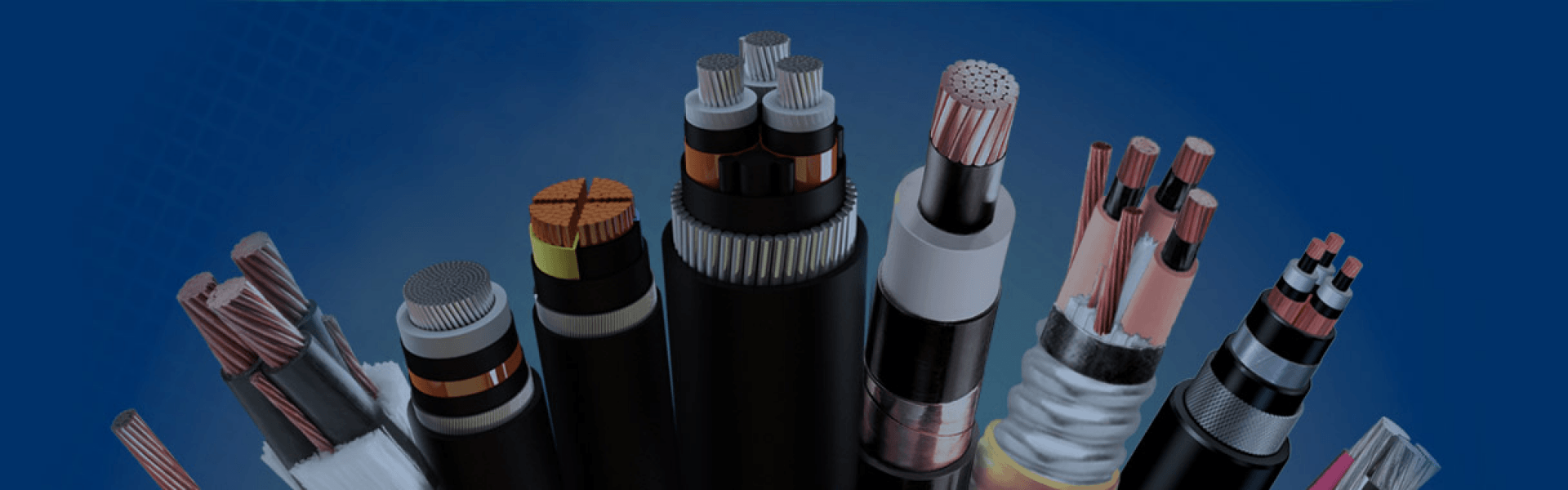
Control Cable
As a professional cable manufacturer and supplier, we offer a wide range of control cables for industrial automation, machinery, power distribution, building services, mining, marine, and other demanding applications. Our control cable portfolio covers screened and unscreened designs, flexible constructions, armored variants, and signal control cables, offering dependable operation across industrial, commercial, and infrastructure applications.
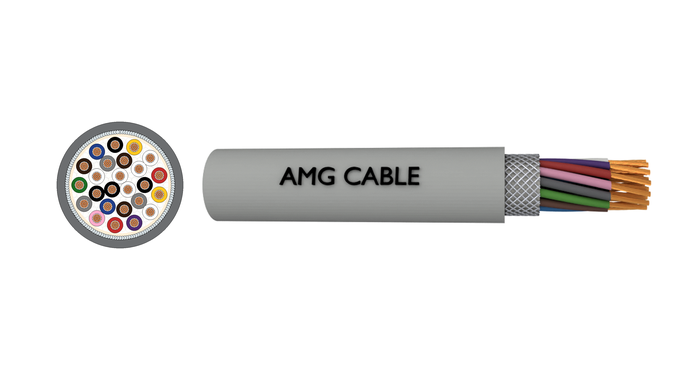
Control cables are used to transmit control, monitoring, signaling, and switching signals between control panels, PLCs, sensors, relays, and electrical equipment. A typical control cable consists of copper conductors, insulation, optional shielding or armor, and an outer protective sheath. Depending on the application, different materials and constructions can be selected to meet requirements for flexibility, mechanical protection, fire performance, and environmental resistance.
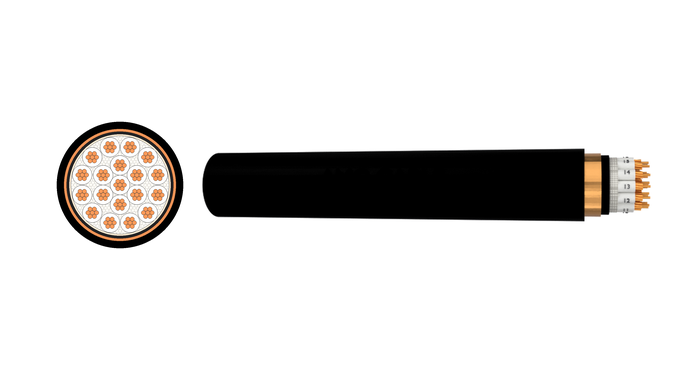
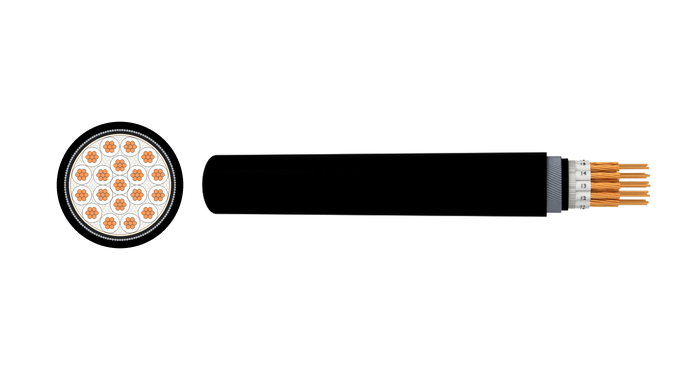
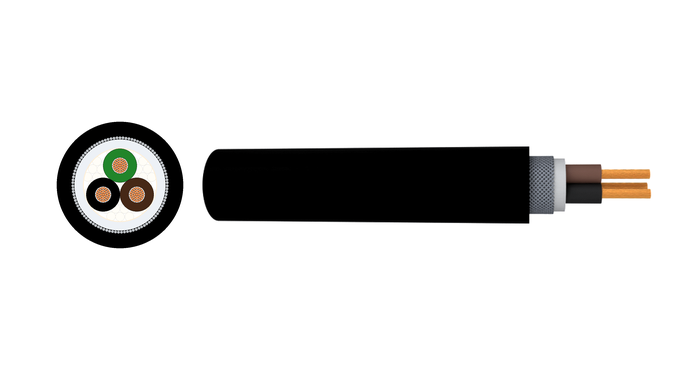
Common types of control cables include unshielded cables for general installations, shielded cables such as CY, LIYCY, and CVV-S for environments with electromagnetic interference, and armored cables for applications requiring additional mechanical protection. Flexible control cables are also widely used in machinery and equipment subject to movement or vibration.
Unlike power cables, which are designed to deliver electrical energy, control cables are intended to carry low-voltage control and signal circuits that enable equipment and systems to operate safely and efficiently. Choosing the correct cable type is essential for maintaining reliable communication and minimizing downtime.
When selecting a control cable, one of the key considerations is whether shielding is required. Unshielded control cables are a cost-effective choice for low-interference environments, while shielded control cables help protect signal integrity in installations with motors, drives, and other sources of electrical noise. The right cable construction ensures dependable performance, longer service life, and efficient system operation.
Control Cable Standards
Control cables are manufactured according to different international and regional standards depending on their construction, shielding requirements, flexibility, and intended application. Choosing a cable that complies with recognized standards helps ensure reliable performance, safety, and compatibility with project specifications.
| Standard | Description | Products |
| VDE 0285 | German standard covering flexible PVC-insulated control cables used in industrial machinery and automation systems. | YY Control Cable, CY Control Cable, SY Control Cable |
| VDE 0812 | Standard for screened signal and data transmission cables requiring reliable signal integrity and EMI protection. | LIYCY Control Cable |
| EN 50525 | European standard for low-voltage energy and control cables with thermoplastic insulation and sheath materials. | YY Control Cable, CY Control Cable, SY Control Cable |
| JIS C 3401 | Japanese standard for control cables used in industrial facilities, power plants, and building control systems. | CVV-S Control Cable, CVV Armored Control Cable |
| IEC 60332 Series | Flame-retardant cable testing standards that evaluate fire propagation characteristics. | CVV Armored Control Cable, CVV-S Control Cable, CY Control Cable, LIYCY Control Cable, SY Control Cable, YY Control Cable |
| IEC 60754 | Standard for measuring halogen acid gas emissions during combustion, commonly specified for low-smoke cable designs. | Selected LSZH versions of CY, LIYCY, SY, and YY Control Cables |
| IEC 61034 | Standard for smoke density testing during cable fires, helping improve visibility in emergency situations. | Selected LSZH versions of CY, LIYCY, SY, and YY Control Cables |
| DIN/VDE Mining & Industrial Specifications | Heavy-duty industrial cable standards for demanding applications requiring high mechanical strength and durability. | 2YSLGCGOEU Signal & Control Cable |
Where required, our control cables can also be supplied with flame-retardant, low-smoke, halogen-free, oil-resistant, UV-resistant, or customized constructions to meet specific project and regulatory requirements. This ensures reliable performance, easier project approval, and long-term operational safety.
Control Cable
Get A Free Quote
Need Help?
Your Trusted Business Partner for Professional Cable Solutions
/ AMG FAQ /
Frequently Asked Questions
Control cables offer several distinct advantages tailored for automated and industrial systems:
- High Core Density: They can bundle a large number of conductors (often up to 40 cores or more) within a single compact outer jacket, saving valuable space in cable trays and conduits.
- Exceptional Flexibility: Designed with Class 5 fine-stranded copper wires, they handle frequent bending, making them ideal for dynamic applications like cable drag chains and robotics.
- Electromagnetic Protection: Shielded versions (like CY, LIYCY, or CVV-S) utilize copper braids or tapes to block electromagnetic interference (EMI), protecting signal integrity near high-noise equipment like variable frequency drives (VFDs).
- Targeted Mechanical Armor: Options with steel wire braids (SY) or steel tape armor (CVV Armored) provide robust physical protection against crushing, impact, and rodent damage without making the cable completely rigid.
Most industrial control cables are rated for low-voltage operation. The two most common ratings are 300/500 V and 450/750 V, with some armored types going up to 600/1000 V. The first number refers to the voltage between a conductor and ground, while the second is the voltage between two phase conductors. These ratings comfortably cover the 24 V DC, 110 V AC, and 230/400 V AC circuits that dominate control, instrumentation, and automation systems. They are not designed for medium-voltage distribution. Always verify the voltage rating printed on the outer sheath against your circuit requirements before installation.
Control cables function as the “nerves” of an industrial facility. They are primarily used to send operational commands, measurement data, and low-voltage signals between equipment. Common applications include:
- Industrial Automation: Linking PLCs, control panels, automated assembly lines, and CNC machine tools.
- Power Stations and Substations: Widely used for control, signaling, and monitoring circuits associated with switchgear, relays, instrumentation, and power distribution equipment.
- Material Handling: Controlling cranes, conveyor belts, stacker-reclaimers, and automated sorting systems.
- Building Automation: Wiring HVAC control networks, commercial lighting controls, and elevator safety loops.
A control cable works by providing dedicated, electrically stable pathways for signals to travel between field devices and controllers. Inside the cable, each copper conductor carries a specific signal — a start command, a sensor reading, or a feedback pulse — while its PVC or PE insulation keeps that signal isolated from neighboring cores. In shielded cables, the copper braid or foil layer wrapped around the core bundle intercepts external electromagnetic noise and drains it to ground, preventing that noise from coupling onto the signal conductors. The outer sheath mechanically binds everything together and protects the inner layers from moisture, oil, and abrasion. The result is that a faint 4-20 mA signal arriving at a PLC input card looks as clean as it did when it left the field transmitter.
The operational lifespan depends heavily on the installation environment and application type:
- Fixed Installations: In clean, indoor, dry environments with no movement (such as inside an electrical panel or fixed conduit), high-quality control cables easily last 10 to 20+ years.
- Dynamic/Moving Applications: In drag chains, automated conveyors, or robotics, lifespan is measured in bending cycles. Premium flexible cables are engineered to survive 5 to 10 million flexing cycles (typically 3 to 7 years of continuous operation) before material fatigue sets in.
- Harsh Outdoor Environments: Exposure to continuous UV rays, ambient moisture, extreme temperatures, or industrial oils will reduce a standard PVC cable’s life unless a specialized rubber or polyurethane jacket (like 2YSLGCGOEU) is specified.
Common control cable failures include:
- Insulation deterioration due to aging or overheating.
- Mechanical damage from impact, crushing, or abrasion.
- Moisture or water ingress.
- Conductor breakage caused by excessive bending or vibration.
- Shield damage leading to signal interference.
- Loose or corroded terminations.
- Chemical or UV degradation of the outer sheath.
Regular inspection and preventive maintenance can help reduce these failures.
Control cables can be tested using several methods:
- Continuity Test – Verifies conductor integrity.
- Insulation Resistance Test – Measures insulation quality using a megohmmeter.
- Voltage Test – Checks electrical performance under operating conditions.
- Conductor Resistance Test – Detects damaged or deteriorated conductors.
- Shield Continuity Test – Confirms the effectiveness of cable shielding.
- Visual Inspection – Identifies physical damage, corrosion, or wear.
Testing should be performed according to relevant standards and safety procedures.
Control cables are categorized by their structural shielding, armor, and intended regional standard:
- Unshielded (YY, CVV): Highly flexible and economical; used in environments free from electrical noise.
- Shielded/Screened (CY, CVV-S, LIYCY): Equipped with copper braids or tapes to block electromagnetic interference (EMI).
- Armored (SY, CVV Armored): Wrapped in steel wire braids or steel tapes to withstand physical impacts and direct burial.
- Heavy-Duty/Specialized (2YSLGCGOEU): Built with rubber/polyurethane jacketing to withstand the continuous pulling, oil, and weather stresses of mining and material handling.
Safety Note: As a general engineering rule, no.
Control cables are engineered for low-current signal transmission and typically feature small conductor cross-sections (usually between 0.5 mm² and 2.5 mm²). Main power cables require much thicker conductors to safely carry high currents without overheating. If you attempt to route main factory power through a control cable, the excessive current will cause the small conductors to rapidly overheat, melting the insulation and posing an immediate electrical fire hazard.
While both operate under low-voltage thresholds, they serve completely different roles in a power distribution layout:
| Primary Purpose | Transmits operational data, logic commands, and signals to manage machinery. | Transmits primary electrical energy to feed electricity directly to machines and distribution boards. |
| Current & Voltage | Handles low current; typically rated at 300/500V or 600V. | Handles high current; typically rated at 600/1000V (1.1kV). |
| Conductor Size | Small cross-sections, typically 0.5 mm² to 2.5 mm². | Large cross-sections, ranging from 4 mm² up to several hundred mm². |
| Core Density | High core count (commonly 5, 12, 24, up to 40+ cores) to manage multiple signal pathways. | Low core count (typically 1 to 5 cores) designed purely to transfer multi-phase electrical power. |

Have Questions?
Get in Touch with Us.
AMG Cable Group support 24*7 service and technical assistance.
Phone /Whatsapp / Wechat
+86 188 3803 6118Address
High-Tech Industrial Development Zone,Zhengzhou City,Henan Province,ChinaSend Us a Message
Please feel free to leave a message. We will reply in 24 hours.
/ AMG WIRE&CABLE /
Your trusted partner in high- performance wire and cables
Our team stands by 24/7, responding promptly to
inquiries and providing most quotations within 24 hours.