

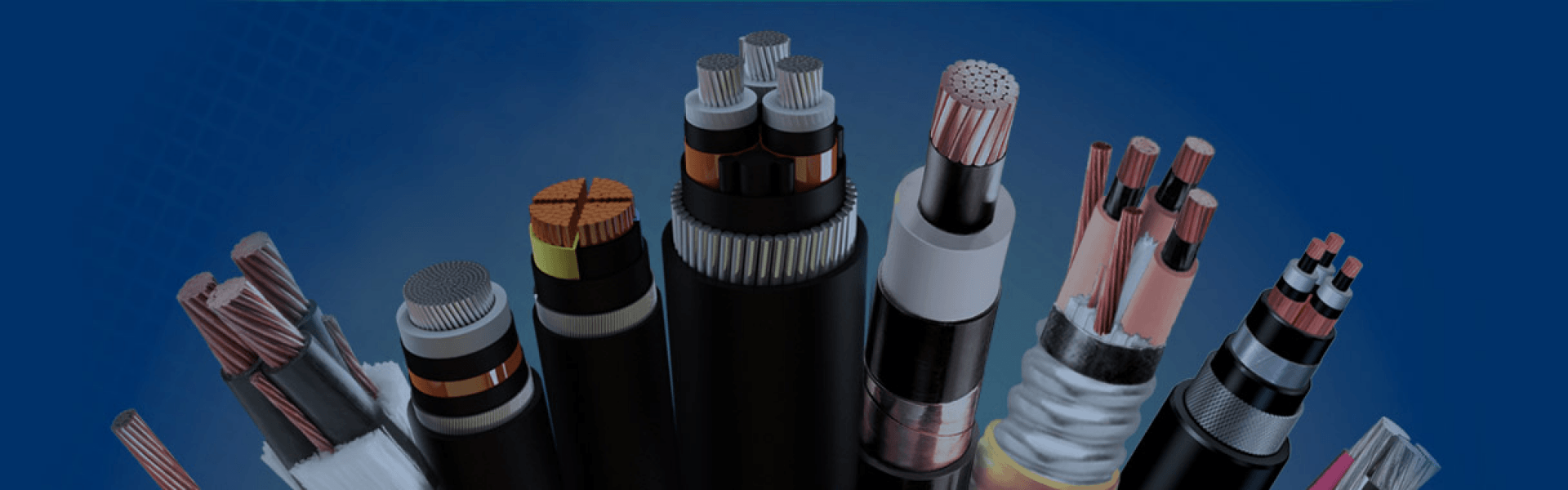
IEC 60092 Cable
IEC 60092 Cable refers to a series of marine and offshore cables designed for electrical installations in ships and offshore units according to the IEC 60092 international standard system. Unlike ordinary industrial cables, IEC 60092 marine cables are specifically engineered for harsh marine environments where equipment is continuously exposed to salt mist, oil contamination, humidity, vibration, mechanical stress, and high fire-risk conditions. These cables are widely used in commercial vessels, offshore platforms, FPSO units, marine automation systems, and shipboard power distribution where high safety, durability, and long-term reliability are required.
IEC 60092 is not limited to a single cable type. It establishes a complete technical framework covering marine power cables, control cables, instrumentation cables, communication cables, and offshore data transmission cables used throughout shipboard electrical systems. The standard applies to low-voltage power distribution, propulsion systems, generators, emergency circuits, automation systems, navigation equipment, communication networks, and marine monitoring systems across ships and offshore platforms.
Compared with ordinary industrial cables, IEC 60092 cables are manufactured to much stricter construction and material requirements. Marine environments are far more demanding than standard land-based installations, so the standard defines detailed requirements for conductor structure, insulation materials, sheath performance, mechanical protection, and fire safety. Conductors are commonly made with stranded tinned copper according to IEC 60228 to improve flexibility and corrosion resistance in salt-air conditions. Depending on the application, cables may also include shielding or armored protection to improve resistance against vibration, abrasion, mechanical impact, and electromagnetic interference.
Material performance is another critical part of IEC 60092 cable design. Since ships and offshore facilities are enclosed environments where smoke and toxic gases can spread rapidly during a fire, the standard places strong emphasis on low smoke, halogen-free, and flame-retardant materials. Modern IEC 60092 marine cables commonly use HF-XLPE or EPR insulation systems capable of operating at temperatures up to 90°C while maintaining stable electrical performance. Sheathing materials such as SHF1 and SHF2 provide improved resistance to oil, seawater, moisture, UV exposure, and harsh offshore operating conditions.
To meet IEC 60092 requirements, marine cables must pass demanding electrical, environmental, and flame retardant tests, including IEC 60332 flame propagation testing and, for critical circuits, IEC 60331 fire resistance testing. Compared with standard industrial cables, IEC 60092 cables provide higher reliability, better fire performance, and stronger resistance to harsh offshore operating conditions, making them essential for modern marine and offshore electrical systems.
| IEC Standard | What it covers in practice |
| IEC 60092-350 | General construction and test requirements. This is the foundation – it defines conductor design, insulation, screening, sheathing and marking. |
| IEC 60092-360 | Sheathing and insulating materials. It sets the performance limits for compounds like XLPE, HEPR, SHF1 and SHF2, including long-term ageing, oil resistance and cold-temperature flexibility. |
| IEC 60092-353 | Low voltage power cables rated 0.6/1 kV and 1.8/3 kV. Use this for main switchboards, generators, motors, lighting and general onboard power. |
| IEC 60092-354 | Medium voltage power cables from 6 kV up to 30 kV. Relevant when you are dealing with propulsion drives, HV switchgear or large generator feeders. |
| IEC 60092-376 | Control and instrumentation cables rated 150/250 V. Covers both screened and unscreened designs for analogue signals, digital control loops and communication links. |
| IEC 60092-352 | Selection, installation and operating conditions. This is the practical guide for ampacity calculations, derating factors, grouping, short circuit withstand and fire-performance rules. |
| IEC 60092-401 | Installation and postinstallation testing. It describes the checks and high voltage tests that must be passed after the cable is installed and before the vessel goes into service. |
IEC 60092 Cable
Get A Free Quote
Need Help?
Your Trusted Business Partner for Professional Cable Solutions
/ AMG FAQ /
Frequently Asked Questions
To ensure safety, compliance, and optimal performance in marine electrical systems, cable sizing and installation under IEC 60092-352 must follow these core methodologies, de-rating factors, and installation rules:
- Ampacity Calculation Methods
- Annex B (General): A simpler approach that applies a global 0.85 de-rating factor when cables are bundled or closely spaced. Best suited for early-stage design.
- Annex A (Specific): A detailed thermal calculation method. Use this for continuous high loads, tight tray arrangements, or when overheating is a real risk.
- Critical De-rating Factors
- Ambient Temperature: Marine ratings are fundamentally based on a baseline of 45 ° For hotter spaces (such as engine rooms or unventilated trunks), you must apply the specific correction factor from the standard.
- Grouping (Bundling): Cables installed together heat each other up. Consequently, more layers and tighter spacing mean a larger de-rating factor is required.
- Short-time Duty: Intermittent or short-time loads allow for reduced conductor sizes, provided that the specific duty cycle is properly documented.
- Strict Installation Rules
- Bending Radius: Always respect the minimum required bending radius (typically 4–6 × OD for unarmoured cables). Tighter bends will damage the insulation and screens.
- Layer Limit: For continuously fully loaded power cables, limit tray stacking to a maximum of two layers to allow for adequate heat dissipation.
- Harmonics: If the Total Harmonic Distortion (THD) exceeds 15%, the neutral may count as a live conductor, meaning the cable cross-section may need to be increased.
Capacity alert
Always apply temperature, grouping and duty‑cycle factors together. The de‑rated capacity is the real limit – exceeding it under continuous load is a fire risk.
Need precise ampacity calculations or a thermal report for your layout? Our engineering team works with IEC 60092-352 daily and can support your project.
- Ultimate Marine Safety: Enforces strict flame-retardant, fire-resistant, and LSZH properties to protect crew lives and keep critical systems (steering, fire pumps) running during emergencies.
- Global Industry Passport: Serves as a universally recognized technical language, eliminating trade barriers between international shipowners, yards, and manufacturers.
- Mandatory Class Approvals: Provides the benchmark and “legal basis” required to pass inspections by major classification societies like DNV, ABS, LR, and CCS.
- Extreme Environmental Reliability: Guaranteed to withstand continuous vibration, high salinity, moisture, and mechanical stress without operational degradation.
- End-to-End Compliance: Regulates the entire lifecycle of marine electrical infrastructure—from initial cable manufacturing to onboard installation and final verification.
- Future-Proof Design: Continuously updated to integrate emerging maritime technologies, including medium-voltage fiber optics and high-frequency communication systems.
Offshore platforms, FPSOs, drilling rigs and support vessels all rely on cables manufactured to the IEC 60092 series. The exact type depends on the circuit:
- Low‑voltage power (0.6/1 kV): XLPE or HEPR insulated cables with halogen‑free sheaths, such as M2XH, M2XCH, MGCH or MGCG. Where mechanical protection is needed, copper‑braid or steel‑wire armour is added.
- Medium‑voltage power (6 kV–30 kV): Cables like MVCECH, designed with conductor and insulation screens to handle higher electrical stresses.
- Control and instrumentation (150/250 V): Screened or unscreened designs, including FM2XCH, FMGCCH and FM2XAH, to protect low‑level signals from interference.
- Fire‑resistant circuits: Cables with an additional mica‑glass tape layer that keeps emergency lighting, fire pumps and PA systems running during a fire.
All share a common foundation: they are tested to IEC 60092‑350, meet the fire‑performance requirements of IEC 60092‑352, and use sheathing materials certified to IEC 60092‑360.
The difference is not cosmetic – it runs through materials, construction, testing and certification. A standard industrial cable (for example, building wire to IEC 60227) is designed for dry, stable indoor spaces. A marine cable to IEC 60092 is designed for a moving, humid, chemically aggressive platform. Here are the five critical distinctions:
- Halogen‑free, low‑smoke sheaths: Marine cables use SHF1 or SHF2 compounds. In a fire they release very little smoke and no corrosive halogen gases. Ordinary PVC cables produce dense, toxic smoke and hydrochloric acid – exactly what you do not want in a confined accommodation space.
- Flame retardance: IEC 60092 cables must pass the demanding bunched‑cable vertical flame test (IEC 60332‑3‑22, Category A). Normal cables are often tested only on a single wire.
- Oil and mud resistance: Marine sheaths, especially SHF2, must withstand prolonged immersion in hot mineral oil and drilling fluids without cracking or excessive swelling. Standard cables fail this test quickly.
- Cold‑temperature flexibility: Sheathing compounds are cold‑bend and cold‑impact tested down to −25 °C, and −40 °C for arctic‑rated designs. A normal cable can become brittle and crack before it is even pulled.
- Type approval: IEC 60092 cables are certified by classification societies such as DNV, ABS, LR and BV. A “normal” cable carries no such approval and will be rejected during vessel certification.
In short, substituting a standard industrial cable may save a small amount on the purchase order, but the risk of fire, corrosion failure or class rejection far outweighs any upfront saving.
- Electrical & Mechanical Tests
- Voltage & Resistance: Verifies copper conductivity and high-voltage endurance to prevent insulation breakdowns.
- Mechanical Aging: Simulates long-term lifespans via oven-baking to check tensile strength and elongation limits.
- Cold Resistance: Tests impact and bending at sub-zero temperatures (down to -35°C) to prevent cracking in Arctic environments.
- Fire Safety Tests (Crucial Baseline)
- Flame Retardancy (IEC 60332): Ensures cables self-extinguish and prevent fire propagation along cable runs.
- Smoke Density (IEC 61034): Guarantees minimal smoke emission to maintain visibility for safe crew evacuation.
- Halogen Content (IEC 60754): Confirms zero toxicity and corrosiveness by restricting halogen acid gas to <0.5%.
- Circuit Integrity Tests
Fire Resistance (IEC 60331): Guarantees critical safety lines (steering, alarms, emergency power) remain fully operational under direct flame (750°C–1000°C) for at least 90 minutes.

Have Questions?
Get in Touch with Us.
AMG Cable Group support 24*7 service and technical assistance.
Phone /Whatsapp / Wechat
+86 188 3803 6118Address
High-Tech Industrial Development Zone,Zhengzhou City,Henan Province,ChinaSend Us a Message
Please feel free to leave a message. We will reply in 24 hours.
/ AMG WIRE&CABLE /
Your trusted partner in high- performance wire and cables
Our team stands by 24/7, responding promptly to
inquiries and providing most quotations within 24 hours.