

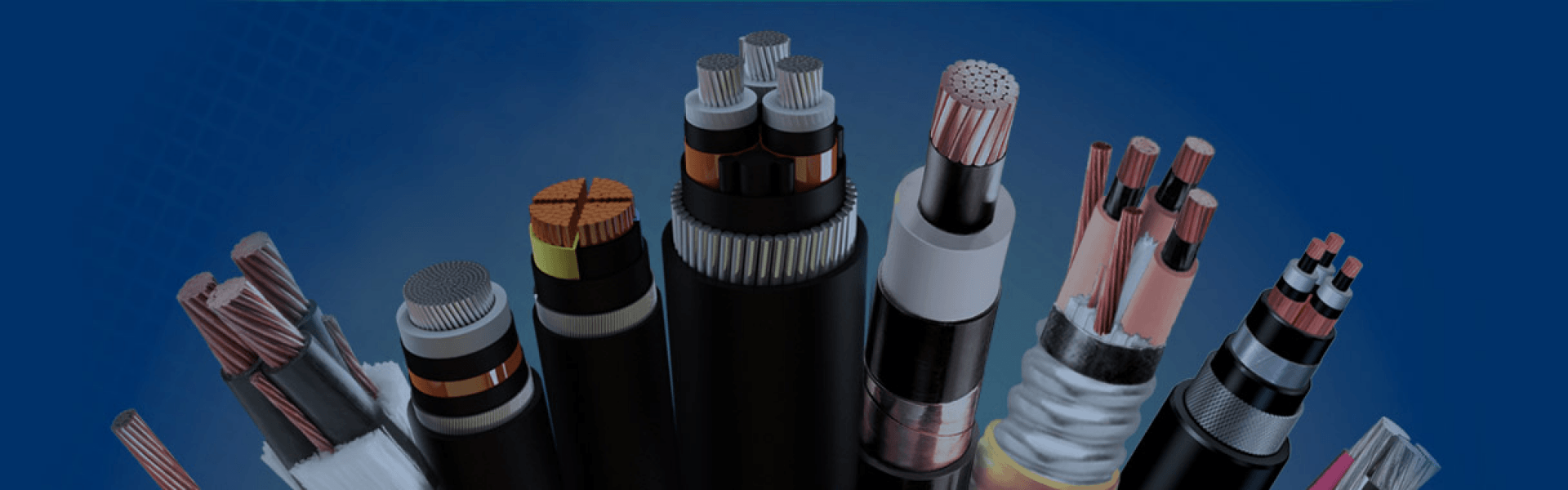
IEC 60840 Cable
IEC 60840 Cable refers to high voltage power cables with extruded insulation and their accessories designed for rated voltages above 30kV up to 150kV. As an internationally recognized IEC standard, it is widely used in utility grids, substations, industrial plants, renewable energy projects, and underground power transmission systems. Common voltage classes such as 66kV, 110kV, and 132kV are typically manufactured and tested according to IEC 60840 requirements.
The standard mainly applies to fixed installation land cables, including single-core and individually screened three-core cables used in high voltage transmission networks. IEC 60840 defines important requirements for cable construction, insulation performance, testing methods, and long-term operational reliability. It is commonly used for underground transmission applications where stable electrical performance and service life are critical.
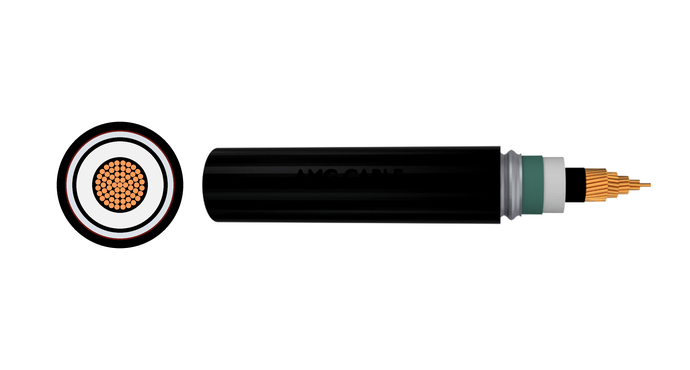
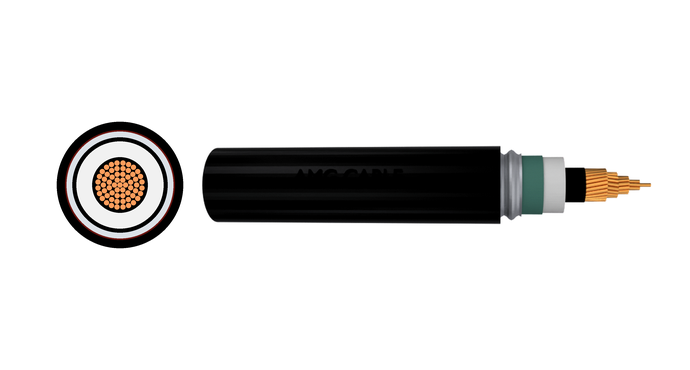
Most IEC 60840 cables use XLPE insulation because of its excellent dielectric strength, thermal resistance, and low electrical loss. Copper or aluminum conductors must comply with IEC 60228 requirements, while metallic screens, water-blocking layers, and protective sheaths help improve moisture resistance and electrical safety in demanding environments.
After installation, IEC 60840 also requires field electrical testing to verify system integrity. Typical tests include outer sheath DC voltage testing and AC withstand voltage testing to ensure cable joints, terminations, and insulation systems are safely installed before operation. Because of its strict technical and testing requirements, IEC 60840 remains one of the most widely recognized standards for high voltage XLPE cable systems worldwide.
| Cable Component | IEC 60840 Requirements | Project & Engineering Benefit |
| Voltage Ratings | 30 kV to 150 kV systems (Um: 36 kV–170 kV). Covers 66kV, 110kV, 132kV, 150kV. | Matches precise regional grid specs; prevents over-engineering. |
| Conductor | High-purity Copper or Aluminum complying with IEC 60228 DC resistance limits. | Optimizes conductivity; controls power loss and overheating under peak load. |
| XLPE Insulation | Extruded XLPE/EPR with strict minimum thickness and high concentricity. | Eliminates structural weak spots, securing a 30+ year reliable service life. |
| Semi-Con Screens | Bonded conductor & insulation shields applied via triple co-extrusion. | Equalizes radial electrical stress; eliminates harmful partial discharge (PD). |
| Metallic Screen | Continuous copper wires, lead sheath, or corrugated aluminum sheath. | Safely carries short-circuit fault currents to ground during grid emergencies. |
| Water-Blocking | Longitudinal (swellable tapes) and radial (metallic tapes/sheaths) moisture barriers. | Prevents water treeing propagation; isolates damage if the outer jacket is cut. |
| Outer Jacket | High-density Polyethylene (ST7) or PVC (ST2) with high mechanical strength. | Protects inner layers from installation pull-stress, rocks, and termite attacks. |
| Cable Type (Voltage) | Common Type Codes | Cores | Max. System Voltage (Um) | Typical Conductor Size Range | Typical Applications |
| 38/66 kV Cable | 2XS(F)2Y (Cu) / A2XS(F)2Y (Al) | 1C / 3C | 72.5 kV | 150 mm² – 1200 mm² | Wind & solar grid connections; heavy industrial plant supplies. |
| 64/110 kV Cable | 2XS(FL)2Y (Cu) / A2XS(FL)2Y (Al) | 1C | 126 kV | 240 mm² – 2000 mm² | Municipal underground transmission; urban cable tunnels. |
| 76/132 kV Cable | 2XS(F)2Y (Cu) / 2XSEYV (Lead Sheath) | 1C | 145 kV | 300 mm² – 2500 mm² | National backbone grids; Middle East & Africa power projects. |
| 87/150 kV Cable | 2XS(F)2Y / Custom Armored | 1C | 170 kV | 400 mm² – 2500 mm² | High-load cross-regional networks; major transmission hubs. |
IEC 60840 Cable
Get A Free Quote
Need Help?
Your Trusted Business Partner for Professional Cable Solutions
/ AMG FAQ /
Frequently Asked Questions
The latest complete edition is IEC 60840:2020 Ed.5.0, published on May 19, 2020. This fifth edition cancels and replaces the fourth edition from 2011 and constitutes a full technical revision.
Since its publication, the standard has been updated through the following amendments and corrigenda:
- IEC 60840:2020/COR1:2021 — Corrigendum 1, published February 10, 2021
- IEC 60840:2020/AMD1:2023 — Amendment 1, published June 2, 2023
- IEC 60840:2020/AMD1:2023/COR1:2025 — Corrigendum 1 to Amendment 1, published June 17, 2025
The consolidated version — IEC 60840:2020+AMD1:2023 CSV — incorporates both the original 2020 text and Amendment 1, including the 2021 and 2025 corrigenda. When specifying or purchasing cables, referencing IEC 60840:2020 with all amendments and corrigenda applied ensures you are working to the most current requirements.
Key technical changes introduced in the fifth edition and Amendment 1 include:
- Gas-immersed cable terminations for rated voltages above 52 kV must now be designed, type-tested, and routine-tested in accordance with IEC 62271-209, in addition to the tests specified in IEC 60840.
- Requirements for composite outdoor termination insulators were introduced.
- The test cylinder diameters for the bending test (both type and prequalification tests) were modified in line with IEC TR 61901:2016.
- A new low-smoke halogen-free oversheath material, designated ST12, was added to the standard.
- Additional fire-condition tests were introduced: vertical flame spread, smoke density, acidity, and conductivity — applied according to the fire performance declared for the cable.
- A water penetration test in the conductor was added.
- Type tests on the screen sectionalizing insulation of all accessories were introduced.
The core difference between these two standards lies entirely in the voltage threshold and the resulting strictness of the testing processes:
- IEC 60840 is for High Voltage (HV) land cables. It covers power systems with rated voltages above 30 kV up to 150 kV (with a maximum system voltage, Um, up to 170 kV). Typical project examples include 66 kV, 110 kV, and 132 kV networks.
- IEC 62067 is for Extra High Voltage (EHV) land cables. It governs massive transmission systems with rated voltages above 150 kV up to 500 kV (Um from 245 kV up to 550 kV). Common examples are 220 kV, 330 kV, and 500 kV backbone grids.
Practical Note: Because EHV grids carry exponentially higher failure risks, IEC 62067 mandates a highly rigorous, long-term Prequalification (PQ) Test—which requires testing a complete cable system under continuous voltage and thermal cycles for at least one full year—whereas IEC 60840 primarily relies on standard Type Tests to certify designs.
IEC 60840 cables are tested at four levels to ensure safety and long-term reliability.
① Routine Tests — 100% on every production length
- Partial Discharge Test: Detects microscopic voids or impurities in the XLPE insulation. Limit: ≤10 pC.
- AC Voltage Test: Confirms the cable withstands its rated voltage without breakdown.
- Oversheath Electrical Test: Checks the outer jacket for cuts or pinholes.
Any length failing these tests is rejected.
② Sample Tests — periodic batch checks
Cut from a finished length (e.g., per batch or every 4 km):
- Dimensional Check: Measures insulation, sheath, and conductor thicknesses against design tolerances.
- XLPE Hot Set Test: Verifies the degree of cross-linking. The material must not melt or excessively deform at 90°C (operating) or 250°C (short-circuit).
③ Type Tests — one-time design qualification
- Required when a new design or material is introduced. The key tests:
- Bending Test: Proves the cable withstands mechanical stress during installation.
- Heating Cycle Voltage Test: 20 thermal cycles (8 h heating to 95–100°C, 16 h cooling) with 2 U₀ continuously applied.
- Lightning Impulse Voltage Test: Withstands 550–750 kV impulses simulating lightning or switching surges.
Passing these tests, verified by a third-party lab, is the entry ticket for utility tenders.
④ Prequalification Test — long-term system validation
A complete cable system (cable + joints + terminations) undergoes months-long accelerated aging under voltage and thermal cycling. It simulates decades of service and proves the long-term reliability of the entire system.
In the B2B high-voltage sector, verifying technical authenticity is vital for securing a project. You can confidently confirm a supplier’s compliance by following these four steps:
- Check the Third-Party Type Test Report (TTR): True compliance cannot be self-certified by a manufacturer. Request a copy of the complete Type Test Report issued by a globally recognized, independent third-party laboratory (such as KEMA, CESI, VDE, or TUV). Ensure that the cable construction, cross-sectional area, and voltage rating listed in the report match what you are purchasing.
- Review Batch-Specific Factory Routine Data: For your exact order shipment, require the manufacturer to provide the official routine test logs. Specifically, look for the Partial Discharge (PD) test chart showing a background noise level below 5 pC (pico-coulombs). Real high-voltage producers document this graph for every single drum.
- Examine the Outer Jacket Physical Markings: Legitimate high-voltage cables feature deep, permanent indented or embossed print on the outer sheath at 1-meter intervals. The tracking line must clearly state the manufacturer’s brand, the exact voltage specification (e.g., 64/110 kV), the conductor size, and explicitly print “IEC 60840”.
- Validate the Certificate via Official Registries: Take the certificate or report number provided by the factory and cross-reference it directly on the issuing laboratory’s online verification portal (for example, KEMA’s certificate lookup). This guarantees the documentation has not been doctored or altered.

Have Questions?
Get in Touch with Us.
AMG Cable Group support 24*7 service and technical assistance.
Phone /Whatsapp / Wechat
+86 188 3803 6118Address
High-Tech Industrial Development Zone,Zhengzhou City,Henan Province,ChinaSend Us a Message
Please feel free to leave a message. We will reply in 24 hours.
/ AMG WIRE&CABLE /
Your trusted partner in high- performance wire and cables
Our team stands by 24/7, responding promptly to
inquiries and providing most quotations within 24 hours.