

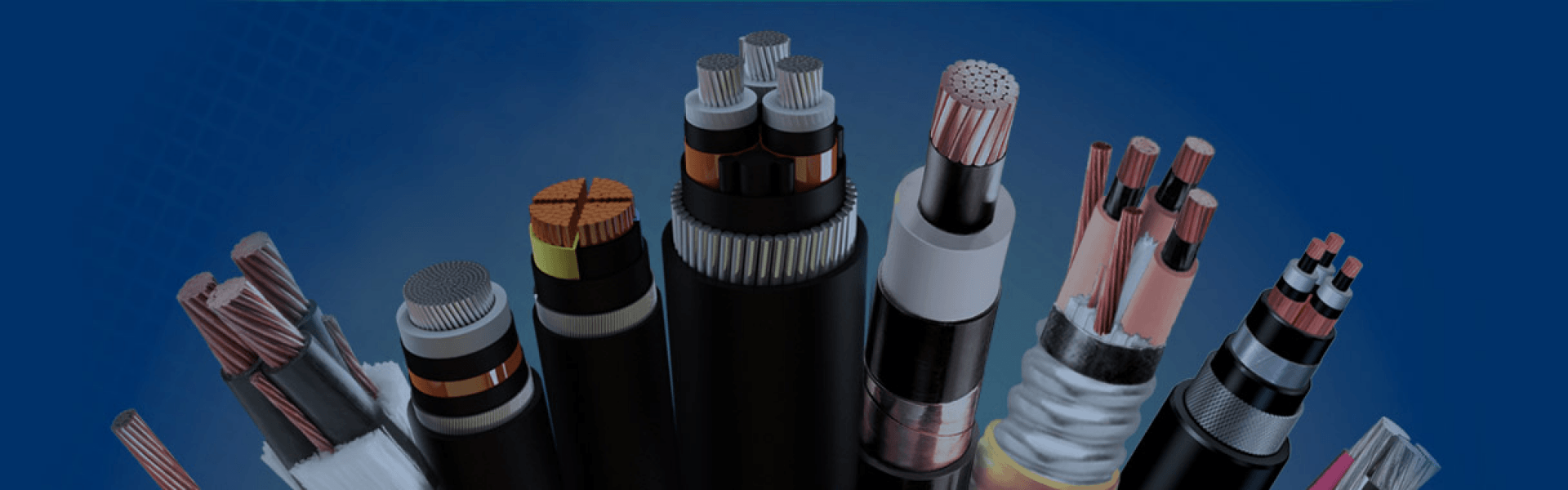
Mining, Drilling & Tunnelling cable
Mining, drilling and tunnelling cables are built for extreme conditions. They provide power, control and trailing functions in environments where standard industrial cables simply cannot deliver the required mechanical strength or service life.We supply a wide range of mining cables for underground mining, surface mining, tunnelling systems, drilling rigs, conveyors, coal cutters, pumps, and other mobile mining equipment. Our product range includes trailing mining cables, medium voltage mining cables, flexible rubber cables, mine power feeder cables, and submersible pump cables for low and medium voltage applications.
Mining cables are typically constructed with flexible copper conductors, EPR or rubber insulation, grounding conductors, screening layers, reinforcement structures, and abrasion-resistant outer sheaths such as CPE or TPU. Compared with standard industrial cables, mining cables are designed to withstand continuous flexing, dragging, torsion, impact, moisture, oil exposure, and abrasive operating conditions commonly found in underground and surface mining operations.
Mining environments place extremely high demands on cable performance. Equipment such as continuous miners, tunnel boring machines, drilling systems, crushers, and mobile conveyors require cables that can maintain stable electrical performance under constant movement and mechanical stress. Reliable mining cables help reduce downtime, improve operational safety, and support longer service life in demanding applications where cable failure can result in costly interruptions.
Our mining cables are widely used in underground mining, tunnelling, drilling, portable power distribution, and submersible pump systems, and are available in various constructions and voltage ratings to meet different installation and operating requirements. Products can be manufactured according to IEC, VDE, AS/NZS, ICEA, MSHA, and other international mining cable standards depending on project specifications.
Types of Mining, Drilling & Tunnelling Cable
| Cable Type | Typical Products | Main Features | Typical Applications |
| Trailing Mining Cable | Type 209, Type 241, Type 245, Type 450 | Flexible, drag-resistant, heavy-duty construction | Continuous miners, shuttle cars, mobile equipment |
| Flexible Rubber Mining Cable | (N)SSHOEU, Type W, H07RN-F | Flexible rubber insulation with oil and abrasion resistance | Portable power and underground mining systems |
| Medium Voltage Mining Cable | Type 441, Type 450, N3GHSSYCY | Medium voltage power transmission with enhanced protection | Mining machinery and power distribution |
| Coal Cutter & Reeling Cable | (N)TSCGEWOEU, NTSCGECWOEU | Anti-torsion design with excellent flexing performance | Coal cutters and reeling systems |
| Mine Power Feeder Cable | Type MP-GC, Type SHD-GC | Heavy-duty shielded power feeder construction | Mine substations and distribution systems |
| Flat Mining Cable | Type SHD Flat, Flat Submersible Cable | Flat flexible construction with anti-twist performance | Reeling systems and mobile mining equipment |
| Submersible Mining Cable | NTSCGERLWOEU, Round Submersible Cable | Water-resistant flexible construction | Submersible pumps and dewatering systems |
| Signal & Control Mining Cable | 2YSLGCGOEU, Type 2S | Screened design for stable signal transmission | Mining automation and control systems |
| Portable & Utility Mining Cable | NTSWOEU, H07RN8-F, Type 210 | Durable portable cable for flexible operation | Portable equipment and drilling systems |
Mining, Drilling & Tunnelling cable
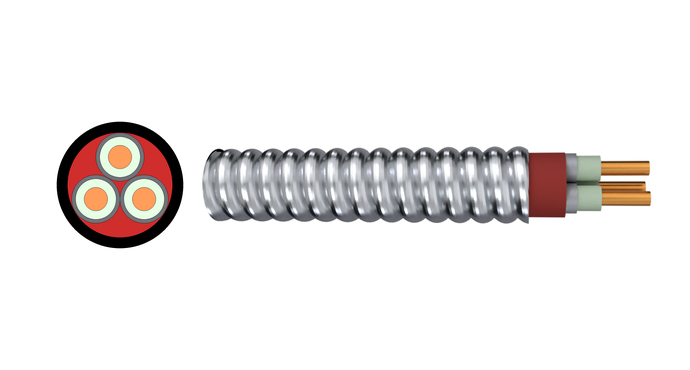
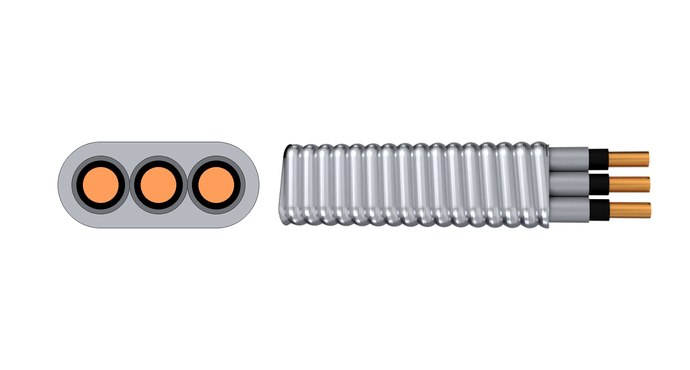
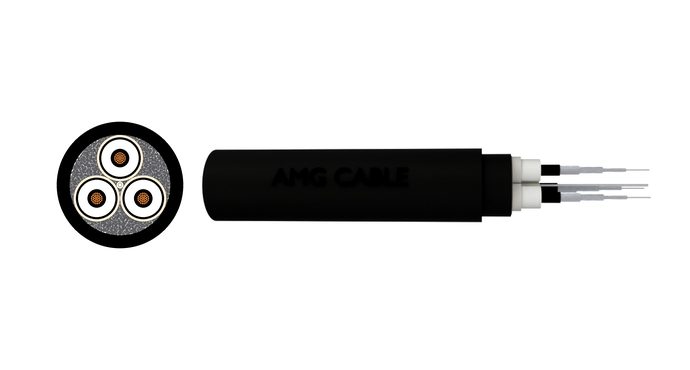
Get A Free Quote
Need Help?
Your Trusted Business Partner for Professional Cable Solutions
/ AMG FAQ /
Frequently Asked Questions
- Choose the correct voltage rating
Select the cable voltage according to the equipment and power system. Common mining cable ratings include 0.6/1kV, 3.3kV, 6.6kV, 11kV, and higher medium voltage applications. - Determine fixed or trailing installation
Fixed cables are used for permanent power distribution, while trailing and reeling cables are designed for mobile mining equipment exposed to constant bending, dragging, and flexing. - Consider torsion and mechanical stress
For coal cutters, TBM systems, reels, and mobile machinery, anti-torsion and high-flex constructions help improve cable service life under continuous movement. - Check oil, abrasion, and water resistance requirements
Mining cables may operate in oil, mud, wet underground areas, or submerged pump systems, requiring durable abrasion-resistant and water-resistant sheath materials. - Confirm underground and flame retardant requirements
Underground mining applications often require flame retardant, shielded, and safety-enhanced cable constructions for safer operation in confined environments. - Select the appropriate jacket material
- CPE — Good abrasion and oil resistance with cost-effective performance
- TPU — inherently high elastic recovery and cut/tear strength for continuous trailing duty
- PCP — Good flame retardant performance for underground mining
- Rubber — Excellent flexibility for portable and high-flex equipment
- Optional features for harsh mining environments
- Anti-torsion steel braid
- Reflective stripes for better underground visibility
- Water-blocking layers for wet installations
- Reinforced sheath protection for heavy-duty applications
SHD stands for Shielded Heavy Duty. It refers to a portable trailing cable where each phase conductor is individually wrapped in a conductive screen, and the cable typically includes both ground wires and a separate ground-check (pilot) conductor. The shielding controls electrical stress around each phase, while the pilot wire allows the protection relay to continuously monitor the earth path. SHD cables are designed for mobile equipment such as shuttle cars, continuous miners, and shearers where ground-fault monitoring is required for safety.
Type G-GC is a heavy-duty, unshielded portable rubber power cable rated up to 2kV (2000V). The abbreviation stands for Ground – Ground Check.
- The “G” (Ground): The cable contains more than one grounding conductor to safely ground the equipment frame.
- The “GC” (Ground Check): It includes a specialized, insulated yellow wire called a ground check conductor. This wire connects to an onboard monitoring system that continuously tests the continuity of the grounding circuit. If the cable is damaged or severed, the system instantly cuts off power to prevent lethal electric shocks.
Type W is a highly flexible, heavy-duty portable power cable rated up to 2kV, but unlike G-GC, it does not contain grounding conductors or ground-check monitoring wires (it features only power conductors, typically 1 to 4 cores).
It is primarily used for:
- Powering mobile and portable electrical equipment where ground-monitoring circuits are not required by local regulations.
- Heavy-duty tools, portable conveyors, loaders, and miners.
- Submersible mine pumps and temporary power supply lines.
- Battery chargers and motor leads in heavy industrial settings.
While all three feature a Ground Check (GC) wire for safety monitoring, they are designed for completely different electrical and mechanical duties:
- Type G-GC (Unshielded Portable Power | Up to 2kV):
- Design: Unshielded conductors, making it highly flexible and budget-friendly.
- Use Case: Light to medium-duty mobile equipment, portable drills, conveyors, and pumps where voltage does not exceed 2000V.
- Type SHD-GC (Shielded Heavy Duty | 2kV to 25kV+):
- Design: Individually shielded power conductors with an ultra-rugged, tear-resistant jacket.
- Use Case: High-voltage, extreme-abuse mobile applications. It is the industry standard for giant open-pit electric shovels, draglines, and underground Tunnel Boring Machines (TBMs).
- Type MP-GC (Mine Power Feeder | 5kV to 35kV):
- Design: Less flexible, often featuring a semi-rigid construction with copper tape shielding and sometimes a PVC jacket.
- Use Case: Fixed or semi-fixed installations. It is used to transmit bulk high-voltage power down horizontal mine shafts or vertical boreholes from surface substations to underground distribution boxes. It is not designed for continuous moving or dragging.
Cables suitable for trailing applications must possess extreme flexibility, high tensile strength, and excellent abrasion resistance to endure continuous dragging across jagged rocks.
The most suitable cables for trailing duties are:
- North American Standards: Type W, Type G, Type G-GC, and Type SHD-GC (especially with a TPU jacket for open-pit environments).
- Australian/International Standards: Type 240, Type 241, and Type 241 Superflex (specifically optimized for high-speed trailing on shuttle cars and continuous miners).
- European Standards: (N)SSHOEU and NTSCGECWOEU (which includes an anti-torsion braid to handle severe twisting during trailing).
Note: Type MP-GC (Mine Power Feeder) is strictly NOT suitable for trailing applications, as continuous dragging will crack its insulation and cause premature cable failure.

Have Questions?
Get in Touch with Us.
AMG Cable Group support 24*7 service and technical assistance.
Phone /Whatsapp / Wechat
+86 188 3803 6118Address
High-Tech Industrial Development Zone,Zhengzhou City,Henan Province,ChinaSend Us a Message
Please feel free to leave a message. We will reply in 24 hours.
/ AMG WIRE&CABLE /
Your trusted partner in high- performance wire and cables
Our team stands by 24/7, responding promptly to
inquiries and providing most quotations within 24 hours.