

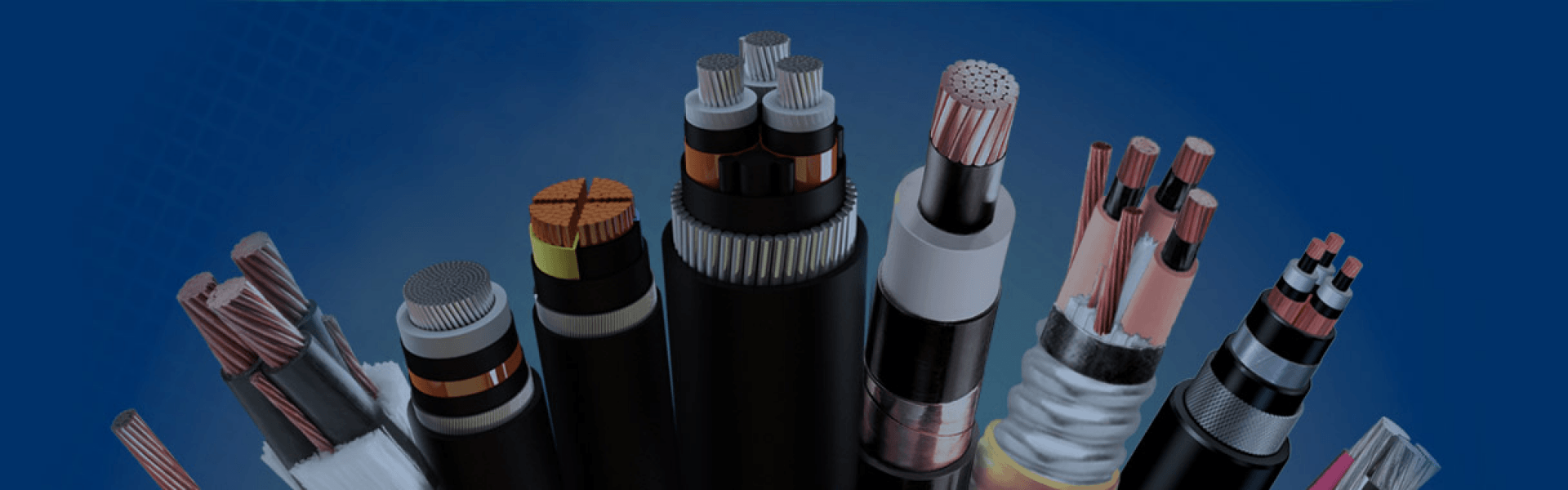
Oil&Gas cable
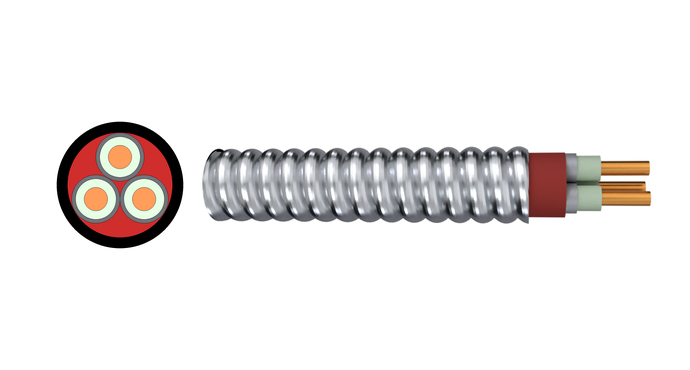
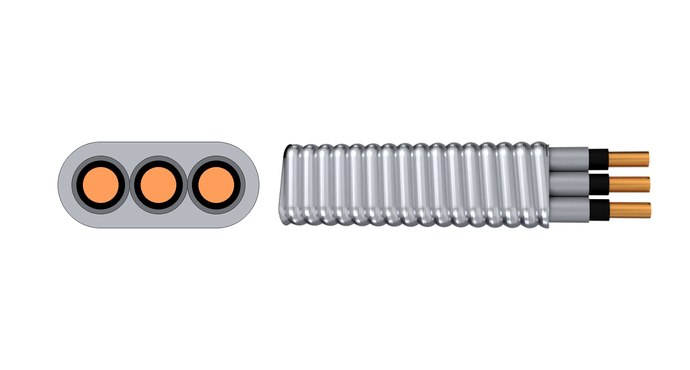
We supply Flat Submersible Oil Pump Cable and Round Submersible Oil Pump Cable for oil and gas applications that require dependable power transmission in tough operating conditions. These cables are built for electric submersible pump (ESP) systems and related oilfield installations where stable performance, long service life, and installation reliability matter. In this category, the cable is not just a connection part. It is a key component that helps keep production running safely and consistently in environments where failure is costly.
Oil & Gas cable construction is designed for strength and durability. A typical design uses stranded copper conductors for reliable current carrying, high-performance insulation materials such as EPR or XLPE, oil-resistant inner layers, and a tough outer jacket that can handle abrasion, moisture, heat, and chemical exposure. Depending on the application, the cable may also include shielding or armor for extra mechanical protection. Oil and gas cables are purpose-designed to endure long-term exposure to severe conditions that ordinary industrial cables can’t handle, including buried, submerged, and high-stress installations.
These cables are commonly used in oil wells, downhole pump systems, drilling sites, offshore platforms, and other locations where equipment is exposed to oil, gas, pressure, vibration, and corrosive fluids. Flat Submersible Oil Pump Cable is often chosen when space is limited inside the well and a flatter profile is easier to install, while Round Submersible Oil Pump Cable is widely used where a balanced structure and dependable mechanical performance are preferred. In both cases, the cable must keep working under continuous stress and in places that are difficult to access for maintenance.
Oil resistance, flame resistance, and chemical resistance are especially important in this industry because cables are often exposed to crude oil, drilling fluids, saltwater, hydrocarbons, and other aggressive substances that can quickly damage standard materials. Good resistance helps prevent insulation breakdown, signal loss, overheating, and premature failure. Flame retardant performance is also critical in hazardous or confined areas, where safety requirements are strict and downtime can affect the entire operation. To support reliable use, Oil & Gas cables are often produced and tested to relevant IEC, NEK 606, IEEE, UL, and project-specific standards, helping ensure they meet the technical demands of real industrial environments.
Flat vs. Round Submersible Pump Cable
| Selection Factors | Flat Submersible Oil Pump Cable | Round Submersible Oil Pump Cable |
| Physical Geometry | Symmetrical parallel configuration (low profile) | Symmetrical twisted configuration (cylindrical) |
| Space & Clearance | Excellent. Designed for tight clearances between production tubing and well casing. | Requires a larger well casing inner diameter (ID) to avoid binding. |
| Mechanical Durability | High tensile strength, but offers directional crushing resistance. | Superior. Provides uniform resistance to crushing and physical impact from all sides. |
| Gas & Pressure Sealing | Requires specialized flat wellhead packer seals to prevent gas migration. | Easier to seal reliably using standard, conventional round wellhead packers. |
| Primary Application | Slim-hole wells, deep wells with restricted casing, and around the pump intake. | Spacious well casings, high-voltage setups, and the upper sections of the well string. |
Oil & Gas Cable: Critical Performance Factors
- High-Temperature Thermal Stability: Reliable continuous operation in extreme downhole temperatures ranging from 90°C up to 232°C (450°F) without insulation degradation or melting.
- Chemical and Gas Immunity: Absolute barrier protection against crude oil, heavy brine, and highly corrosive sour gases like H2S and CO2 to prevent downhole fluid penetration and electrical short circuits.
- Rapid Gas Decompression (RGD) Resistance: Specialized elastomeric compounding that withstands sudden wellbore pressure drops, preventing internal gas expansion from causing structural blistering or ruptures.
- Mechanical and Crushing Strength: Heavy-duty interlocking steel or Monel armor engineered to support thousands of feet of vertical hanging weight while resisting severe pinching and abrasion against the well casing.
- High Dielectric Integrity: Maintenance of stable insulation resistance and uniform electrical balance under high operating voltages (3kV to 5kV) while subjected to crushing hydrostatic pressures.
- Compact, Low-Profile Design: Engineered with tight dimensional tolerances to fit the narrow annular clearance between production tubing and casing without binding during deployment.
Oil&Gas cable
Get A Free Quote
Need Help?
Your Trusted Business Partner for Professional Cable Solutions
/ AMG FAQ /
Frequently Asked Questions
The industry uses several cable types, each built for a specific job. The most common are submersible pump cables (flat and round) that power downhole ESP systems. Instrumentation cables carry precise signals from sensors and transmitters. Control cables manage valves, actuators, and switchgear. VFD cables connect variable-frequency drives to motors without dumping electrical noise into the system. Medium- and low-voltage power cables handle general power distribution. For offshore work, marine and umbilical cables meet NEK 606 standards and carry power, data, and hydraulic fluids in a single bundle. Fiber optic cables monitor temperature and strain along pipelines and in wellbores.
They cover the full lifecycle. Upstream, submersible pump cables run ESPs in production wells, and instrumentation cables feed back real-time downhole data. On offshore platforms, power, control, and marine cables tie everything from drilling drives to safety systems together. Midstream, cables run pump stations on pipelines and monitor integrity through fiber optics. Downstream in refineries and LNG plants, you will find power, instrumentation, and control cables linking process units, often with flame-retardant jackets for hazardous areas. Practically anywhere you have oil or gas moving through a piece of equipment, a cable is nearby.
In the B2B industrial market, there is no fixed retail price for oil and gas cables. These cables are typically manufactured to project-specific requirements and quoted based on the required cable length, usually per meter or per foot after technical review.
Prices vary drastically based on several technical cost-drivers:
- Conductor Material & Size: Large gauge copper (e.g., 2 AWG, 4 AWG) costs significantly more than smaller control wires. Tinned copper adds a premium over bare copper.
- Chemical Barriers: Cables requiring a continuous lead sheath to block acid gases (H₂S/CO₂) are much more expensive than standard rubber-jacketed cables.
- Armor Type: Interlocking Monel (a nickel-copper alloy) armor for highly corrosive wells costs substantially more than standard galvanized steel armor.
- Voltage Rating: A 5kV rated ESP cable requires thicker, higher-grade insulation than a 3kV cable, increasing the material cost.
Industry Reality: Standard industrial control wire might cost less than $1 per meter, while a high-temperature, lead-sheathed, Monel-armored ESP cable for severe downhole environments can range from $15 to $50+ per meter depending on the exact specifications and order volume.
To ensure cables do not fail downhole or on a rig, they undergo rigorous, standardized quality assurance testing:
- Oil Immersion Test (e.g., IEC 60811-404 / UL 1277): Cable jacket and insulation samples are completely submerged in specific industrial oils (like mineral oil or ASTM oil) at elevated temperatures (e.g., 100°C to 150°C) for a set period (usually 24 to 168 hours). Technicians then measure the retention of tensile strength and elongation. Premium cables must retain over 75–80% of their original properties.
- High-Voltage DC / Spark Testing: The entire length of the cable is run through a high-voltage tester to ensure there are zero pinholes, micro-cracks, or insulation voids that could cause a short circuit under field pressure.
- Insulation Resistance (IR) Testing: Measures the electrical resistance of the insulation layer under extreme thermal conditions to guarantee it can contain the current without leakage.
- Rapid Gas Decompression (RGD) Test: Cables are placed in a high-pressure gas chamber, and the pressure is suddenly released. The jacket is then cross-sectioned and inspected for internal blistering or structural splitting.

Have Questions?
Get in Touch with Us.
AMG Cable Group support 24*7 service and technical assistance.
Phone /Whatsapp / Wechat
+86 188 3803 6118Address
High-Tech Industrial Development Zone,Zhengzhou City,Henan Province,ChinaSend Us a Message
Please feel free to leave a message. We will reply in 24 hours.
/ AMG WIRE&CABLE /
Your trusted partner in high- performance wire and cables
Our team stands by 24/7, responding promptly to
inquiries and providing most quotations within 24 hours.