

Armoured Cable
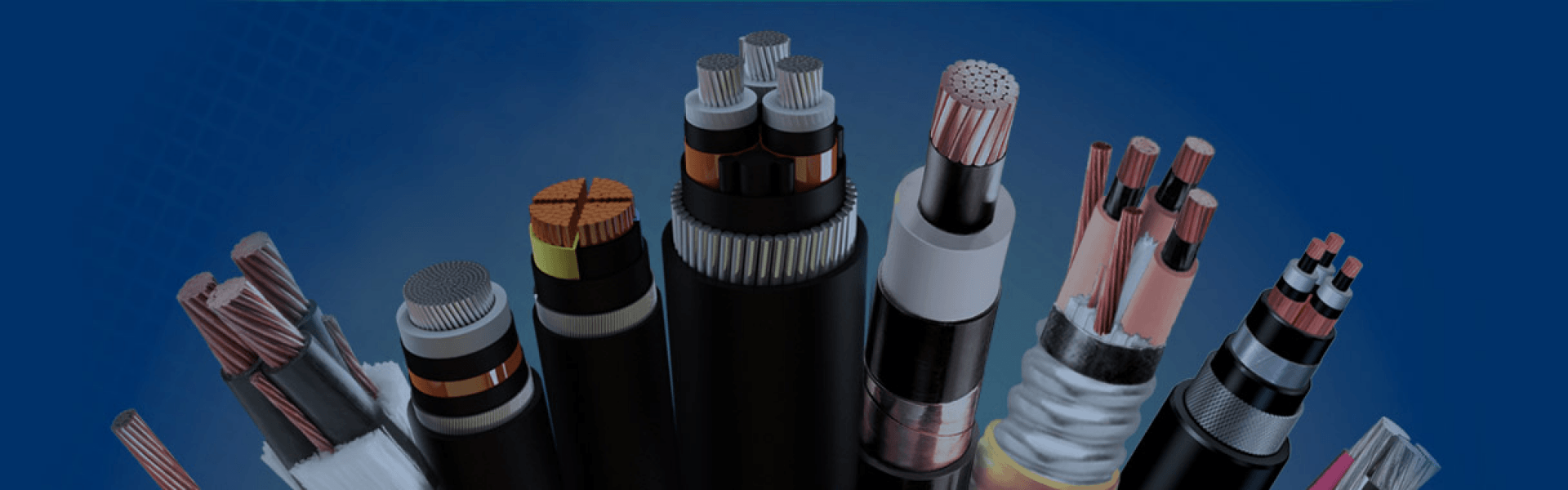
We supply a wide range of armoured cables for power distribution, industrial installations, utilities, and infrastructure projects where cables need both reliable electrical performance and strong mechanical protection. Our range includes low-voltage and medium-voltage armoured power cables, as well as armoured control and instrumentation cables for fixed installations in more demanding environments.
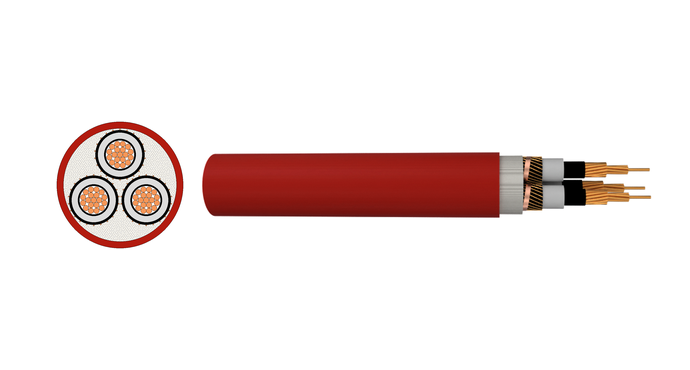
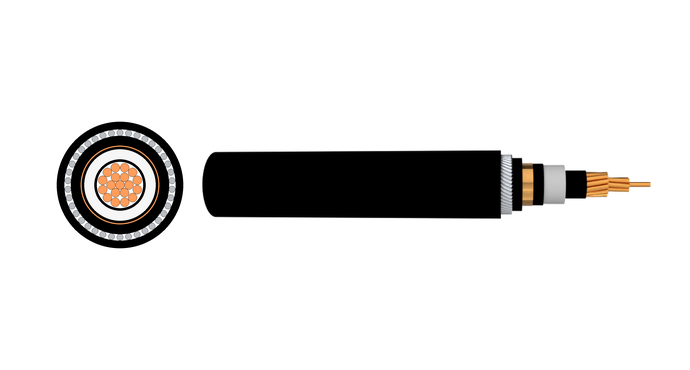
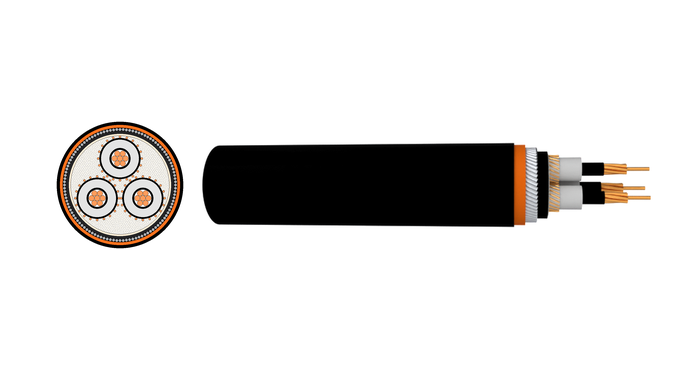
Armoured cable is a cable built with an additional metallic protective layer known as the armour. In a typical construction, the conductor is insulated, the insulated cores are laid up together, and an inner sheath or bedding is applied before the armour is added. An outer sheath is then extruded over the armour to protect the cable from moisture, abrasion, UV exposure, and general weathering. Depending on the design, the armour may be made from steel wire, steel tape, aluminium wire, or other metallic materials.
The purpose of the armour is to improve the cable’s resistance to impact, crushing, pulling force, and other forms of mechanical stress. This makes armoured cable a practical choice for direct burial, outdoor cable runs, industrial plants, substations, and other exposed or heavy-duty installations where unarmoured cable may not provide enough protection. Armoured cables are available in a wide range of constructions and voltage ratings, from 0.6/1kV low-voltage systems to medium-voltage networks up to 35kV, depending on the application and project requirements.
Armour Types Explained
| Armour Type | What It Is | Where It Sits | Why It Is Used |
| SWA (Steel Wire Armour) | Galvanised steel wire layer over the cable core. Common in LV and MV fixed power cables. | Over the inner sheath/bedding, under the outer sheath. | Highest mechanical strength—resists impact, crushing, pulling, and rodent damage. Ideal for direct burial, outdoor runs, and industrial installations. |
| STA (Steel Tape Armour) | Steel tape helically wrapped around the cable assembly. | Between the inner sheath and outer sheath. | Provides excellent crush resistance in a compact form. Commonly used in medium-voltage fixed installations. |
| AIA (Aluminium Interlocked Armour) | Interlocked aluminium tape armour. Common in North American cable constructions. | Around the core or inner jacket, with optional outer jacket. | Lighter than steel, good mechanical and corrosion protection. Suited for commercial, industrial, and utility applications. |
| Metal-Clad / Interlocked Metal Armour | Interlocked metal armour (aluminium or steel) over insulated conductors. | Formed around the conductor assembly; may include an outer jacket. | Provides mechanical protection with installation efficiency. Used in commercial buildings, exposed runs, and service wiring. |
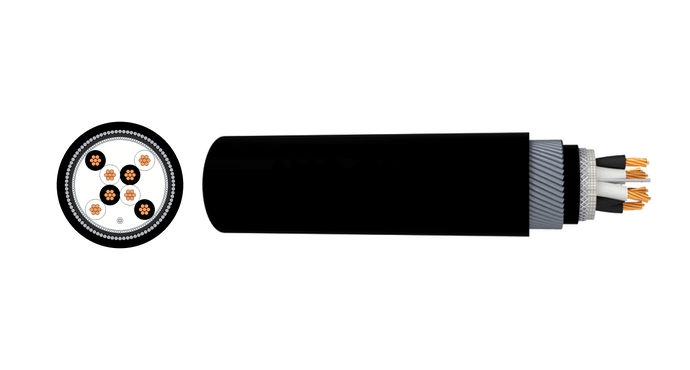
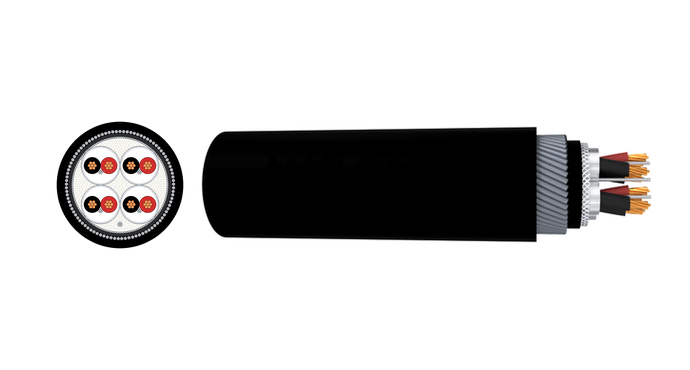
| Instrument Cable Armour | Steel wire or braided armour combined with overall or individual screening for signal circuits. | Screen around pairs/core; armour over inner sheath, under outer sheath. | Protects signal integrity while providing mechanical protection. Used in oil & gas, process plants, and industrial controls. |
| Control Cable Armour | Steel wire or tape armour applied over control cores. | Over laid-up cores and inner sheath, under outer sheath. | Protects control circuits from impact, abrasion, and harsh site conditions in substations, factories, and outdoor wiring. |
| Single-Core / Special MV Armour | Wire or tape armour adapted for single-core or project-specific MV cable designs. | Outside the screened core assembly, beneath the outer sheath. | Provides mechanical protection for medium-voltage circuits in underground, outdoor, or exposed industrial installations. |
Armoured Cable
Get A Free Quote
Need Help?
Your Trusted Business Partner for Professional Cable Solutions
/ AMG FAQ /
Frequently Asked Questions
The specific armoured cable you need depends entirely on your project location, installation environment, and electrical load.
By Region: If you are working on a North American project, you will likely need Type MC or ACWU90 (Aluminum Interlocked Armour) compliant with UL/CSA. For UK, European, or global projects following IEC standards, SWA (Steel Wire Armour) is the industry standard. For Australia or New Zealand, you will need AS/NZS 5000.1 Circular Orange SWA cables.
By Application: Use SWA for underground burial or vertical drops where high pulling tension is expected. Use STA (Steel Tape Armour) if the cable is exposed to surface crushing risks or traffic but minimal pulling tension. Always consult your electrical blueprint or a certified engineer to verify the exact phase and insulation requirements.
Installing armoured cable requires careful planning to maintain mechanical integrity and electrical safety:
- Route Planning: Ensure the path avoids sharp edges and allows you to maintain the manufacturer’s specified minimum bending radius (typically 6 to 12 times the cable’s overall diameter).
- Support and securing: For lines above ground, use heavy-duty, appropriately sized cable clamps or cable clips to secure the cables to walls, cable trays, or structural beams. The cable clamps or cable clips should be spaced at regular intervals.
- Protection: When laying the cable underground, dig a trench, clear it of sharp rocks, lay a protective bed of sand, place the cable, cover it with more sand, and place an electrical warning tape above it before backfilling.
- Safety Check: Always ensure the metal armour layer is properly bonded to the earth at the termination points to provide a safe fault path.
Armoured cable is engineered for heavy-duty power and signal transmission in environments prone to mechanical damage, moisture, or chemical exposure. Common applications include:
- Underground Distribution: Main power supplies running from substations into commercial, residential, or industrial buildings.
- Harsh Industrial Environments: Wiring inside manufacturing plants, chemical processing facilities, refineries, and deep mining operations.
- Outdoor Infrastructure: Powering street lighting, rail networks, external security systems, and renewable energy sites like solar farms.
- High-Risk Zones: Public buildings and transit systems where enhanced physical protection and low-smoke, zero-halogen (LSZH) safety are required.
No, in most standard installations, armoured cable does not require an external conduit. The built-in metal armor layer (whether it is metal wire, tape or interlocking aluminum) can act as a flexible, continuous conduit to safely absorb impacts, pressure, and rodent attacks. However, you should still use a protective pipe or conduit in exceptional circumstances, such as when routing the cable directly underneath a high-traffic roadway or passing through concrete foundations where future replacement might be necessary.
Termination must be done using a matching industrial cable gland (such as a BW gland for dry indoor use or a CW gland for weatherproof outdoor applications) to guarantee mechanical security and electrical grounding:
- Strip back the outer sheath to expose the required length of metal armour.
- Cut back the individual armor wires evenly using a specialized cutting tool or hacksaw.
- Pass the cable through the cable gland assembly, ensuring the gland’s internal cone slides underneath the armor layer while the outer ring clamps firmly over the outside of the wires.
- Tighten the gland completely to lock the armor in place. This creates a secure, metal-to-metal connection that bonds the armor to the earth terminal of your enclosure.
- Strip the inner bedding and conductor insulation, then crimp or screw the wires into your terminal blocks.
The correct cable size depends on three main factors:
- Current load – how much current the devices will draw
- Run length – longer distances increase voltage drop and may require a larger cable
- Acceptable voltage drop – typically limited to 3-5%, depending on the application.
Here’s a general size guide:
| Cable Size | Common Uses |
| 1.5 – 2.5 mm² | Lighting circuits |
| 4 – 6 mm² | Sockets, garden power |
| 10 – 16 mm² | Ovens, industrial equipment |
| 25 mm²+ | Mains distribution, large machinery |
For longer lines, voltage drop should be considered and the dimensions increased accordingly. Using a professional cable calculator can help determine the exact size needed.
The cost of armoured cable is highly dynamic and depends on three main variables:
- Global Commodity Prices: Because copper and aluminum are the primary conductors, global market fluctuations on exchanges like the LME directly impact daily manufacturing costs.
- Cable Specification: Multi-core cables, larger cross-sections (mm² or AWG), medium-voltage ratings (6kV–35kV), and specialized LSZH (Low Smoke Zero Halogen) outer jackets cost more than standard low-voltage PVC cables.
- Order Volume: Bulk procurement for major infrastructure projects qualifies for significant factory-direct wholesale discounts.
- Tip for Buyers: Contact our sales team with your exact project bill of materials (BOM) to receive an accurate, up-to-date commercial quote.
To connect armoured cable safely to a junction box or distribution board, follow these practical steps:
- Ensure the junction box is constructed of heavy-duty material (metal enclosures are ideal for grounding; robust IP-rated plastic boxes require an internal earth continuity plate).
- Punch out or drill a hole matching the thread size of your industrial cable gland.
- Terminate the cable using the correct gland, ensuring the armor wires are clamped securely within the gland body.
- Insert the gland thread through the box entry hole and lock it tightly from the inside using a brass locknut and an earth tag (fly-lead).
- Connect the earth tag directly to the main grounding busbar of the system, then wire the phase and neutral conductors into the internal terminal block.
Yes, direct burial is one of the primary design purposes of armoured cable. Heavy-duty cables like standard multi-core SWA (Steel Wire Armoured) or North American ACWU90 lines feature specialized, rugged outer jackets (PVC or polyethylene) that resist moisture, soil chemicals, rot, and fungi. The internal metal armor protects the electrical cores from soil shifting, stone abrasion, and accidental impacts from hand tools during future landscaping or maintenance.
The required burial depth varies according to national wiring regulations, but standard engineering practices generally mandate:
- Walkways and Gardens: A minimum depth of 600 mm (24 inches) to keep the cable well clear of common gardening tools, aerators, and shallow excavation work.
- Roadways and Driveways: A minimum depth of 750 mm to 900 mm (30 to 36 inches) to protect the cable from the continuous structural stress and vibrations caused by heavy vehicle traffic.
- Installation Rule: Always place a visible, brightly colored plastic warning tape roughly 150 mm to 300 mm above the cable layer during the backfilling process to alert future excavators before they reach the live line.
The cable itself is highly water-resistant and suitable for continuously damp soils, but it is not inherently waterproof at its connection points. The extruded outer plastic jacket prevents water from penetrating the internal cores along the length of the run. However, the ends of the cable—where it is cut open for termination—are completely vulnerable. To ensure a waterproof installation, you must use high-quality, outdoor-rated weatherproof cable glands (such as CW or E1W glands) combined with IP66 or IP68 rated junction boxes, seals, and shrouds to prevent moisture tracking into the system.

Have Questions?
Get in Touch with Us.
AMG Cable Group support 24*7 service and technical assistance.
Phone /Whatsapp / Wechat
+86 188 3803 6118Address
High-Tech Industrial Development Zone,Zhengzhou City,Henan Province,ChinaSend Us a Message
Please feel free to leave a message. We will reply in 24 hours.
/ AMG WIRE&CABLE /
Your trusted partner in high- performance wire and cables
Our team stands by 24/7, responding promptly to
inquiries and providing most quotations within 24 hours.