

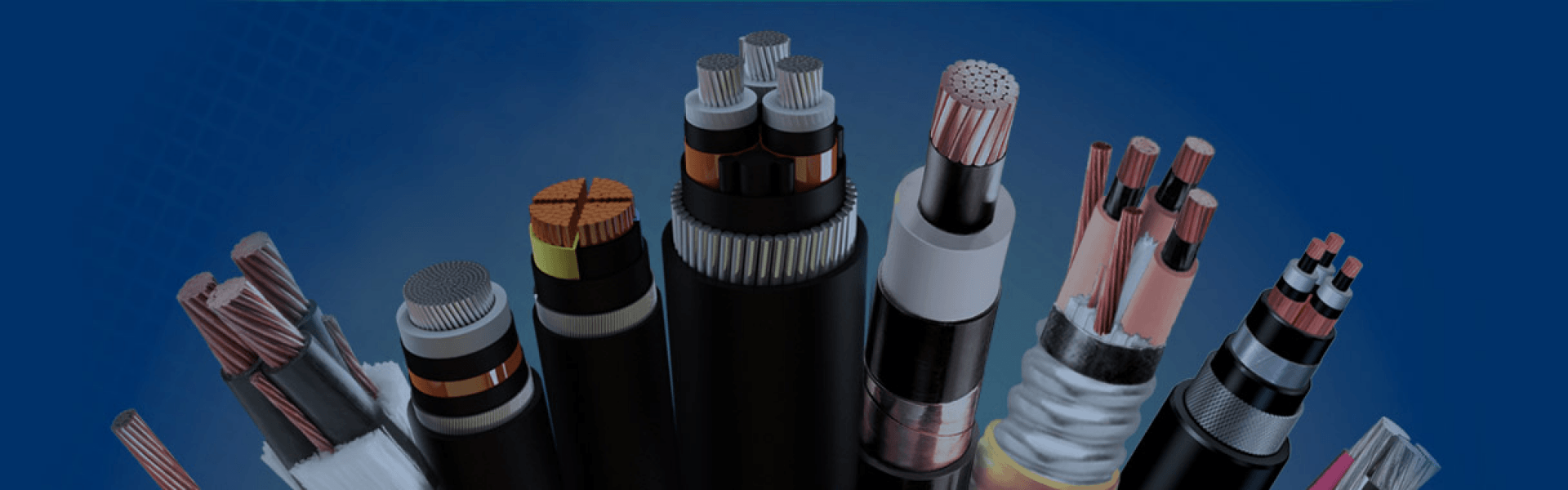
IEC 60227 Cable
IEC 60227 refers to a series of low-voltage PVC insulated wires and cables manufactured according to the requirements of the International Electrotechnical Commission international standard system. These cables are widely used in residential wiring, commercial buildings, electrical panels, household appliances, and industrial control systems where stable electrical performance and long-term installation reliability are required. Because IEC 60227 is recognized in many global markets, cables produced to this standard are commonly used in export projects and international electrical installations.
IEC 60227 specifies voltage ratings with U₀/U, where U₀ measures conductor‑to‑earth and U measures conductor‑to‑conductor levels.IEC 60227 mainly covers 300/300V, 300/500V, and 450/750V cable systems. Higher voltage cables such as 0.6/1kV power cables are generally covered by IEC 60502 standards.
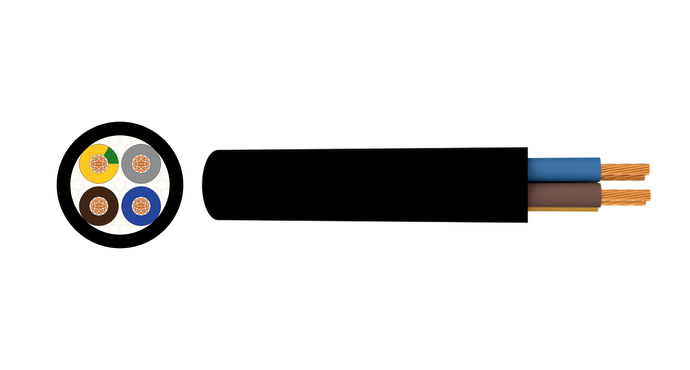
IEC 60227 cables are commonly used for both fixed installation and flexible connection applications. Fixed installation cables are designed for permanent wiring inside buildings, conduits, switchboards, distribution systems, and industrial facilities where the cable remains in place after installation. Flexible cable types are used in movable equipment, appliances, extension cords, control systems, and machinery requiring repeated bending or easier routing. This wide application range makes IEC 60227 one of the most commonly specified standards for low-voltage electrical wiring.
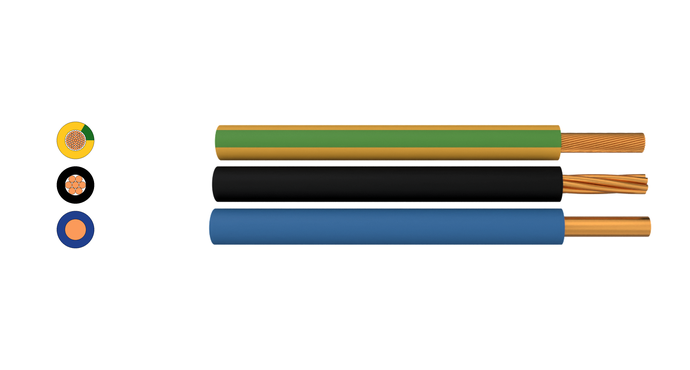
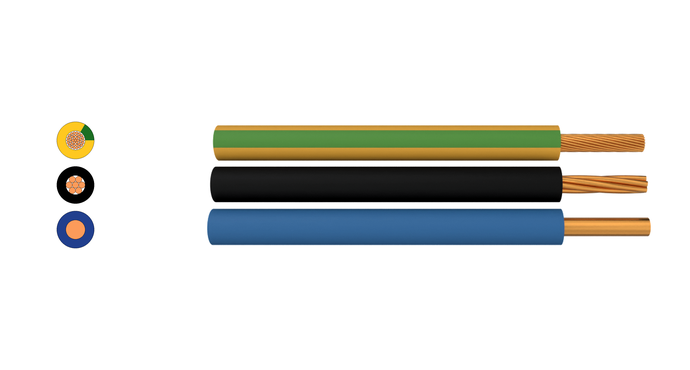
TTo comply with IEC 60227, cables must pass important electrical, mechanical, thermal, and flame resistance tests.he standard also defines practical identification requirements to improve installation safety and reduce wiring errors. Green/yellow conductors are reserved exclusively for protective earth applications, while light blue is commonly used for neutral conductors. Cable surfaces are typically printed with permanent markings including manufacturer identification, cable type designation, and size information, helping installers and maintenance personnel identify products quickly during installation and servicing.
Certified to global benchmarks, IEC 60227 cables deliver exceptional project value through their core features: reliable PVC insulation, stable electrical parameters, customizable flame retardant choices, and an economical price point that provides a supple build and easy routing for stationary or moving applications.
| Part | Title | Scope in brief | Key IEC designations | Voltage |
| 60227-1 | General requirements | Common rules for materials, conductor resistance, marking, and mandatory electrical/mechanical thresholds. | All types | All classes |
| 60227-2 | Test methods | Voltage withstand, insulation resistance, mechanical ageing, thermal stability, and flame tests. | – | – |
| 60227-3 | Nonsheathed singlecores for fixed wiring | Solid or stranded plain/tinned copper with a single PVC insulation layer; 90 °C variants available. | 01 (BV), 02 (RV) | 450/750 V |
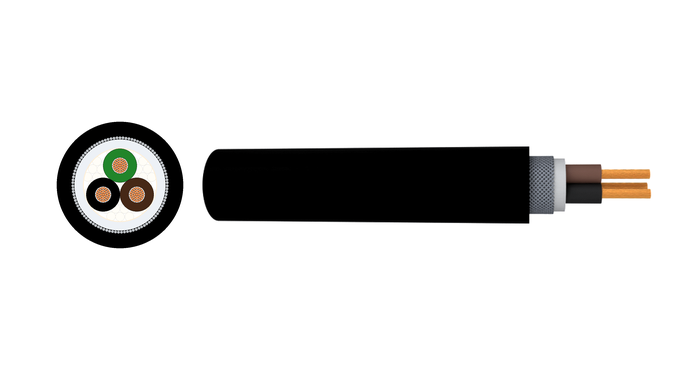
| 60227-4 | Sheathed cables for fixed wiring | Multicore with PVC insulation plus an outer PVC sheath for tougher mechanical protection. | 10 (BVV) and similar | 300/500 V, 450/750 V |
| 60227-5 | Flexible cables (cords) | Finestranded flexible copper with soft PVC insulation and sheath for repeated movement. | 52 (light), 53 (ordinary), H05VVF, H05VVH2F | 300/300 V, 300/500 V |
| 60227-6 | Lift and flexible connection cables | Suspended, freely moving cables with high flexibility and tensile strength; flat or round. | 71 (flat), 72 (round) | 300/500 V, 450/750 V |
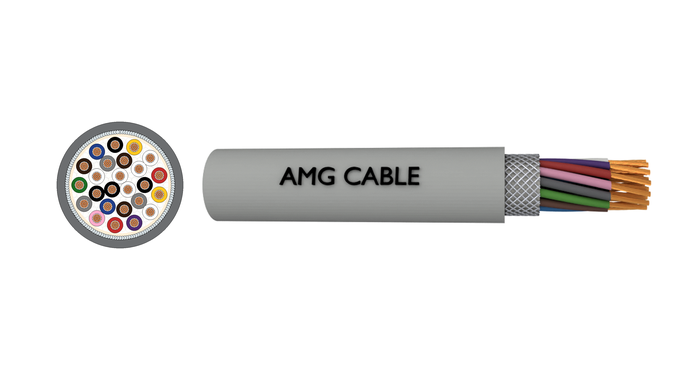
| 60227-7 | Screened and unscreened flexible control cables | 90 °C rated control and signal cables, with or without copper braid screen. | 74 (unscreened), 75 (screened) | 300/500 V |
| Technical Component | Core IEC 60227 Requirement | Compliance Boundary | Practical Sourcing Value |
| Conductor Material | Must use high-purity plain annealed copper or tinned copper matching IEC 60228. | Lower-grade alloys or alternative metals are strictly rejected. | Ensures maximum conductivity and eliminates rapid oxidation at terminals. |
| Flexibility Class | Categorized by application: Class 1 (Solid), Class 2 (Stranded), and Class 5 & 6 (Flexible). | Class 1 & 2: Fixed installation only. Class 5 & 6: Mobile appliances or machinery. | Class 1 & 2 withstand heavy pulling forces; Class 5 & 6 endure continuous bending without cracking. |
| Electrical Resistance | Enforces absolute maximum limits for DC conductor resistance measured at 20°C. | Strict maximum limits (Ohm/km) specified for each cross-sectional area (such as 1.5 mm² or 2.5 mm²). | Prevents manufacturers from under-sizing copper, eliminating over-heating and voltage drops. |
| Insulation Thickness | Sets an absolute “thickness red line” for inner insulation and outer sheathing. | Minimum thickness at any single point must satisfy: t = 0.9 x t(nom) – 0.1mm (where t(nom) is the nominal thickness). | Prevents dangerous voltage breakthroughs or short-circuits caused by uneven extrusion or thin spots. |
| PVC Compound Grade | Classifies PVC compounds by operating temperature and mechanical exposure. | Standard (70°C): PVC/C (Insulation) / PVC/ST4 (Sheath). Heat-Resistant (90°C): PVC/E. | Ensures the cable jacket matches ambient conditions—preventing softening in summer or cracking in high-heat zones. |
IEC 60227 Cable
Get A Free Quote
Need Help?
Your Trusted Business Partner for Professional Cable Solutions
/ AMG FAQ /
Frequently Asked Questions
IEC 60227 cables are used for low‑voltage power supply, control, and internal wiring in domestic, commercial, and light industrial environments. The standard covers both fixed installation (building wiring in conduit or trunking) and flexible connections (appliance cords, power tools, machine interlinks). Common use cases span from basic lighting loops and control switchgear to household laundry units, vertical elevator runs, and automated CNC tooling. In short, they are ideal for any application demanding reliable PVC insulation within the 450/750V limit.
Start with three practical checks.
- Voltage – match the cable’s U₀/U class (300/300 V, 300/500 V, or 450/750 V) to your system.
- Installation – pick a nonsheathed or sheathed cable such as 60227 IEC 01 or 10. When the cable has to move, go with a flexible cord like 60227 IEC 53.
- Operating conditions – check the temperature rating (70 °C or 90 °C) and the conductor cross‑section (mm²) you need for the load. If the environment is harsh, opt for a sheathed construction; if signal interference is a concern, pick a screened control cable under IEC 60227‑
An IEC 60227 cable’s service life is not fixed but depends on its operating conditions. However, when installed correctly and used within its rated voltage and temperature limits, a high-quality cable typically has an expected service life of 25 years or more. The actual lifespan is influenced by factors such as operating temperature, mechanical stress, and environmental exposure. The standard’s rigorous accelerated aging tests are designed to verify the insulation’s durability over decades of service.
60227 IEC 53 is the specific designation for an ordinary-duty PVC-sheathed flexible cable. It is one of the most common types of flexible cords in the standard. The cable consists of fine-stranded copper conductors with PVC insulation and an outer PVC sheath. It is rated for a voltage of 300/500 V and a maximum continuous operating temperature of 70 °C. Its typical applications include power supply cords for household appliances (like washing machines and refrigerators), power tools, and other equipment where flexibility is needed.
60227 IEC 06 (RV) is a single‑core, non‑sheathed flexible wire rated 300/500 V and 70 °C, designed for internal wiring in appliances and control panels. It is produced in a few standard metric cross‑sections. The most common sizes and their approximate AWG equivalents are:
- 5 mm² → ~20 AWG
- 75 mm² → ~18 AWG
- 0 mm² → ~17 AWG
If your equipment documentation specifies one of these AWG sizes, the corresponding 60227 IEC 06 wire will match the electrical and mechanical requirements.
Quality under IEC 60227 is built on four hard requirements, each verified through defined tests.
- Construction and dimensions – Conductor class, insulation and sheath materials, minimum thicknesses, and legible, durable marking are all specified. No dangerously thin spots or incorrect colours are permitted.
- Electrical performance – A maximum DC conductor resistance at 20 °C is set for every cross‑ Minimum insulation resistance (e.g. 0.011 MΩ·km for a 1.5 mm² conductor at 70 °C) limits leakage current. A 2000 V AC voltage withstand test proves the insulation won’t break down under stress.
- Mechanical and environmental endurance – Flexing tests (over 10 000 cycles for some flat cables), cold bend and impact at –15 °C, hot pressure, and accelerated ageing (135 °C for 168 hours, with elongation retention ≥70 %) confirm the cable stays tough and flexible over its service life.
- Safety – Every cable must pass a single‑cable vertical flame test (IEC 60332‑1‑2) and self‑ Screened control cables must also keep transfer impedance ≤250 Ω/km to protect signal integrity.
In short, a genuine IEC 60227 cable has already proven its electrical safety, mechanical strength, and flame retardance in the test lab – not just on paper.

Have Questions?
Get in Touch with Us.
AMG Cable Group support 24*7 service and technical assistance.
Phone /Whatsapp / Wechat
+86 188 3803 6118Address
High-Tech Industrial Development Zone,Zhengzhou City,Henan Province,ChinaSend Us a Message
Please feel free to leave a message. We will reply in 24 hours.
/ AMG WIRE&CABLE /
Your trusted partner in high- performance wire and cables
Our team stands by 24/7, responding promptly to
inquiries and providing most quotations within 24 hours.