

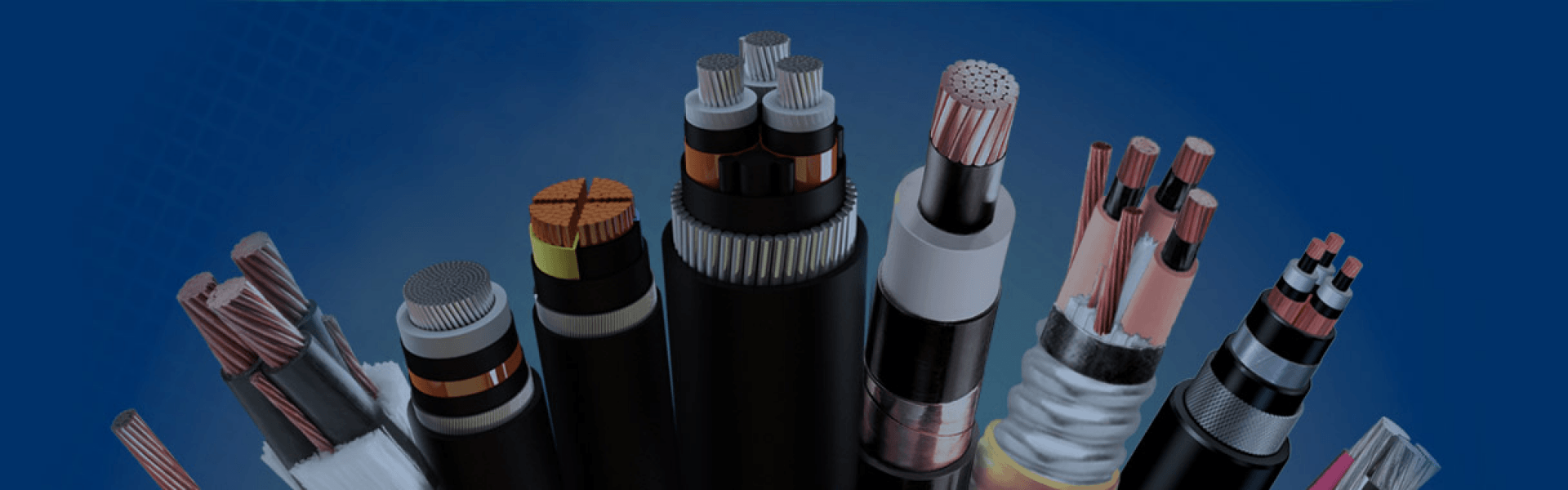
IEC 60502-1 Cable
IEC 60502-1 is an internationally recognized standard for low voltage power cables used in fixed installations such as industrial plants, commercial buildings, utilities, infrastructure, and renewable energy projects. It covers extruded insulated power cables with rated voltages of 1kV (Um=1.2kV) and 3kV (Um=3.6kV), while higher voltage cables are covered under IEC 60502-2. The standard mainly applies to XLPE, PVC, and EPR insulated cables, making it one of the most widely used specifications for modern power distribution systems.
IEC 60502-1 defines key technical requirements for cable construction, insulation, sheath materials, conductor design, dimensions, electrical performance, and marking. It also establishes a strict testing system including type tests, routine tests, and sample tests to verify insulation strength, mechanical durability, flame retardant performance, and long-term reliability.
The latest IEC 60502-1:2021 edition also places stronger emphasis on fire safety and environmental performance. For flame retardant applications, cables may be tested according to IEC 60332 standards to evaluate flame propagation resistance. For low smoke and halogen-free applications, IEC 60754 testing helps ensure that cables release limited corrosive gases and lower smoke density during fire conditions, improving safety for people, equipment, and emergency evacuation systems in public buildings, tunnels, transportation projects, and industrial facilities.
In addition to conventional AC power systems, the latest version of the standard also recognizes certain DC applications. Subject to manufacturer declaration and system conditions, some IEC 60502-1 cables may also be suitable for DC distribution systems such as 750V DC and 1500V DC installations commonly used in renewable energy and transportation projects.
It is also important to understand the scope limitations of IEC 60502-1. The standard is intended for general low voltage power distribution applications and does not apply to specialized cable systems such as overhead conductors, mining cables, submarine cables, shipboard cables, or certain nuclear power plant installations. Within its intended operating range, however, IEC 60502-1 serves as a comprehensive and reliable technical reference for manufacturers, engineers, project contractors, and end users worldwide, providing a consistent basis for cable quality, safety, and performance.
| Cable Layer | IEC 60502-1 Standard Requirements | Material & Key Points |
| Conductor | Complies with IEC 60228. Defines material, class, and max DC resistance at 20°C to prevent overheating. | Class 1 (Solid) or Class 2 (Stranded). Plain/tinned Copper or Aluminum. |
| Insulation | Specifies nominal/minimum thickness based on conductor size to prevent electrical breakdown. | XLPE: 90°C (Mainstream, high performance). EPR: 90°C (Flexible). PVC: 70°C (Cost-effective). |
| Screening | Not required for 0.6/1 kV. Only for 3 kV cables to uniform the electric field and stop partial discharge. | Semi-conductive layers + Copper tape/wire screen. |
| Inner Bedding | Mandates non-hygroscopic fillers and binders for multi-core cables to ensure a round shape. | Extruded inner covering or lapped tapes. |
| Armor (Optional) | Regulates dimensions and coverage for mechanical protection against impact, tension, or rodents. | STA: Steel Tape (Direct burial). SWA: Steel Wire (High pulling tension). AWA: Aluminum Wire (Single-core AC lines). |
| Outer Sheath | Sets thickness and aging test standards to protect the cable from environmental wear. | ST2 PVC: Standard flame-retardant. ST8 LSZH: Low smoke zero halogen for safety. |
| Selection Category | Available Options & Technical Limits | Practical Engineering Application |
| Voltage Rating | 0.6/1 kV: Standard low-voltage systems. 1.8/3 kV: Heavy-duty low-voltage applications. | Use 0.6/1 kV for general industrial machinery, commercial building grids, and civil distribution lines. Choose 1.8/3 kV for specialized industrial networks prone to sudden voltage surges. |
| Insulation Type | XLPE (90°C): High thermal load capacity. EPR (90°C): Superior flexibility. PVC (70°C): Standard indoor/conduit grade. | Specify XLPE for high-current environments and outdoor burial due to its durability. Choose EPR for flexible infrastructure or maritime environments. Reserve PVC for basic indoor layouts with minimal load demands. |
| Armoring Type | Unarmored: Zero mechanical layers. STA (Steel Tape): Crushing protection. SWA (Steel Wire): Pulling tension. AWA (Aluminum Wire): Single-core AC protection. | Use Unarmored inside concrete conduits or indoor cable trays. Choose STA for underground direct burial with heavy surface compression risks. Specify SWA for vertical shafts or high-tension pulling. Use AWA exclusively for single-core AC lines to eliminate magnetic heating. |
| Outer Sheath | ST2 PVC: Flame-retardant and oil-resistant. ST8 LSZH: Low smoke zero halogen. PE: Moisture and UV resistant. | Standard PVC works for general indoor/outdoor routing. Specify LSZH for high-occupancy public areas like subways, hospitals, or airports to minimize toxic fumes during fire incidents. Use PE for extreme damp environments or direct water exposure. |
| Conductor Class | Class 1: Solid conductor. Class 2: Stranded conductor (Standard configuration). | Class 1 is best suited for small cross-sectional areas (under 6 mm²) in fixed, completely static setups. Class 2 stranded copper or aluminum is recommended for all standard power loops to ensure optimal bending radii during installation. |
IEC 60502-1 Cable
Get A Free Quote
Need Help?
Your Trusted Business Partner for Professional Cable Solutions
/ AMG FAQ /
Frequently Asked Questions
The 2021 edition brought several important changes. It was harmonized with the EU Construction Products Regulation (CPR), enabling CPR fire performance classification. Technical updates include a simplified procedure for lead sheath and oversheath thicknesses, revised routine voltage and oversheath tests, and a new post-installation test at 0.1 Hz. Manufacturing tolerances for bending test mandrels were corrected, and requirements for semiconducting layers on non-metallic sheaths were revised. The edition also explicitly addresses DC applications: a 1 kV AC cable can be used in DC systems up to 750 V line-to-earth or 1500 V line-to-line, subject to manufacturer declaration — an important update for solar and battery storage installations.
IEC 60502-1 applies to power cables with extruded solid insulation, designed for fixed installations at rated AC voltages of 1 kV (Um = 1.2 kV) and 3 kV (Um = 3.6 kV). It covers cables insulated with XLPE, EPR, or PVC, commonly used in distribution networks, industrial plants, and commercial buildings. The standard does not cover overhead lines, mining cables, nuclear containment areas, or submarine and shipboard cables. For voltages from 6 kV to 30 kV, the requirements are given in IEC 60502-2.
The standard does not give a single number. The minimum bending radius during installation is expressed as a multiple of the cable’s overall diameter (D) and depends on construction. Typical values are 20D for unarmoured single-core cables, 15D for unarmoured multicore, 15D for armoured single-core, and 12D for armoured multicore. For fixed installations, a common rule of thumb is 10D for most types. Always check the specific datasheet, as the exact requirement can vary with cable design.
IEC 60502-1 gives manufacturers, specifiers, and installers a single, globally accepted technical reference. It defines the essentials that matter day to day — insulation thickness, conductor resistance, test voltages, and fire performance — so a cable specified to this standard meets the same safety and performance benchmarks regardless of where it was produced. This removes guesswork from cross-border procurement and gives you confidence that the cable will handle its rated load, survive a short circuit, and behave predictably during a fire. Because the standard is maintained and periodically updated, it also keeps your specification aligned with advances in materials and testing practice.
Here are the key differences between PVC and XLPE cables under IEC 60502-1:
- Material Type: PVC is a thermoplastic that softens when heated; XLPE is a thermoset with a cross-linked structure, giving it superior heat resistance.
- Operating Temperature: PVC cables have a maximum continuous conductor temperature of 70°C, while XLPE cables can operate at 90° Their short-circuit ratings are 160°C and 250°C respectively.
- Current-Carrying Capacity: Due to the higher operating temperature, XLPE cables can carry a greater current for the same conductor size.
- Insulation Thickness: XLPE has better dielectric strength, so it requires thinner insulation than PVC for the same rated voltage.
- Installation Conditions: XLPE cables can be installed in colder environments (down to -15°C) compared to PVC cables (down to -5°C).
- Service Life: XLPE cables typically last around 40 years, significantly longer than PVC cables (~30 years) due to better thermal aging resistance.
- Cost: PVC cables are more economical initially; XLPE cables have a higher upfront cost but often provide better lifecycle value.

Have Questions?
Get in Touch with Us.
AMG Cable Group support 24*7 service and technical assistance.
Phone /Whatsapp / Wechat
+86 188 3803 6118Address
High-Tech Industrial Development Zone,Zhengzhou City,Henan Province,ChinaSend Us a Message
Please feel free to leave a message. We will reply in 24 hours.
/ AMG WIRE&CABLE /
Your trusted partner in high- performance wire and cables
Our team stands by 24/7, responding promptly to
inquiries and providing most quotations within 24 hours.