

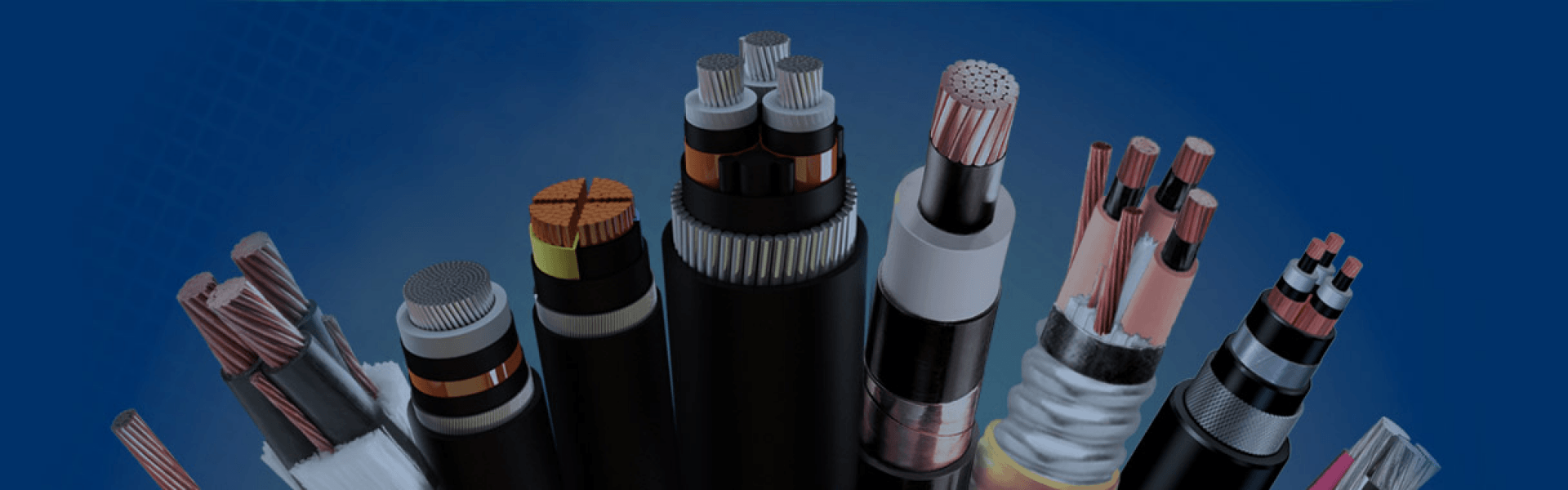
IEC 60228 Cable
Every power cable depends on its conductor, and IEC 60228 is the international standard that defines how that conductor must be made and how it must perform. Published by the International Electrotechnical Commission and adopted worldwide—often written as BS EN 60228 or VDE 0295—the current version, IEC 60228:2023, applies to nominal cross‑sections from 0.5 mm² to 3 500 mm², for both copper and aluminium conductors in insulated cables.
The strength of this standard lies in its focus. It deals strictly with the bare conductor, leaving insulation and sheathing to other specifications, which lets it go deep into the electrical details that matter. For each material and cross‑section, IEC 60228 sets a maximum DC resistance at 20 °C — a single, measurable value that becomes the universal benchmark for production testing and quality control. Once that resistance is met, the conductor can be trusted within the thermal and electrical limits of the overall cable design.
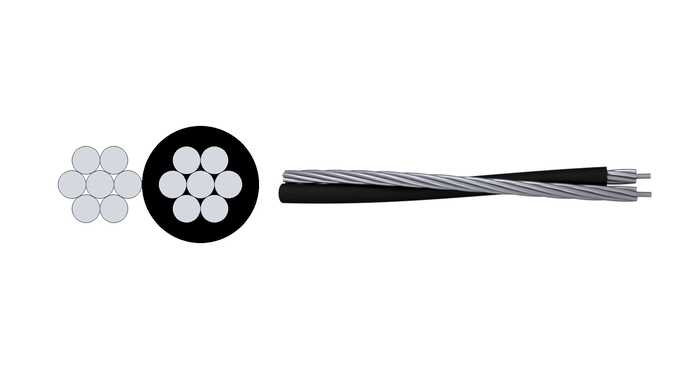
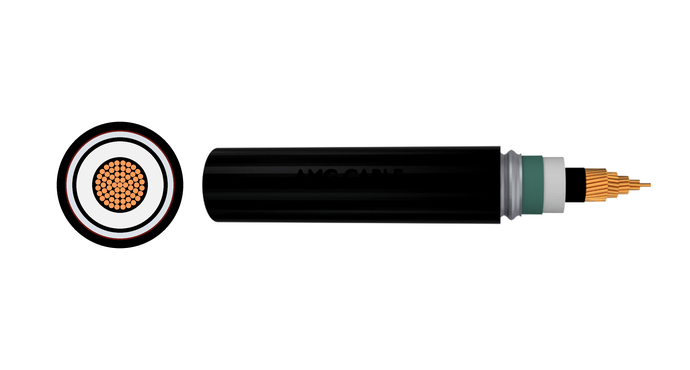
IEC 60228 groups conductors into four classes: Class 1 for solid conductors, Class 2 for stranded conductors in fixed power cables, and Classes 5 and 6 for flexible copper conductors suited to movement and tight bending. Aluminium is standardised only in Class 1 and Class 2, while the flexible classes remain exclusively copper. The standard also defines minimum constructional requirements — number of wires, maximum wire diameter, and permitted shapes — so that a “Class 2 stranded copper conductor” delivers consistent performance regardless of the manufacturer, removing uncertainty from specification and procurement.
| Class | Construction | Material | Characteristics | Main Applications |
| Class 1 | Solid single wire | Copper or aluminium | Rigid, simple structure, smallest bending radius not suitable for movement | Smallsize fixed wiring, building wires, panel connections |
| Class 2 | Stranded (circular, compacted or sectorshaped) | Copper or aluminium | Semirigid, good conductivity, standard for stationary installation | All stationary power cables — LV, MV, HV, armoured or unarmoured |
| Class 5 | Flexible — multiple fine copper wires | Copper only | Soft, bendable, designed for movement but not extreme flexing | Equipment wiring, control cables, connections subject to vibration |
| Class 6 | Extra flexible — even finer copper wires | Copper only | Very soft, withstands repeated bending and tight routing | Drag chains, cable tracks, portable tools, frequent rerouting |
| Nominal CrossSection (mm²) | Class 2 Stranded * (Min. Strands × Max. Wire Ø) | Class 5 Max. Wire Ø (mm) | Class 6 Max. Wire Ø (mm) | Max. DC Resistance at 20°C (Ω/km) Bare Cu |
| 0.5 | 7 × 0.21 | 0.21 | 0.16 | 36.0 |
| 0.75 | 7 × 0.24 | 0.21 | 0.16 | 24.5 |
| 1.0 | 7 × 0.26 | 0.21 | 0.16 | 18.1 |
| 1.5 | 7 × 0.32 | 0.26 | 0.16 | 12.1 |
| 2.5 | 7 × 0.41 | 0.26 | 0.16 | 7.41 |
| 4 | 7 × 0.51 | 0.31 | 0.16 | 4.61 |
| 6 | 7 × 0.63 | 0.31 | 0.21 | 3.08 |
| 10 | 7 × 0.80 | 0.41 | 0.21 | 1.83 |
| 16 | 7 × 1.03 | 0.41 | 0.21 | 1.15 |
| 25 | 7 × 1.29 | 0.41 | 0.21 | 0.727 |
| 35 | 7 × 1.53 | 0.41 | 0.21 | 0.524 |
| 50 | 19 × 1.10 | 0.41 | 0.31 | 0.387 |
| 70 | 19 × 1.29 | 0.51 | 0.31 | 0.268 |
| 95 | 19 × 1.51 | 0.51 | 0.31 | 0.193 |
| 120 | 37 × 1.20 | 0.51 | 0.31 | 0.153 |
| 150 | 37 × 1.34 | 0.51 | 0.31 | 0.124 |
| 185 | 37 × 1.49 | 0.51 | 0.31 | 0.0991 |
| 240 | 37 × 1.70 | 0.51 | 0.31 | 0.0754 |
| 300 | 61 × 1.48 | 0.51 | 0.31 | 0.0601 |
| 400 | 61 × 1.71 | 0.51 | 0.31 | 0.0470 |
| 500 | 61 × 1.92 | 0.61 | 0.31 | 0.0366 |
| 630 | 91 × 1.73 | 0.61 | 0.41 | 0.0283 |
| IEC 60228 Nominal Size (mm²) |
AWG / KCMIL Equivalent | Actual CrossSection (mm²) |
Construction Standard |
| 0.5 | 22 AWG | 0.324 | IEC 60228 Class 1, 2, 5, 6 |
| 0.5 | 20 AWG | 0.519 | IEC 60228 Class 1, 2, 5, 6 |
| 0.75 | 20 AWG | 0.519 | IEC 60228 Class 1, 2, 5, 6 |
| 1.0 | 18 AWG | 0.823 | IEC 60228 Class 1, 2, 5, 6 |
| 1.5 | 16 AWG | 1.31 | IEC 60228 Class 1, 2, 5, 6 |
| 2.5 | 14 AWG | 2.08 | IEC 60228 Class 1, 2, 5, 6 |
| 4.0 | 12 AWG | 3.31 | IEC 60228 Class 1, 2, 5, 6 |
| 6.0 | 10 AWG | 5.26 | IEC 60228 Class 1, 2, 5, 6 |
| 10.0 | 8 AWG | 8.37 | IEC 60228 Class 1, 2, 5, 6 |
| 16.0 | 6 AWG | 13.3 | IEC 60228 Class 1, 2, 5, 6 |
| 25.0 | 4 AWG | 21.2 | IEC 60228 Class 1, 2, 5, 6 |
| 35.0 | 2 AWG | 33.6 | IEC 60228 Class 1, 2, 5, 6 |
| 50.0 | 1 AWG | 42.4 | IEC 60228 Class 1, 2 |
| 50.0 | 1/0 AWG | 53.5 | IEC 60228 Class 5, 6 |
| 70.0 | 2/0 AWG | 67.4 | IEC 60228 Class 1, 2, 5, 6 |
| 95.0 | 3/0 AWG | 85.0 | IEC 60228 Class 1, 2, 5, 6 |
| 120.0 | 4/0 AWG | 107.2 | IEC 60228 Class 1, 2, 5, 6 |
| 150.0 | 250 KCMIL | 126.7 | IEC 60228 Class 1, 2 |
| 150.0 | 300 KCMIL | 152.0 | IEC 60228 Class 5, 6 |
| 185.0 | 350 KCMIL | 177.3 | IEC 60228 Class 1, 2, 5, 6 |
| 240.0 | 400–500 KCMIL | 202.7–253.4 | IEC 60228 Class 1, 2, 5, 6 |
| 300.0 | 550–600 KCMIL | 278.7–304.0 | IEC 60228 Class 1, 2, 5, 6 |
| 400.0 | 700–800 KCMIL | 354.7–405.4 | IEC 60228 Class 1, 2, 5, 6 |
| 500.0 | 900–1000 KCMIL | 456.0–506.7 | IEC 60228 Class 1, 2, 5, 6 |
| 630.0 | 1000–1250 KCMIL | 506.7–633.4 | IEC 60228 Class 1, 2, 5, 6 |
| 800.0 | 1500 KCMIL | 760.0 | IEC 60228 Class 2 |
| 1000.0 | 1750–2000 KCMIL | 886.7–1013.4 | IEC 60228 Class 2 |
Typical Applications of IEC 60228 Cable
- Utility Power Distribution
Stable conductors for urban grid networks. - Industrial Manufacturing
Reliable power for heavy-duty machinery. - Underground Cable Systems
Durable cables for buried installations. - Renewable Energy Projects
Efficient transmission for solar and wind. - Commercial Building Wiring
Safe internal distribution for large buildings. - Mining and Harsh Environments
Rugged cables for demanding site conditions. - Railway and Infrastructure
Reliable power for rail and transit systems. - Automation and Moving Equipment
Flexible conductors for dynamic motion use.
Applying IEC 60228 in Cable Selection – Key Benefits
- Universal Fit: Standardized cross-sections ensure 100% compatibility with global connectors and lugs.
- Performance Guarantee: Mandates Maximum DC Resistance, ensuring accurate voltage drop and heat calculations.
- Flexibility Mapping: Classes 1–6 provide a clear technical path to match cable movement needs (fixed vs. dynamic).
- Material Integrity: Guarantees high-purity copper/aluminum, preventing the use of inferior, high-resistance metals.
- Risk Reduction: Prevents overheating and fire hazards through strict resistance limits.
- Global Compliance: Simplifies international project approvals and insurance compliance.
- Energy Efficiency: Minimized resistance reduces power loss and long-term operational costs.
- Easy Verification: Provides a clear, measurable standard for Factory Acceptance Testing (FAT).
IEC 60228 Cable
Get A Free Quote
Need Help?
Your Trusted Business Partner for Professional Cable Solutions
/ AMG FAQ /
Frequently Asked Questions
Wire size for a grounding system is determined by the fault current requirements of the specific installation, not directly by IEC 60228. The standard only ensures that the conductor (often bare copper Class 2) meets strict dimensional and resistance performance criteria. For example, a 120 mm² bare copper conductor must not exceed a maximum DC resistance of 0.153 Ohm/km. You should select the conductor cross-sectional area based on your electrical design needs, and then specify an IEC 60228-compliant conductor of that size.
IEC 60228:2023 updates conductor classifications, technical definitions, and verification requirements for insulated cable conductors. One important change is the formal removal of the old Class 3 conductor category. The revision also improves consistency for conductor resistance requirements, strand construction references, and testing methods, helping manufacturers and engineers align with current international cable design practices.
IEC 60228 focuses on the conductors used inside insulated cables, including conductor classes, strand construction, cross-sectional areas, and maximum DC resistance values. IEC 60502, however, covers the complete power cable structure, including insulation, sheath materials, voltage ratings, and testing requirements. In many power cables, IEC 60228 defines the conductor while IEC 60502 defines the cable itself.
IEC 60228 standard establishes a direct relationship between a conductor’s maximum DC resistance and its nominal cross-section, material, and construction class. In essence, there is no single maximum resistance value; a larger conductor has lower resistance, and flexible constructions (Class 5/6) made of fine wires have slightly higher resistance than solid or stranded conductors (Class 1/2) of the same size. For instance, the standard requires a 16 mm² Class 2 copper conductor to not exceed 1.15 Ω/km at 20°C, while the maximum for a much larger 630 mm² Class 2 copper conductor is just 0.0283 Ω/km.

Have Questions?
Get in Touch with Us.
AMG Cable Group support 24*7 service and technical assistance.
Phone /Whatsapp / Wechat
+86 188 3803 6118Address
High-Tech Industrial Development Zone,Zhengzhou City,Henan Province,ChinaSend Us a Message
Please feel free to leave a message. We will reply in 24 hours.
/ AMG WIRE&CABLE /
Your trusted partner in high- performance wire and cables
Our team stands by 24/7, responding promptly to
inquiries and providing most quotations within 24 hours.