

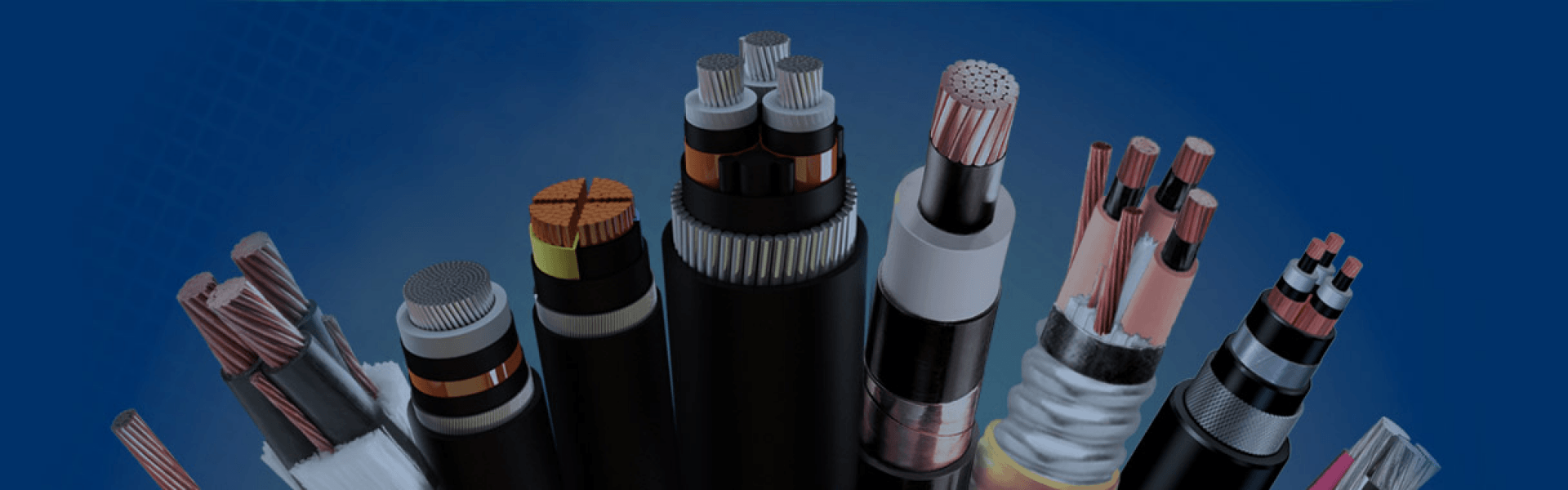
Low Voltage Cable
A low voltage power cable is essentially the backbone of electrical distribution within buildings, industrial plants, and infrastructure projects. When we talk about low voltage cables in this category, we are referring to cables rated for 0.6/1kV — that is, 600 volts between conductor and earth and 1,000 volts between phase conductors — as defined by international standards like IEC 60502-1. These cables are not for signal or data transmission; they are designed to carry mains electricity from transformers and switchgear right down to the equipment that needs it, safely and reliably, day after day.
The rating 0.6/1kV is a practical guarantee that the cable will perform under normal operating conditions in a wide range of fixed installations. Inside, you will typically find plain or metal-clad copper or aluminium conductors, insulated with either PVC (polyvinyl chloride) or XLPE (cross-linked polyethylene). PVC insulation has been a workhorse for decades, offering a good balance of cost and performance for general use, while XLPE allows a higher continuous operating temperature — up to 90°C — which means greater current-carrying capacity for the same conductor size. Around the insulated cores, an outer sheath of PVC or LSZH (low smoke zero halogen) material provides environmental protection and, where required, fire performance characteristics that are now essential in public and commercial buildings.
Low Voltage Cable Types – What We Stock and When to Use Them
| Type | Insulation | Armor | Flexibility | Typical Use |
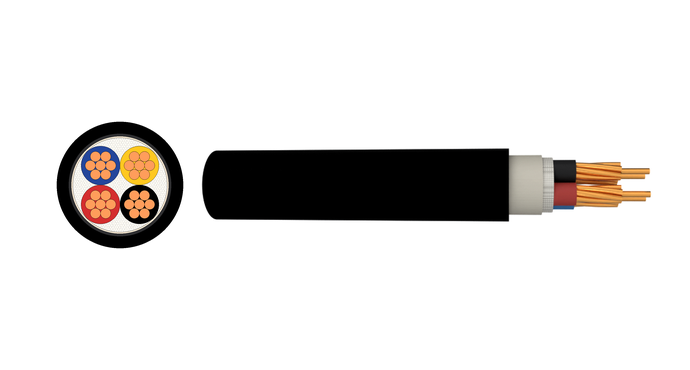
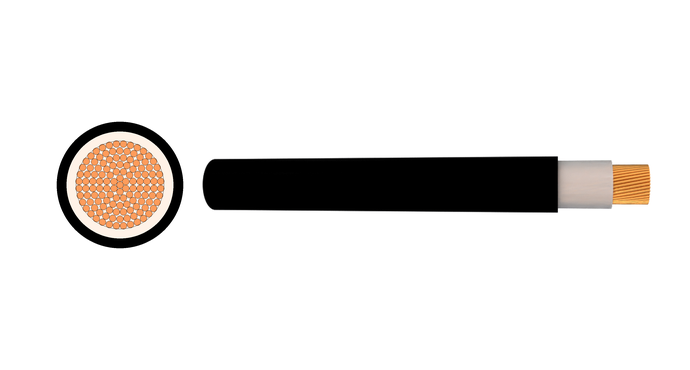
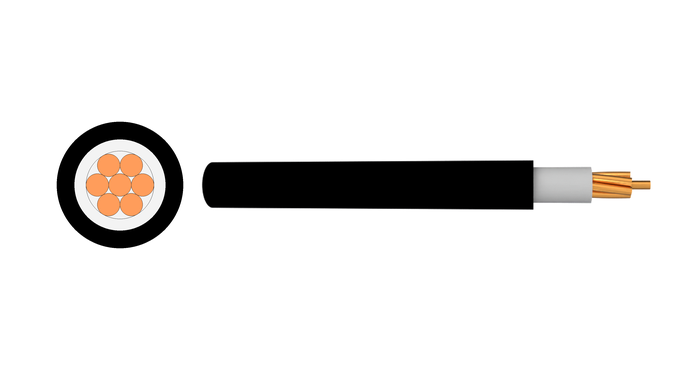
| Unarmored Cable | PVC or XLPE | None | Fixed installation | Indoor power and lighting on trays, trunking, or walls. No mechanical risk expected. |
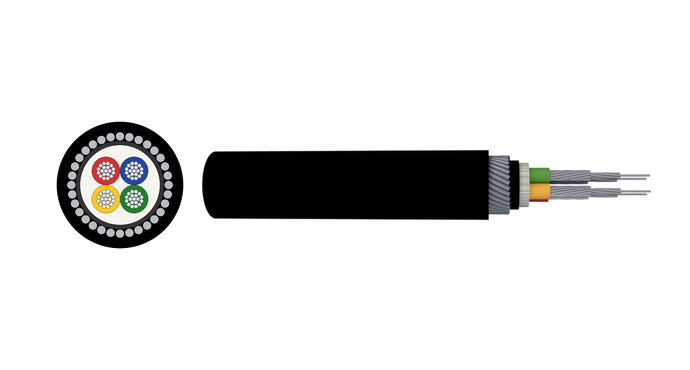
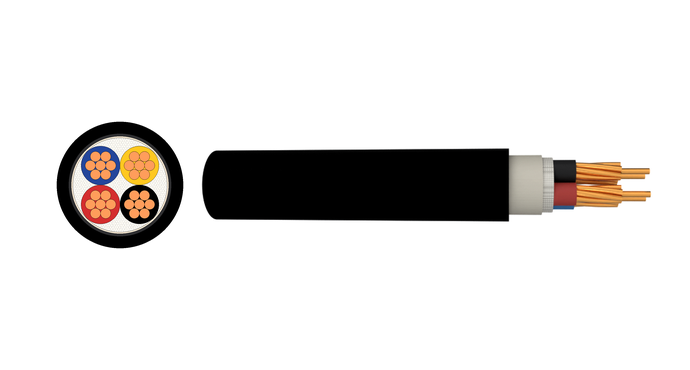
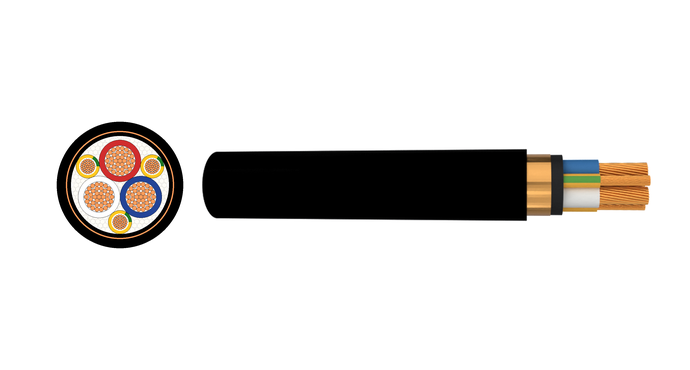
| Armored Cable | PVC or XLPE | Steel wire (SWA) or steel tape (STA) | Fixed installation | Direct burial, underground ducts, or areas exposed to impact and crushing. |
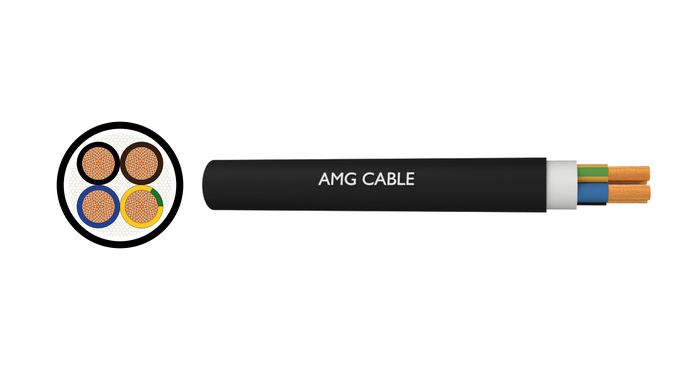
| Flexible Power Cable | XLPE (PVC available) | None | Flexible (Class 5) | Machine rooms, switchboards, and generator connections where easy routing matters. |
| LSZH Cable | XLPE (typically) | Optional | Fixed or flexible | Public buildings, tunnels, and data centers where low smoke and zero halogen are mandatory. |
| Orange Circular Cable | PVC or XLPE | Optional | Fixed installation | AU/NZ residential and commercial power circuits per AS/NZS 5000.1. Supplied with integral earth. |
| VSD / EMC Flexible Cable | XLPE | Braided copper screen | Flexible | Drive-to-motor connections that require reliable electromagnetic noise suppression. |
Low Voltage Cable Standards & References
Every low voltage cable we supply is designed and tested against the relevant national or international standard for its target market. Knowing which standard applies to your project helps you confirm performance, safety, and local code compliance before you order. The table below lists the main standards that govern the 0.6/1kV cables in our range.
| Standard | Title & Scope | Relevance for Your Project |
| IEC 60502-1 | Power cables with extruded insulation for rated voltages from 1kV to 30kV. | The global reference standard for LV power cable construction and routine testing. Covers PVC and XLPE insulated, unarmored and armored designs. |
| AS/NZS 5000.1 | Electric cables – Polymeric insulated – For working voltages up to and including 0.6/1kV. | Mandatory for fixed wiring in Australia and New Zealand. Defines the orange circular power cables (2C+E, 3C+E, 4C+E) used in residential and commercial installations. |
| VDE 0276-603 / 604 | Power cables of rated voltage 0.6/1kV (Germany). | The reference for NYY, N2XY, N2XRY, and related N-series designations widely used across Europe, the Middle East, and parts of Asia. |
| EN 50575 | Power, control and communication cables – Cables for general applications in construction works subject to reaction to fire requirements (Construction Products Regulation – CPR). | Mandatory for cables placed on the EU market that are intended for permanent installation in buildings and civil engineering works. Classifies reaction-to-fire performance (Euroclasses), requires CE marking and a Declaration of Performance (DoP). |
| BS 5467 | Electric cables – Thermosetting insulated, armoured cables for voltages up to 0.6/1kV. | The UK standard for XLPE-insulated, steel wire armoured (SWA) and PVC sheathed power cables. Widely specified for industrial, commercial, and utility distribution in the UK and many Commonwealth countries. |
| BS 6724 | Electric cables – Thermosetting insulated, armoured cables for voltages up to 0.6/1kV, with low smoke and halogen free oversheath. | The LSZH companion to BS 5467. Specifies XLPE-insulated, SWA cables with an LSZH outer sheath. Required wherever fire safety and low smoke performance are critical, such as in public buildings, tunnels, and enclosed spaces. |
| IEC 60332-1 / 60332-3 | Tests on electric cables under fire conditions – Flame propagation. | Verifies that a single cable or a bunch of cables resists flame spread. Often referenced alongside the main construction standard to confirm basic fire performance. |
| IEC 60754-1/2 & IEC 61034-2 | Halogen gas emission and smoke density measurement during combustion. | The core tests behind LSZH (low-smoke zero-halogen) cable claims. Projects in tunnels, data centres, and public buildings typically reference these to protect people and sensitive equipment. |
Low Voltage Cable
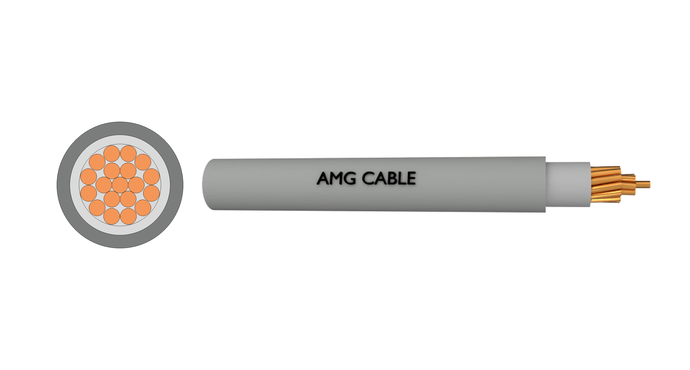
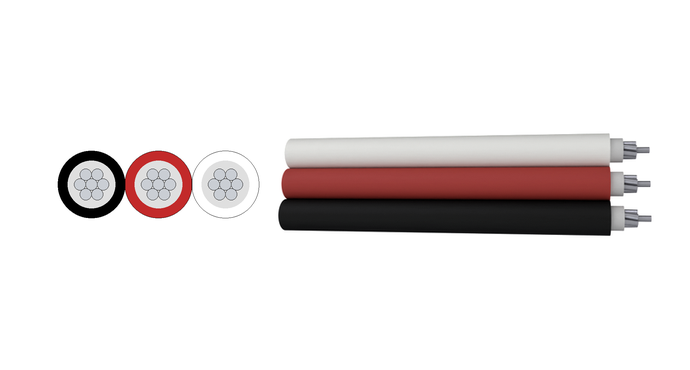
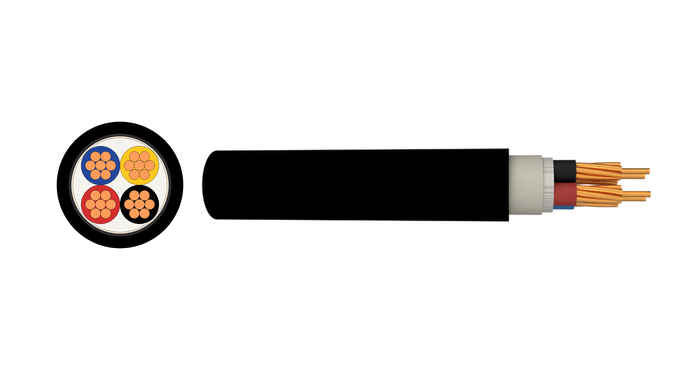
Get A Free Quote
Need Help?
Your Trusted Business Partner for Professional Cable Solutions
/ AMG FAQ /
Frequently Asked Questions
Generally, no. Standard electrical codes (such as the NEC or IEC regulations) strictly prohibit running low-voltage (0.6/1kV) and high-voltage cables in the same conduit, raceway, or cable tray without adequate separation. This rule prevents high-voltage electromagnetic interference (EMI) from disrupting low-voltage signals and eliminates the catastrophic risk of high-voltage arcing into the low-voltage system during a fault. If they must cross or run parallel in open trays, a certified physical barrier or specific clearance distance (typically 300mm or more, depending on local codes) must be maintained.
Yes, for 0.6/1kV power cables. It is critical to distinguish between data/signal low voltage (under 50V) and industrial low-voltage power cables (0.6/1kV). Because 0.6/1kV cables carry lethal electrical currents used to power heavy machinery, buildings, and infrastructure, international regulations mandate that installation, termination, and testing be performed exclusively by a licensed commercial electrician or certified electrical contractor.
Not always. It depends on the cable construction and installation environment. Unarmoured cables installed indoors on cable trays or surface-mounted in low-risk areas may not need conduit. However, if an unarmoured cable is buried, run through a wall, or exposed to mechanical damage, conduit or ducting is mandatory. Armoured cables (SWA or STA) can often be direct-buried or cleated to a wall without separate conduit, provided the installation method is permitted by the standard. The key is to match the cable type to the installation method, not to treat conduit as a universal requirement.
Burial depth is governed by local installation codes (e.g., AS/NZS 3000, NEC, or European standards) and the type of protection used:
Direct Burial Armored Cable (SWA): Typically requires a minimum depth of 500mm to 600mm in standard soil conditions.
Unarmored Cable in Rigid Conduit: Usually requires a depth of 450mm to 600mm.
Under Roadways or Heavy Traffic Areas: The depth is routinely increased to 750mm to 1000mm combined with concrete slab protection to withstand heavy vehicular loads.
The standard industrial procedure involves:
1.Trenching: Excavate the trench to the legally required depth, ensuring the bottom is level and free of sharp rocks.
2.Bedding: Lay a 50mm–100mm layer of washed sand at the bottom of the trench to act as a soft cushion.
3.Cable Laying: Lay the cable (preferably SWA armored) onto the sand bed with slight snaking to allow for soil expansion and contraction.
4.Covering: Cover the cable with another 100mm layer of sand.
5.Protection & Warning: Place concrete/plastic cable protection covers or a high-visibility electrical warning tape about 150mm–300mm above the cable before backfilling the remaining soil.
0.6/1kV low voltage cables carry electrical power from the utility supply or on-site transformers to distribution boards, motors, lighting panels, and building services. Typical uses include residential and commercial building wiring, industrial plant feeders, street lighting, underground distribution between buildings, generator connections, and variable-speed drive motor circuits. In short, if you see fixed power wiring in a building or infrastructure project that is not the utility’s high-voltage side, you are almost certainly looking at low voltage cable.
1.Visual Inspection – Check for physical damage, proper connections, and correct cable rating.
2.Continuity Test – Using a multimeter, verify each conductor is intact and free of short circuits.
3.Insulation Resistance (IR) Test – Apply a megohmmeter at 500 V or 1000 V DC. Measure between all conductors and between each conductor and earth. A reading above 1 MΩ is typical, but always follow applicable standards.
4.High-Voltage Withstand (Hi‑Pot) Test – Apply a DC voltage (e.g., 2.5 kV for a 600/1000 V cable) for one minute to confirm dielectric strength. Perform only after a satisfactory IR test and mainly on new installations.
5.Polarity & Phase Rotation Check – Confirm correct phase assignment and sequence using a phase rotation meter.
Safety first: Isolate and lock out the circuit, prove it dead, and discharge the cable after any DC test.
The maximum length of a cable run is limited by Voltage Drop. As distance increases, the internal resistance of the conductor causes a drop in voltage at the receiving end. For power systems, international standards usually restrict maximum voltage drop to 3% to 5% of the nominal voltage. To run power over longer distances without experiencing problematic voltage drops, engineers must increase the cross-sectional area (sq mm) of the conductor beyond the standard current-carrying rating.
Under normal operating conditions – installed correctly and not overloaded – a power cable with XLPE insulation is typically designed for a service life of 30 to 40 years, and PVC cables around 25 to 30 years. The actual lifespan depends heavily on the operating temperature, cyclic loading, moisture, mechanical stress, and the environment. Cables that run consistently cooler than their maximum rated temperature, and are protected from physical damage and excessive UV, often outlast their design life. Regular thermographic inspection and insulation testing help you assess condition as the cable ages.

Have Questions?
Get in Touch with Us.
AMG Cable Group support 24*7 service and technical assistance.
Phone /Whatsapp / Wechat
+86 188 3803 6118Address
High-Tech Industrial Development Zone,Zhengzhou City,Henan Province,ChinaSend Us a Message
Please feel free to leave a message. We will reply in 24 hours.
/ AMG WIRE&CABLE /
Your trusted partner in high- performance wire and cables
Our team stands by 24/7, responding promptly to
inquiries and providing most quotations within 24 hours.