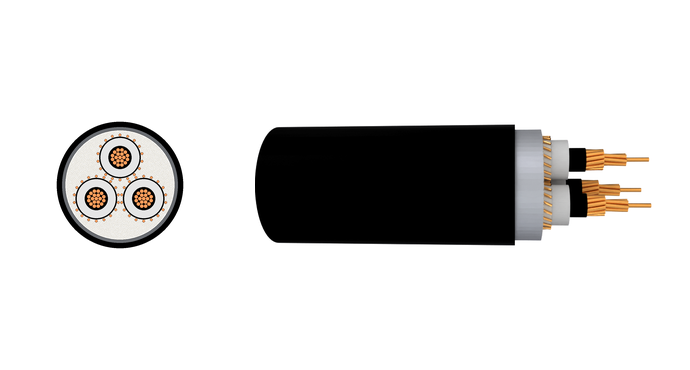
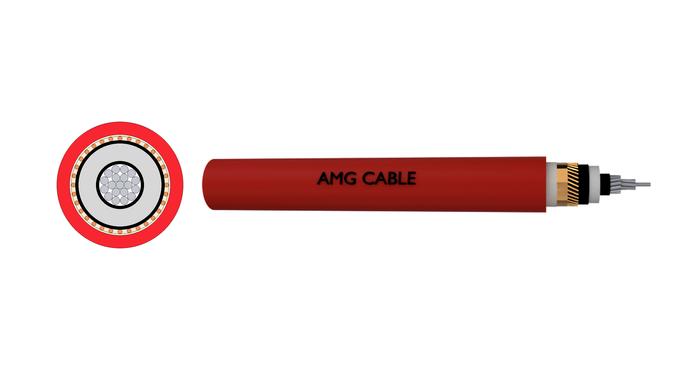
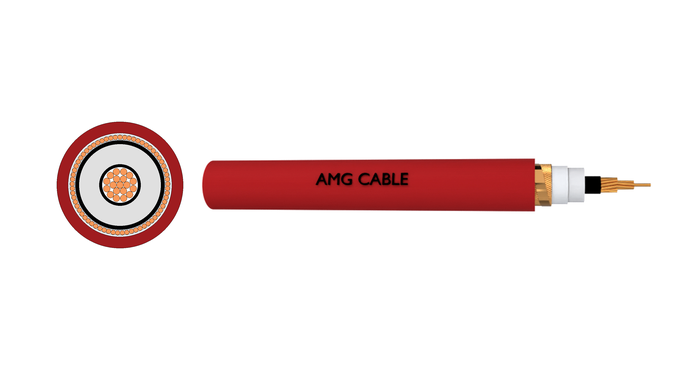
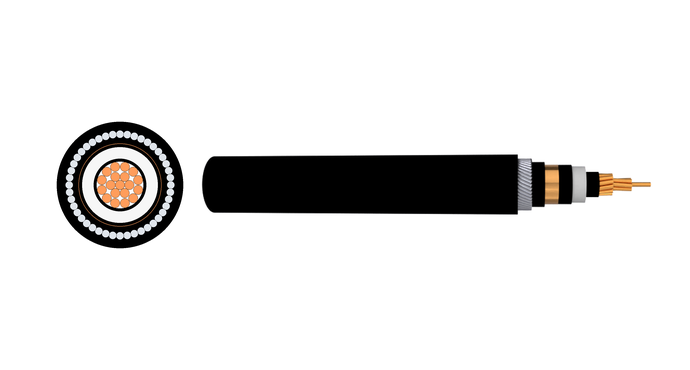
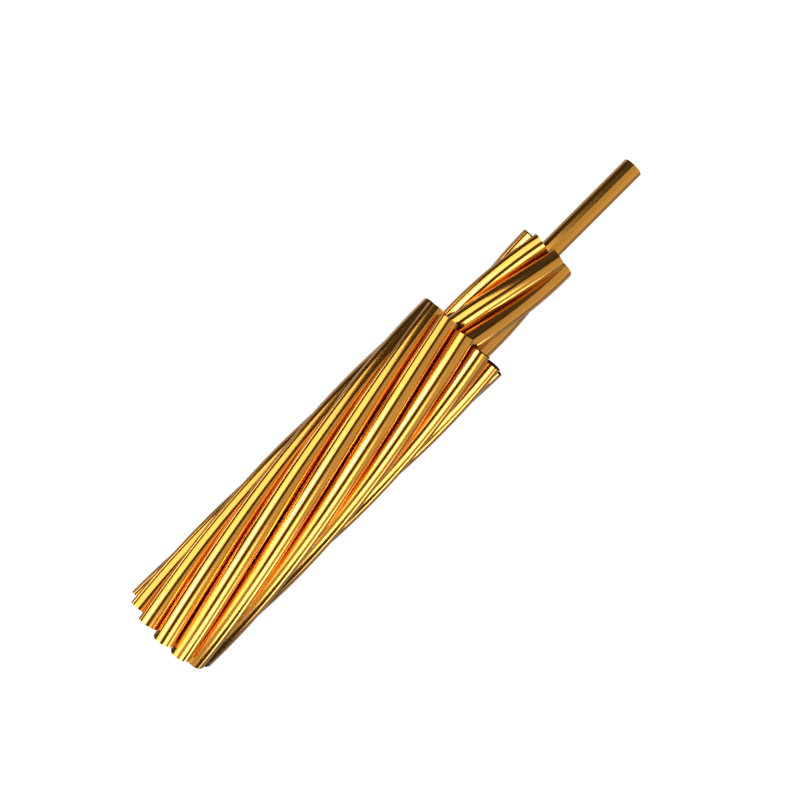
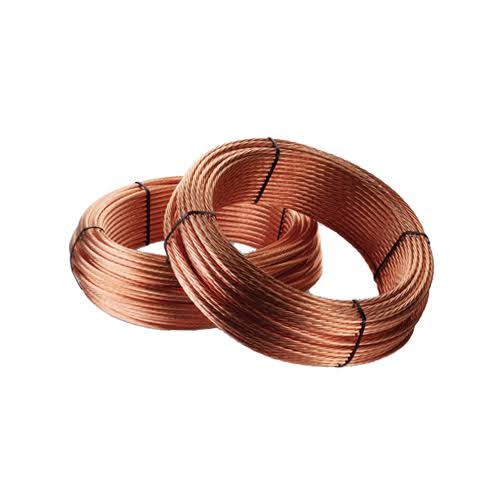
Bare copper cable is an electrical conductor made from copper without an insulating or protective sheath. Because there is no PVC, XLPE, rubber, or other insulation covering the conductor, bare copper is used where a direct conductive path is required, especially in grounding, earthing, bonding, substations, equipment connections, and certain overhead applications. Bare copper conductors can be manufactured as solid or stranded conductors and in different tempers, including soft or annealed and hard-drawn copper. Copper is widely selected for its high electrical conductivity, while the absence of insulation makes the conductor different from a conventional power or wiring cable. When choosing a bare copper conductor, the main factors are the application, conductor size, construction, flexibility, mechanical strength, installation environment, and applicable standard.
Key Takeaways
- Bare copper cable has no electrical insulation, making it suitable for applications where an exposed conductive path is appropriate.
- Soft/annealed and hard-drawn copper have different mechanical characteristics, so the choice depends on flexibility versus mechanical strength.
- Solid and stranded constructions serve different installation needs, with stranded conductors generally offering easier handling and routing.
- Conductor size and applicable standards must be determined from the project requirements, particularly for grounding, fault-current, and overhead applications.
What Is Bare Copper Cable?
Bare copper cable is a copper conductor without an insulating layer or outer sheath. The copper itself forms the outside surface of the conductor, which is why it is described as bare copper.
Unlike an insulated copper cable, a bare copper conductor does not have PVC, XLPE, rubber, or another material separating the copper from the surrounding environment. This construction is intentional. It is used when the conductor is required to provide a conductive connection without needing the electrical insulation provided by a conventional cable.
Common applications include grounding and earthing systems, bonding, substation grounding, electrical equipment connections, jumpers, lightning protection, and selected overhead transmission or distribution applications.
Bare copper conductors are not all the same. They can differ in:
- Conductor size
- Solid or stranded construction
- Number and diameter of strands
- Copper temper
- Mechanical strength
- Electrical resistance
- Applicable standard
The choice should therefore start with the function of the conductor rather than simply asking for a certain size of copper wire.
Why Is It Called “Bare” Copper?
The word bare refers to the absence of an insulating or protective covering around the conductor.
A bare copper conductor does not have:
- PVC insulation
- XLPE insulation
- Rubber insulation
- An outer polymer sheath
This does not mean that the conductor is unfinished. Bare copper is a purpose-designed conductor for applications where insulation is not required or where the conductor forms part of a grounding, bonding, overhead, or other electrical system.
Bare Copper Cable vs. Insulated Copper Cable
| Feature | Bare Copper Cable | Insulated Copper Cable |
|---|---|---|
| Insulation | None | PVC, XLPE, rubber, or other insulation |
| Conductor | Exposed copper | Copper covered by insulation |
| Typical applications | Grounding, bonding, earthing, jumpers, selected overhead applications | Power distribution, wiring, equipment and electrical circuits |
| Electrical separation | No insulation provided by the conductor | Insulation separates the conductor from surrounding materials |
| Environmental protection | Must be considered as part of the installation | Partly provided by the cable construction |
| Flexibility | Depends on conductor construction and temper | Depends on conductor, insulation, and cable construction |
This distinction is important because bare copper should not be viewed simply as an insulated power cable without the insulation. The two products are designed for different purposes.
Types of Bare Copper Cable
Bare copper conductors can be classified in two main ways: by copper temper and by conductor construction.
The temper describes the mechanical condition of the copper, while the construction describes whether the conductor is solid or made from multiple strands.
Soft-Drawn or Annealed Bare Copper
Soft or annealed copper has greater ductility and flexibility than hard-drawn copper.
This makes it easier to bend and route during installation. Soft or annealed stranded copper is therefore commonly considered for applications such as:
- Grounding and earthing
- Bonding
- Ground rings
- Equipment connections
- Jumpers
- Below-ground earthing
- Certain renewable energy grounding systems
The main reason to select annealed copper is generally not simply “better conductivity.” The key practical advantage is its combination of electrical conductivity and greater flexibility.
For installations involving frequent bending, routing around equipment, or connections between different components, a flexible conductor construction can simplify installation.
Hard-Drawn Bare Copper
Hard-drawn copper has greater mechanical strength and lower flexibility than annealed copper.
It is commonly associated with applications where the conductor must withstand mechanical loading, including certain overhead transmission and distribution applications.
For an overhead conductor, factors such as span length, installation tension, wind loading, vibration, and support conditions can be more important than ease of bending. Hard-drawn copper can therefore be considered when mechanical strength is a major design requirement.
However, hard-drawn copper is not automatically the correct choice for every outdoor or overhead application. The final selection should be based on the conductor design, mechanical calculation, project specification, and applicable standard.
Medium-Hard Copper
Some bare copper conductor specifications also provide a medium-hard temper.
Medium-hard copper sits between soft/annealed and hard-drawn material in terms of mechanical characteristics. It can be considered where a project needs a balance between flexibility and strength.
Whether medium-hard copper is available or appropriate depends on the specific product range and applicable standard.
Solid Bare Copper
A solid bare copper conductor consists of a single copper conductor rather than multiple individual wires.
Its main characteristics include:
- Simple construction
- Greater rigidity
- Limited flexibility compared with stranded conductors
- Straightforward physical structure
Solid conductors can be suitable for specific fixed installations and certain conductor sizes. They may also be used in applications where flexibility is not a major requirement.
As conductor size increases, however, handling and bending become more difficult. This is one reason stranded construction is often preferred when routing flexibility is important.
Stranded Bare Copper
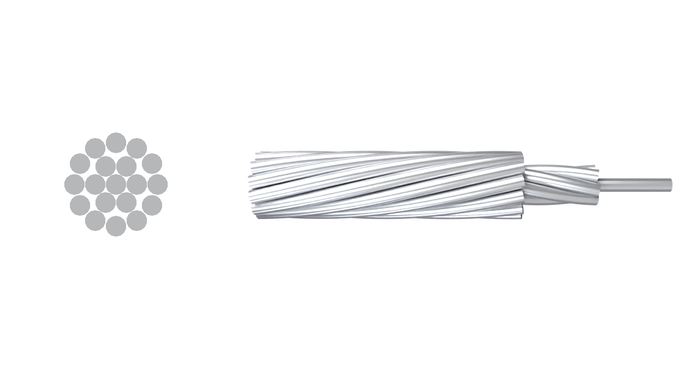
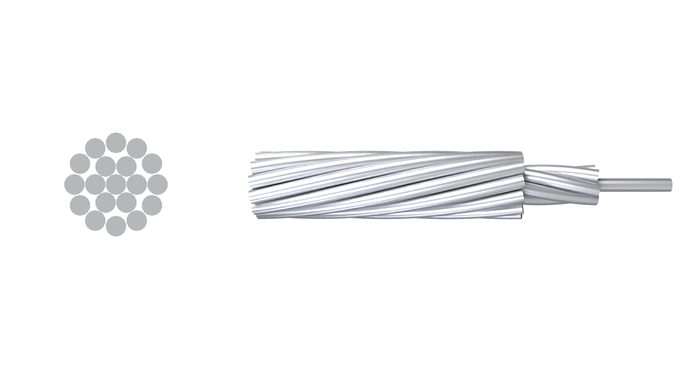
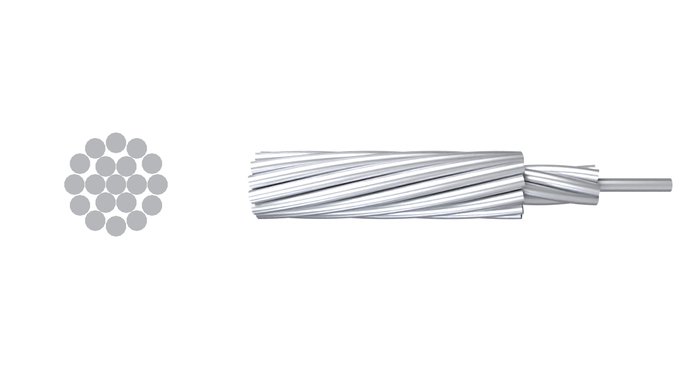
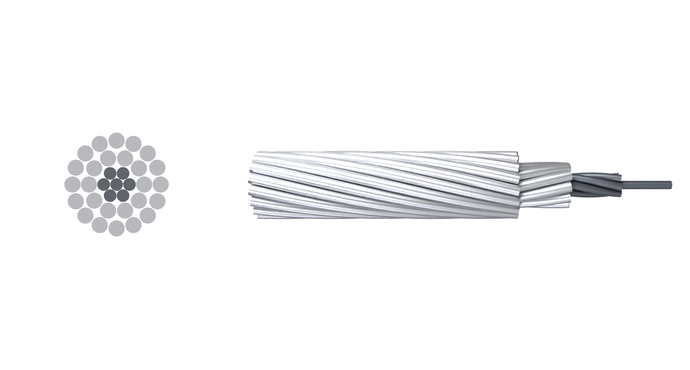
A stranded bare copper conductor consists of multiple individual copper wires assembled into a single conductor.
Compared with a solid conductor of similar cross-sectional area, stranded construction generally provides greater flexibility and is easier to handle and route.
Stranded bare copper is commonly considered for:
- Grounding
- Bonding
- Jumpers
- Equipment connections
- Substation grounding
- Other installations where flexibility is useful
Different standards and product designs can specify different strand arrangements. The number and diameter of strands should therefore be checked against the actual product specification rather than assumed from the nominal conductor size alone.
Soft-Drawn vs. Hard-Drawn Bare Copper Cable
The difference between soft-drawn and hard-drawn copper is one of the most important selection considerations.
| Property | Soft / Annealed Copper | Hard-Drawn Copper |
|---|---|---|
| Flexibility | Higher | Lower |
| Ductility | Higher | Lower |
| Mechanical strength | Lower | Higher |
| Ease of bending | Better | More limited |
| Typical consideration | Grounding, bonding, jumpers, equipment connections | Certain overhead and mechanically loaded applications |
| Selection priority | Flexibility and installation | Mechanical strength and loading |
The table should be treated as a general engineering comparison rather than a universal rule.
For example, soft copper is not automatically required for every grounding system, and hard-drawn copper is not automatically required for every overhead installation. Conductor size, installation conditions, mechanical loading, project specification, and applicable standards all affect the final choice.
A useful way to think about the decision is:
If installation flexibility is the main concern, consider soft or annealed construction. If mechanical strength is the main concern, consider hard-drawn construction.
The actual conductor specification should then be confirmed against the project requirements.
Solid vs. Stranded Bare Copper Cable
Solid and stranded conductors have different physical characteristics.
| Feature | Solid Bare Copper | Stranded Bare Copper |
|---|---|---|
| Construction | One copper conductor | Multiple individual wires |
| Flexibility | Lower | Higher |
| Rigidity | Higher | Lower |
| Handling | More rigid | Easier to route |
| Bending | More difficult | Easier |
| Typical consideration | Fixed installations and specific applications | Grounding, bonding, jumpers and connections |
Which Is More Flexible?
Stranded bare copper is generally more flexible than solid copper of comparable cross-sectional area.
This can make stranded construction easier to install around bends, equipment, grounding structures, and connection points.
When Is Solid Copper Preferred?
Solid copper can be useful when the conductor remains relatively fixed and additional flexibility is unnecessary.
It can also be appropriate for certain conductor sizes and applications defined by the applicable standard.
When Is Stranded Copper Preferred?
Stranded construction is generally preferred when installation involves bending, routing, pulling, or connections that benefit from a less rigid conductor.
The exact strand construction still matters, so buyers should compare the number and diameter of strands rather than looking only at “solid” or “stranded.”
Where Is Bare Copper Cable Used?
The most common applications for bare copper are related to grounding, bonding, electrical equipment, substations, and selected power distribution systems.
Grounding and Earthing
Grounding and earthing are among the most important applications for bare copper conductors.
A grounding system provides a conductive path for fault currents and helps establish the required electrical relationship between equipment, structures, and earth. Depending on the system design, bare copper can be used for:
- Grounding conductors
- Earthing connections
- Ground rings
- Ground grids
- Equipment grounding
- Substation earthing
- Below-ground grounding systems
Soft or annealed stranded copper can be useful where the installation requires flexibility.
However, the statement that “bare copper is always the best grounding conductor” would be too broad. The appropriate conductor depends on fault conditions, conductor size, installation method, corrosion considerations, local requirements, and the complete grounding system design.
Bonding
Bare copper can also be used as a bonding conductor.
Bonding creates an electrically conductive connection between equipment, structures, or parts of an electrical system.
For example, a bare copper conductor may be used to bond conductive components within a grounding system where the project design and applicable requirements permit.
For bonding applications, the conductor should be selected based on the required electrical and mechanical performance rather than simply choosing the most flexible or largest available conductor.
Substations
Bare copper conductors are widely associated with substation grounding and electrical connections.
Possible applications include:
- Ground grids
- Equipment grounding
- Grounding connections
- Jumpers
- Bonding connections
- Other uninsulated electrical connections
Substations can involve both significant electrical fault currents and demanding mechanical conditions. For this reason, conductor size, resistance, mechanical properties, and applicable standards need to be evaluated together.
Overhead Power Transmission and Distribution
Bare copper can also be used in selected overhead power transmission and distribution applications.
In this type of installation, the conductor may be exposed to mechanical loads that are not present in a typical grounding connection. Wind, vibration, span length, conductor tension, and support conditions can all affect the conductor selection.
Hard-drawn copper is therefore relevant where higher mechanical strength is required.
The exact conductor class and construction should be specified according to the applicable overhead-line standard and project requirements.
Electrical Equipment and Jumpers
Bare copper conductors can be used for equipment connections and jumpers where a direct conductive connection is required.
Stranded construction is often useful when the conductor needs to be routed between connection points or around equipment.
In these applications, low electrical resistance, flexibility, conductor size, connection method, and mechanical durability can all be relevant.
Lightning Protection
Bare copper can also be used in certain lightning protection and grounding systems.
A conductor used in a lightning protection system must be selected and installed according to the relevant lightning protection design and applicable standard. Conductor size, routing, connections, bonding, and environmental exposure all need to be considered.
Renewable Energy Projects
Grounding is an important part of renewable energy installations such as solar farms and other large electrical facilities.
Bare copper may be used in grounding and bonding networks where the system design permits it. The choice between soft, hard, solid, or stranded copper depends on the particular installation.
Large renewable energy projects can also have long conductor runs and extensive grounding networks, making conductor size, resistance, installation method, and environmental conditions important during specification.
Bare Copper Cable Construction
A bare copper conductor has a relatively simple construction, but several parameters determine its actual performance.
Conductor Material
The conductor is made from copper selected according to the applicable product specification and standard.
Copper is widely used because of its high electrical conductivity and established use in electrical grounding, power, and bonding applications.
The exact copper grade and material requirements should be verified against the applicable product standard rather than assumed from the general term “copper.”
Surface
The conductor surface is bare and uninsulated.
This is the fundamental characteristic that separates bare copper conductors from insulated electrical cables.
Because the copper is exposed, the installation environment must be considered carefully.
Construction
Depending on the product, a bare copper conductor can be:
- Solid
- Stranded
- Concentric-lay stranded
- Other constructions defined by the applicable specification
The actual construction affects flexibility, diameter, weight, mechanical characteristics, and installation behavior.
Temper
The copper can be supplied in different tempers, including:
- Soft or annealed
- Medium-hard
- Hard-drawn
The temper determines much of the balance between flexibility and mechanical strength.
Bare Copper Cable Specifications: What Should Buyers Check?
A professional buyer should look beyond the nominal conductor size.
The following specifications are commonly relevant when evaluating bare copper conductors.
| Specification | Why It Matters |
|---|---|
| Cross-sectional area | Helps determine electrical resistance and suitability for the application |
| Number of strands | Defines part of the stranded conductor construction |
| Individual wire diameter | Helps identify the exact stranding arrangement |
| Overall conductor diameter | Important for installation, routing, and connections |
| DC resistance at 20°C | Indicates the conductor’s electrical resistance under the specified reference condition |
| Weight | Important for logistics, handling, and some mechanical applications |
| Tensile strength | Particularly important where mechanical loading is significant |
| Conductivity | Indicates the electrical performance of the copper material |
| Copper temper | Helps determine flexibility and mechanical strength |
| Applicable standard | Defines relevant material, dimensional, electrical, or mechanical requirements |
Cross-Sectional Area
Cross-sectional area is normally expressed in mm², while some markets and projects use AWG or other sizing systems.
It is one of the most important parameters because conductor size affects resistance and electrical performance.
For grounding and fault-current applications, the required size should be established through the relevant engineering calculation and project requirements rather than selecting a commonly used size without checking the system conditions.
Number and Diameter of Strands
For stranded conductors, the number of wires and individual wire diameter define part of the conductor construction.
Two conductors can have the same nominal cross-sectional area but use different strand configurations.
This can affect flexibility, finished diameter, weight, and handling.
DC Resistance at 20°C
DC resistance is commonly specified at 20°C as a reference value.
Resistance depends on conductor material, cross-sectional area, temperature, and conductor construction.
For engineering comparison, buyers should use the resistance value stated in the relevant product specification or standard rather than comparing products based only on nominal size.
Tensile Strength
Tensile strength becomes particularly important when the conductor is subject to mechanical loads.
This is especially relevant for overhead applications, where conductor tension and environmental loads must be considered.
A grounding conductor installed with limited mechanical stress may have different mechanical priorities from a conductor spanning between supports.
Weight
Weight matters for transportation and installation planning.
For long conductor runs or overhead installations, conductor weight can also influence mechanical design.
Conductivity
Copper is widely selected because of its high electrical conductivity.
However, conductivity should be evaluated according to the actual material specification and applicable standard. It should not be assumed that all copper conductors have identical properties simply because they are described as copper.
Bare Copper Cable Standards
Different bare copper constructions and applications may be specified under different standards. The correct standard depends on the conductor type, temper, construction, application, and target market.
Common standards encountered in bare copper specifications include the following.
ASTM B1
ASTM B1 covers hard-drawn copper wire and is relevant when a hard-drawn copper construction is specified under the ASTM system.
ASTM B2
ASTM B2 covers medium-hard-drawn copper wire.
This type of specification can be relevant when the project requires a balance between the mechanical characteristics of soft and hard-drawn copper.
ASTM B3
ASTM B3 covers soft or annealed copper wire.
It is therefore relevant when a soft copper conductor is required under the ASTM system.
ASTM B8
ASTM B8 covers concentric-lay-stranded copper conductors.
The relevant conductor class and construction should be checked against the actual application and product specification.
ASTM B787
ASTM B787 covers certain combination unilay-stranded copper conductors.
This illustrates why buyers should not specify a stranded conductor using only the word “stranded.” The exact construction may be defined by the applicable standard.
IEC 60228
IEC 60228 specifies conductor requirements used for insulated cables and cords, including conductor classes and electrical characteristics.
It is important to check whether a particular bare conductor is actually being specified under IEC 60228 or another product-specific standard. A standard should not be claimed simply because it is commonly seen in the cable industry.
BS EN 60228
BS EN 60228 is the British adoption of the IEC conductor standard.
Where a project specifies BS EN 60228, the buyer should verify the required conductor class and product construction.
BS 7884 and Other Application-Specific Standards
BS 7884 is also encountered in specifications for certain copper conductors used in electrical and related applications.
The key point for procurement is that the applicable standard must match the actual product and application.
A supplier should not claim compliance with a standard unless the relevant product has been designed, manufactured, and verified against that standard.
How to Choose the Right Bare Copper Cable
A practical selection process can be divided into several steps.
Step 1: Define the Application
Start by identifying what the conductor needs to do.
Is it for:
- Grounding?
- Earthing?
- Bonding?
- A substation?
- An overhead line?
- Lightning protection?
- Equipment connection?
- A jumper?
- A renewable energy grounding system?
The answer will determine which conductor characteristics are most important.
Step 2: Choose Solid or Stranded Construction
If the conductor is installed in a relatively fixed position and flexibility is not important, solid construction may be appropriate.
If the conductor needs to bend, route around equipment, or simplify installation, stranded construction is often more practical.
Step 3: Select the Copper Temper
Consider the balance between flexibility and mechanical strength.
Choose soft or annealed construction when:
- Bending is important
- Installation involves routing around equipment
- Flexibility is a major requirement
- The application involves grounding, bonding, or connections where the design permits it
Consider hard-drawn construction when:
- Mechanical strength is important
- The conductor is subject to significant mechanical loading
- The application involves certain overhead systems
Medium-hard copper may be considered where an intermediate balance is required and the relevant product standard permits it.
Step 4: Determine the Required Conductor Size
Do not choose conductor size simply because another project uses the same size.
Depending on the application, sizing may need to consider:
- Continuous current
- Fault current
- Short-circuit conditions
- Grounding requirements
- Conductor length
- Installation method
- Temperature
- Applicable electrical code
- Project specifications
For grounding systems, the required conductor size should be determined through the applicable engineering method.
Step 5: Check Mechanical Requirements
Mechanical conditions can be critical for overhead and exposed installations.
Consider:
- Pulling tension
- Span length
- Wind loading
- Vibration
- Mechanical stress
- Support conditions
- Installation method
A conductor that meets the electrical requirements may still be unsuitable if its mechanical characteristics do not match the installation.
Step 6: Check the Applicable Standard
Confirm the required standard before selecting the final product.
The standard can depend on:
- Destination country
- Utility requirements
- Industry
- Project specification
- Conductor construction
- Copper temper
- Installation type
For international projects, it is useful to confirm the standard during the specification stage rather than after production.
Step 7: Evaluate the Installation Environment
Because bare copper has no insulation, environmental conditions need careful consideration.
Check whether the conductor will be installed:
- Indoors
- Outdoors
- Underground
- In soil
- In wet conditions
- Near saltwater
- In an industrial or corrosive environment
If corrosion is a concern, the buyer may need to consider alternative conductor materials or surface treatments, depending on the project requirements.
Bare Copper vs. Tinned Copper
Bare copper and tinned copper are sometimes considered alternatives, particularly when environmental exposure is a concern.
| Feature | Bare Copper | Tinned Copper |
|---|---|---|
| Surface | Exposed copper | Copper with a tin coating |
| Conductive material | Copper | Copper |
| Corrosion protection | No additional tin coating | Tin coating provides additional surface protection |
| Typical consideration | Standard grounding, bonding and other suitable applications | Applications where additional environmental protection is required |
| Cost | Generally lower than equivalent tinned construction | Generally higher |
Tinned copper can be useful in environments where moisture, salt, or other corrosive conditions create additional concerns.
However, this does not mean that tinned copper is automatically required for every outdoor or underground installation. The correct choice depends on the actual environment, applicable standard, installation method, and project specification.
A useful procurement rule is:
If the environment presents a significant corrosion concern, evaluate whether a tinned or otherwise protected conductor is required. If corrosion is not a significant design factor, bare copper may be a suitable and more economical option where permitted.
Bare Copper vs. Aluminum Conductor
Copper and aluminum are both used as electrical conductor materials, but they have different physical and electrical characteristics.
| Factor | Copper | Aluminum |
|---|---|---|
| Conductivity by cross-section | Higher | Lower |
| Density | Higher | Lower |
| Conductor weight | Higher | Lower for equivalent electrical performance in many designs |
| Mechanical characteristics | Different depending on alloy and temper | Different depending on alloy and construction |
| Corrosion considerations | Generally good, but environment still matters | Requires appropriate consideration of oxide layer and connections |
| Material cost | Typically higher | Typically lower |
| Termination | Depends on application and connector | Requires connectors and installation methods appropriate for aluminum |
Neither material is universally better.
For a particular project, the correct choice depends on conductor size, weight, electrical requirements, mechanical design, connection method, cost, environmental conditions, and applicable standards.
Advantages and Limitations of Bare Copper Cable
Advantages
Bare copper conductors offer several practical benefits:
- High electrical conductivity for efficient electrical connections.
- Simple construction without an insulating layer.
- Good flexibility when soft and/or stranded construction is selected.
- Suitable for grounding and bonding in applications where the design permits bare conductors.
- Different constructions available, including solid and stranded conductors.
- Different mechanical characteristics available through soft, medium-hard, and hard-drawn constructions.
- Suitable for a range of applications, including grounding, substations, equipment connections, and certain overhead systems.
Limitations
Bare copper also has clear limitations:
- There is no insulation, so it cannot provide the electrical separation of an insulated cable.
- The conductor is exposed to the environment, so environmental conditions must be considered.
- It is not a direct replacement for insulated power cable in applications requiring electrical insulation.
- Mechanical protection may be required depending on the installation.
- Corrosion conditions must be evaluated, particularly in aggressive environments.
- Conductor size cannot be selected by rule of thumb for critical grounding or fault-current applications.
The main point is simple: the absence of insulation is a deliberate feature of bare copper, but it also determines where and how the conductor can be used.
Frequently Asked Questions
What is bare copper cable used for?
Bare copper cable is commonly used for grounding, earthing, bonding, substation grounding, ground grids, equipment connections, jumpers, lightning protection, and certain overhead transmission and distribution applications.
Is bare copper better than tinned copper?
Neither is universally better. Bare copper can be suitable where the environment does not create significant corrosion concerns. Tinned copper may be preferred where additional surface protection is required, such as certain humid, salty, or corrosive environments. The decision should be based on the project environment and specification.
What is the difference between annealed and hard-drawn bare copper?
Annealed copper is softer and more flexible, while hard-drawn copper has greater mechanical strength and lower flexibility. Annealed copper is commonly considered for grounding, bonding, jumpers, and equipment connections, while hard-drawn copper is relevant to applications where mechanical strength is important, including certain overhead systems.
What is the difference between solid and stranded bare copper?
Solid bare copper consists of one conductor and is relatively rigid. Stranded bare copper consists of multiple individual wires and is generally more flexible and easier to route. Stranded construction is often useful for grounding, bonding, jumpers, and equipment connections where flexibility is important.
Is bare copper cable good for grounding?
Bare copper is widely used for grounding and earthing, but suitability depends on the system design, conductor size, fault-current requirements, installation environment, applicable code, and project specification. It should not be assumed that one bare copper construction is suitable for every grounding system.
Can bare copper cable be used outdoors?
Yes, bare copper conductors can be used in outdoor applications designed for bare conductors. However, the suitability of a specific conductor depends on environmental exposure, mechanical loading, corrosion conditions, installation method, and applicable requirements.
Can bare copper cable be buried directly in the ground?
Bare copper conductors are used in some underground grounding and earthing systems, but direct burial is application-specific. Soil conditions, corrosion, local electrical requirements, conductor construction, and the grounding system design should all be considered before installation.
What standards apply to bare copper conductors?
Depending on the conductor type and application, commonly encountered standards include ASTM B1, ASTM B2, ASTM B3, ASTM B8, ASTM B787, IEC 60228, BS EN 60228, and BS 7884. The applicable standard should always be confirmed against the actual product specification and project requirements.
How do I choose the right bare copper cable size?
Start with the application and determine the electrical and mechanical requirements. Depending on the project, this can include fault current, grounding requirements, conductor length, installation method, mechanical loading, applicable electrical code, and project specifications. The final conductor size should be established through the appropriate engineering calculation rather than a general recommendation.
Conclusion
Bare copper cable is a simple conductor in construction, but the correct selection depends on several engineering factors. The most important questions are not simply “How much copper do I need?” but Where will the conductor be used, how will it be installed, and what electrical and mechanical requirements must it meet?
For grounding, bonding, equipment connections, and similar applications, soft or annealed stranded copper may be useful when flexibility and easy installation are important. For certain overhead applications, hard-drawn copper may be more appropriate when mechanical strength is a priority. Solid and stranded constructions also provide different handling characteristics.
Conductor size, strand configuration, DC resistance, tensile strength, copper temper, environmental conditions, and applicable standards should all be checked before final selection.
For B2B procurement, the best approach is to define the application first, select the appropriate conductor construction and temper, determine the required size through the project design, and then confirm the applicable standard and product specification. This makes it easier to select a bare copper conductor that is suitable not only on paper, but also for the actual installation.