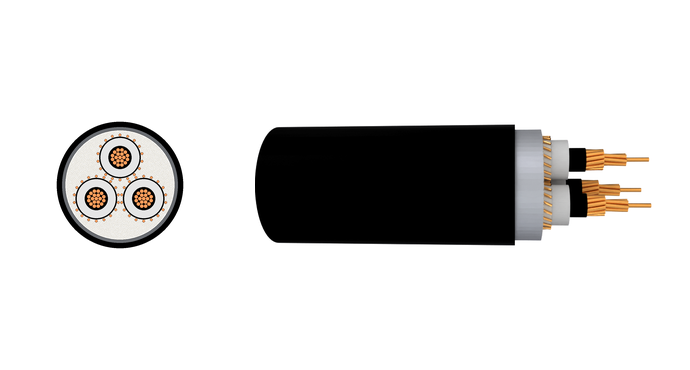
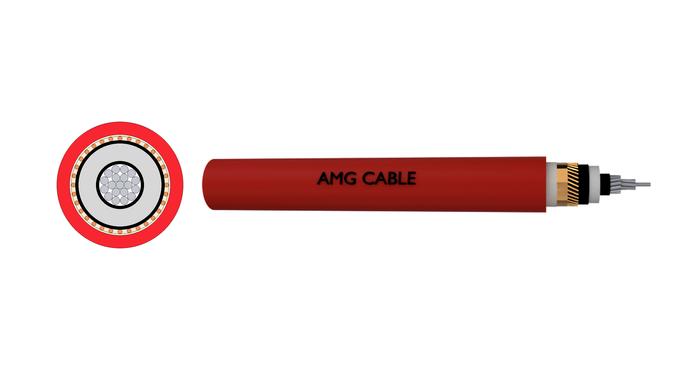
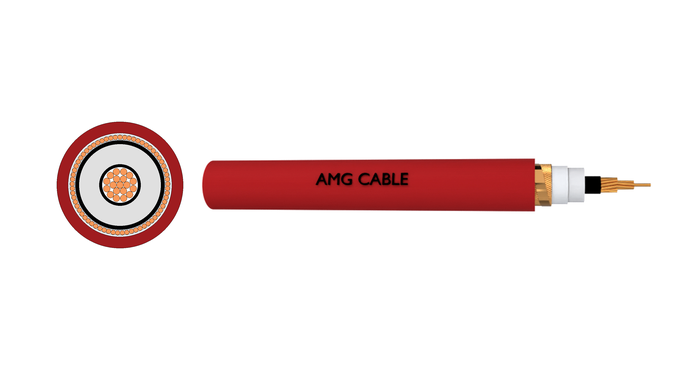
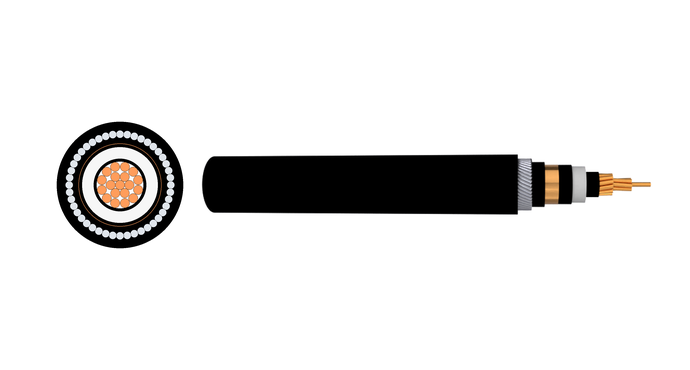
Mineral insulated (MI) cable is a specialized cable designed for applications where conventional polymer-insulated cables may not provide sufficient fire resistance, temperature resistance, mechanical protection, or long-term reliability. A typical MI cable consists of a conductor, compacted magnesium oxide (MgO) insulation, and a metallic sheath. This inorganic construction gives the cable different thermal, fire, and mechanical characteristics from conventional PVC-, XLPE-, or rubber-insulated cables.
MI cables are commonly considered for fire alarm systems, emergency power, fire pumps, smoke extraction systems, industrial plants, oil and gas facilities, transportation infrastructure, and other critical or high-temperature applications. However, MI cable is not automatically the right choice for every project. Conductor size, voltage, sheath material, temperature rating, fire performance, installation method, termination, and applicable standards all need to be considered together.
This guide explains MI cable construction, types, applications, specifications, standards, advantages, limitations, installation considerations, and the key factors to consider when selecting a cable for a project.
What Is Mineral Insulated (MI) Cable?
Mineral insulated cable, commonly called MI cable, is an electrical cable that uses a mineral material, typically magnesium oxide (MgO), as its primary insulation instead of conventional organic polymer insulation.
The basic construction can be simplified as:
Conductor → MgO insulation → metallic sheath
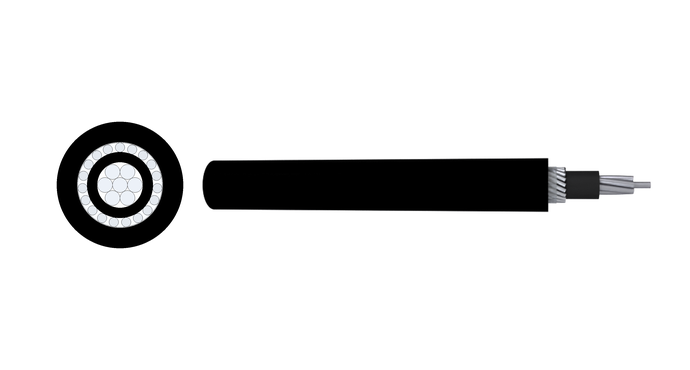
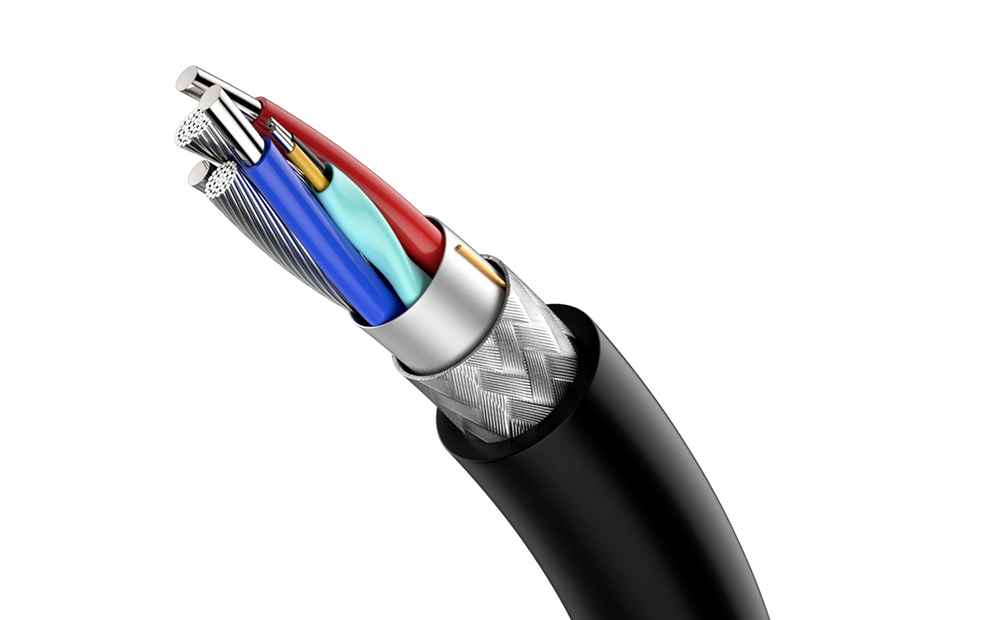
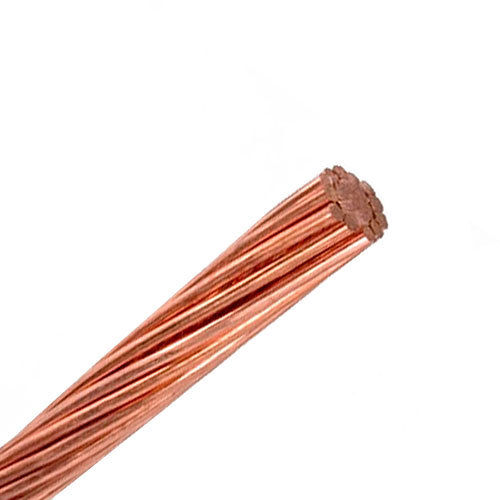
The conductor carries the electrical current. The compacted MgO separates the conductor from other conductors and from the metallic sheath. The outer metallic sheath provides mechanical and environmental protection and, depending on the cable construction and system design, may also form part of the grounding or shielding arrangement.
What Does MI Cable Stand For?
MI stands for Mineral Insulated.
Other terms used in the industry include:
- MI cable
- Mineral Insulated Cable
- MICC cable
- Mineral Insulated Copper-Clad Cable
- Mineral Insulated Metal Sheathed Cable
- MIMS cable
These terms are often used to describe related cable constructions, but they should not automatically be treated as identical in every market. The conductor, sheath material, insulation system, voltage rating, and applicable standard can vary between manufacturers and product designs.
For example, a traditional mineral insulated copper cable generally uses copper conductors, magnesium oxide insulation, and a copper sheath. Other MI constructions can use stainless steel or nickel-based alloy sheaths when the application requires different temperature or corrosion performance.
What Makes MI Cable Different?
The main difference is the use of inorganic mineral insulation and a metallic sheath.
Conventional cables commonly use materials such as PVC, XLPE, EPR, PE, or rubber as insulation or jacketing materials. These materials are practical and widely used, but their temperature and fire performance depends strongly on the specific polymer formulation and cable construction.
MI cable instead uses compacted MgO. This changes how the cable behaves under heat and fire and makes MI construction particularly useful for circuits where maintaining electrical continuity under severe conditions is important.
How Is Mineral Insulated Cable Constructed?
The performance of an MI cable starts with its physical construction. Each layer has a specific engineering function.
1. Conductors
The conductor is the current-carrying part of the cable.
Copper is commonly used because of its electrical conductivity, mechanical properties, and compatibility with many MI cable constructions. Depending on the application and product design, other conductor materials or alloys may also be used.
Important conductor parameters include:
- Conductor material
- Conductor size
- Number of cores
- Resistance
- Current-carrying capacity
- Voltage drop
- Operating temperature
Conductor size should not be selected only from the expected load current. Installation conditions, ambient temperature, grouping, cable arrangement, allowable voltage drop, and the applicable electrical standard can all affect the final selection.
2. Magnesium Oxide (MgO) Insulation
Magnesium oxide is the defining material in a conventional MI cable.
MgO is an inorganic mineral insulation with high thermal stability and good electrical insulating properties. It is compacted around the conductors to maintain electrical separation and provide the required insulation system.
Unlike many organic polymer insulation materials, MgO does not depend on an organic polymer matrix to provide its basic insulation function. This is one reason MI cable is widely considered for high-temperature and fire-performance applications.
MgO also has good thermal conductivity compared with many conventional electrical insulation materials. This allows heat generated by the conductor to transfer through the insulation toward the metallic sheath.
However, MgO is also hygroscopic. If the cable ends are exposed and moisture enters the insulation, insulation resistance can decrease. Proper sealing, storage, preparation, and termination are therefore important parts of MI cable installation.
3. Metallic Sheath
The metallic sheath surrounds the compacted mineral insulation and provides the cable with its physical protection.
Depending on the product design and application, sheath materials can include:
- Copper
- Stainless steel
- Nickel-based alloys
- Other corrosion- or temperature-resistant alloys
The sheath can provide several functions:
- Mechanical protection
- Protection of the mineral insulation
- Environmental protection
- Electromagnetic shielding in applicable constructions
- Earth continuity or grounding function where designed and permitted
- Resistance to specific temperature or corrosion conditions
The correct sheath material depends heavily on the installation environment. A cable for a building fire alarm system may have very different requirements from one installed near high-temperature process equipment or in a corrosive industrial environment.
How Does MI Cable Work?
The basic operating principle of an MI cable is straightforward, but its performance comes from the interaction between the conductor, mineral insulation, and metallic sheath.
Electrical Insulation
The compacted MgO electrically separates:
Conductor ↔ Conductor
and
Conductor ↔ Metallic Sheath
This allows the cable to carry power or signals while maintaining electrical insulation between the conductive components.
Thermal Performance
MgO has high thermal stability and relatively good thermal conductivity. Heat generated by the conductor can therefore be transferred through the mineral insulation to the sheath.
The actual operating temperature of an MI cable still depends on the complete cable construction, conductor temperature, sheath material, installation conditions, and applicable rating.
For this reason, there is no single temperature rating that applies to every MI cable.
Fire Performance
MI cables are widely used in fire-resistant and circuit-integrity applications because their mineral insulation and metallic sheath do not rely on conventional organic polymer insulation for their basic electrical insulation system.
However, it is important not to describe every MI cable simply as “fireproof.”
Fire performance depends on:
- Cable construction
- Conductor and sheath materials
- Termination system
- Installation method
- Applicable test standard
- Required fire exposure
- Mechanical and water exposure during the test
A project should therefore specify the required fire performance and test standard rather than assuming that all MI cables provide the same fire rating.
Key Features and Advantages of MI Cable
| Feature | Why It Matters |
|---|---|
| Mineral MgO insulation | Provides inorganic electrical insulation with high thermal stability |
| Metallic sheath | Provides mechanical and environmental protection |
| Fire-resistant construction | Suitable for many safety-critical circuit applications when appropriately tested and specified |
| High-temperature capability | Useful for demanding thermal environments |
| Compact construction | Can be useful where cable routing space is limited |
| Metallic shielding | The sheath can provide shielding in applicable designs |
| Mechanical protection | Helps protect the insulation system from external damage |
| Long service potential | Inorganic insulation does not age in the same way as many polymer systems |
One important advantage is that the metallic sheath can provide more than simple physical protection. In a properly designed system, it may also contribute to electrical shielding or protective earthing.
However, the sheath should not automatically be treated as a protective conductor in every installation. Its electrical role must be confirmed from the cable design, applicable standard, and project requirements.
Types of Mineral Insulated Cable
MI cables can be classified in several ways. Looking at the cable from more than one dimension helps engineers and buyers understand which construction is appropriate.
By Sheath Material
Copper-Sheathed MI Cable
Copper is a common sheath material for traditional MI cable constructions. It provides good electrical conductivity and corrosion resistance in many indoor and general-purpose applications.
Copper-sheathed MI cable is widely associated with fire alarm, emergency power, building services, and other critical circuit applications.
Stainless Steel-Sheathed MI Cable
Stainless steel can be selected where additional corrosion resistance or mechanical performance is required.
The exact grade and temperature capability should be checked against the manufacturer’s technical data rather than assuming that all stainless steel sheaths have the same performance.
Nickel or Alloy-Sheathed MI Cable
Nickel-based and other high-performance alloys may be used for more demanding temperature or chemical environments.
These constructions are more application-specific and should be selected according to the required temperature, corrosion resistance, and applicable standard.
By Conductor Material
Common options include:
- Copper conductor
- Nickel or alloy conductor for specialized applications
The conductor material affects electrical resistance, current capacity, temperature performance, and overall cable construction.
By Number of Cores
MI cables may be manufactured as:
- Single-core
- Twin-core
- 3-core
- Multi-core
The required number of cores depends on whether the cable is used for power, control, instrumentation, signaling, or another circuit configuration.
By Application
Depending on the manufacturer’s product range, MI cables can also be grouped as:
- MI power cable
- MI fire-resistant cable
- MI instrumentation cable
- MI heating cable
Not every manufacturer supplies every type, so buyers should always confirm the actual product construction and certification.
Mineral Insulated Cable Applications
MI cable is most useful where the consequences of cable failure are high, the operating temperature is demanding, or circuit integrity during a fire is an important design requirement.
| Application | Why MI Cable Is Considered |
|---|---|
| Fire alarm systems | Circuit integrity during fire conditions |
| Emergency lighting | Supports critical emergency circuits |
| Fire pumps | Used for critical power supply circuits |
| Smoke extraction systems | Helps maintain safety-critical circuits |
| Emergency power | Suitable for critical power distribution when properly specified |
| Oil & gas | Useful in demanding thermal and industrial environments |
| Petrochemical plants | Suitable for harsh process environments |
| Power plants | Used for selected critical circuits and instrumentation |
| Airports | Suitable for emergency and safety-related systems |
| Tunnels | Used for emergency power, signaling, and safety systems |
| Industrial plants | Useful for high-temperature or demanding installations |
| Hospitals | Used in selected critical and life-safety circuits |
| Data centers | Can be considered for emergency and critical power systems |
MI Cable for Fire Alarm Systems
Fire alarm circuits need to remain functional long enough for detection, notification, evacuation, and emergency response.
MI cable is widely used for fire alarm and life-safety circuits because its inorganic insulation and metallic sheath can provide strong fire-performance characteristics when the complete cable system is tested and specified for the required application.
The cable alone is not the only consideration. Terminations, joints, supports, routing, and the applicable fire-performance standard also need to be considered.
MI Cable for Emergency Lighting
Emergency lighting must continue operating when normal electrical power is lost or when a fire or other emergency affects parts of the building.
MI cable can be used for selected emergency lighting circuits where circuit integrity is required.
MI Cable for Fire Pumps
Fire pumps are safety-critical equipment. Failure of the electrical supply can directly affect the building’s fire protection system.
For this reason, the power cable supplying a fire pump may need specific fire-resistance and circuit-integrity performance.
MI Cable for Smoke Extraction Systems
Smoke control and extraction systems are designed to operate during emergency conditions.
MI cable can be considered where the cable supplying fans and associated equipment must maintain circuit operation during a specified fire exposure.
MI Cable for Oil & Gas
Oil and gas facilities can combine high temperatures, hydrocarbons, chemicals, mechanical hazards, and potentially hazardous areas.
MI cable can be suitable for selected power, control, heating, or instrumentation applications, but hazardous-area installation must be designed according to the applicable area classification, equipment requirements, cable construction, and local regulations.
MI Cable for High-Temperature Industrial Applications
MI cables are also used in demanding industrial environments, including selected applications around furnaces, kilns, process equipment, and other high-temperature systems.
In these applications, the sheath material and termination system become particularly important. The temperature rating should always be based on the complete cable design rather than the insulation material alone.
MI Cable for Airports and Tunnels
Airports, railway facilities, metro systems, and tunnels often contain emergency systems that must continue operating under abnormal conditions.
Applications can include:
- Emergency lighting
- Fire alarm systems
- Smoke control
- Emergency power
- Safety signaling
The specific cable construction should be selected according to the project specification and applicable local standards.
Mineral Insulated Cable Specifications
There is no single specification that defines every MI cable. Buyers should evaluate the complete cable construction.
| Parameter | What to Check |
|---|---|
| Rated voltage | Confirm the required system and cable voltage |
| Number of cores | Single, twin, 3-core, 4-core, or multi-core |
| Conductor material | Copper or application-specific alloy |
| Conductor size | mm² and required current capacity |
| Insulation | Compacted MgO |
| Sheath material | Copper, stainless steel, alloy, etc. |
| Operating temperature | Based on complete cable construction |
| Fire performance | Required fire or circuit-integrity rating |
| Bending radius | Manufacturer’s installation requirement |
| Outer diameter | Important for routing and accessories |
| Current rating | Based on conductor and installation conditions |
| Weight | Important for cable supports and installation |
| Termination | MI-specific glands, seals, and accessories |
| Applicable standard | Based on market and application |
Rated Voltage
Voltage requirements should be confirmed from the electrical system and project specification.
Do not select a cable only because its voltage appears higher than the system voltage. The cable must also satisfy the applicable construction and installation requirements.
Conductor Size
Conductor size affects:
- Current-carrying capacity
- Voltage drop
- Conductor resistance
- Heat generation
- Overall cable dimensions
Temperature Rating
Temperature rating is one of the most important selection parameters, but it should not be viewed in isolation.
The actual permissible operating temperature depends on:
- Conductor material
- Conductor size
- Sheath material
- Cable construction
- Ambient temperature
- Installation method
- Heat dissipation
- Termination
- Applicable standard
Do not select MI cable based on temperature rating alone. Check the complete cable construction and installation conditions.
Fire Performance
A fire-resistant cable specification should state what performance is actually required.
For example, a project may specify:
- Fire exposure temperature
- Duration
- Circuit integrity
- Mechanical impact
- Water spray
- Applicable test standard
This is more useful than simply specifying “fireproof cable.”
Mineral Insulated Cable Standards
Standards should be selected according to the product, market, and application. A cable construction standard, a fire-performance test, and an installation code are not necessarily the same thing.
IEC / EN Standards
The IEC 60702 series is particularly relevant to mineral insulated cables.
IEC 60702-1 addresses mineral insulated cables and their construction requirements within its defined scope.
IEC 60702-2 addresses termination requirements for mineral insulated cables.
Other IEC or EN standards may apply depending on the intended application and fire-performance requirements.
Fire Performance Standards
For fire-critical installations, additional fire test standards may be specified.
Examples can include:
- IEC 60331
- BS 6387
- BS EN 50200
These standards address different aspects of cable performance under fire or emergency conditions.
For example, BS 6387 includes different test categories addressing fire, water, and mechanical impact. The exact test category and required duration must be checked against the project specification.
North American Requirements
For projects in North America, the applicable requirements may include:
- UL standards
- UL 2196 for certain fire-resistive cable systems
- National Electrical Code (NEC) requirements
- Local authority requirements
The important point is:
Cable construction standard ≠ fire test standard ≠ installation code.
A cable may comply with one standard without automatically satisfying every requirement of a project.
MI Cable vs Conventional Cable
MI cable is not necessarily a replacement for conventional cable. The right choice depends on the application.
| Feature | MI Cable | Conventional Polymer-Insulated Cable |
|---|---|---|
| Primary insulation | MgO | PVC, XLPE, EPR, PE, rubber, etc. |
| Sheath | Metallic | Polymer, metallic, or combination |
| Fire performance | Strong for suitable tested constructions | Depends on cable type and fire rating |
| Temperature capability | High for appropriate constructions | Depends strongly on insulation system |
| Mechanical protection | Generally strong | Depends on construction |
| Flexibility | Generally lower | Usually easier to handle |
| Installation | Requires specific handling and termination | Usually simpler |
| Cost | Often higher | Often lower |
| Typical use | Critical and demanding applications | General power, control, and building applications |
When Should You Choose MI Cable Instead of Conventional Cable?
MI cable is worth considering when one or more of the following conditions apply:
- Circuit integrity during fire is critical.
- The installation has high-temperature requirements.
- The cable is exposed to demanding industrial conditions.
- A metallic sheath is beneficial for mechanical protection.
- The project specification requires mineral insulation.
- The application requires a cable construction with inorganic insulation.
For normal power distribution, building wiring, or control applications where these characteristics are not required, a conventional cable may be more practical and economical.
The goal is not to choose the most technically robust cable in every situation. The goal is to choose a cable that meets the actual project requirements without unnecessary cost or installation complexity.
Advantages and Limitations of MI Cable
A good engineering decision requires understanding both sides.
Advantages
High-temperature capability
MI construction can operate in demanding thermal environments when the complete cable is appropriately designed and rated.
Strong fire performance
The inorganic insulation system is well suited to many fire-resistant and circuit-integrity applications.
Mechanical protection
The metallic sheath provides a level of physical protection that is not available from a simple polymer insulation layer.
Compact construction
MI cable can provide a relatively compact cable construction for applications where space is limited.
Inorganic insulation
MgO does not behave like conventional organic polymer insulation when exposed to high temperatures.
Suitable for critical circuits
MI cables are widely used for emergency and safety-related circuits where cable integrity is important.
Limitations
Lower flexibility
MI cable is generally more rigid than conventional polymer-insulated cable and requires appropriate bending methods.
Specialized installation
Cable preparation and termination require more care than many standard cable types.
Moisture sensitivity at exposed ends
MgO can absorb moisture if the cable ends are not properly protected.
Higher initial cost
The cable and associated termination components can cost more than conventional cable systems.
Installation requirements
Bending radius, support, termination, grounding, sealing, and routing all need to follow the manufacturer’s requirements.
These limitations do not make MI cable unsuitable. They simply mean that the cable should be selected as part of a complete installation system.
How to Choose the Right Mineral Insulated Cable
Selecting an MI cable should start with the application rather than the product name.
Step 1: Define the Application
First determine what the cable will do.
Is it for:
- Fire alarm?
- Emergency lighting?
- Fire pump?
- Emergency power?
- Instrumentation?
- Oil and gas?
- High-temperature equipment?
- Industrial process equipment?
The application determines many of the later requirements.
Step 2: Determine the Voltage
Confirm:
- System voltage
- Operating voltage
- Required cable voltage rating
- AC or DC application where relevant
Do not select the voltage rating independently from the project electrical design.
Step 3: Select the Conductor
Determine:
- Conductor material
- Number of cores
- Conductor cross-sectional area
- Design current
- Voltage drop
- Installation conditions
Step 4: Select the Insulation and Sheath
MgO is the primary mineral insulation in conventional MI cable, but the sheath material may vary.
Consider:
- Operating temperature
- Corrosion
- Moisture
- Chemicals
- Mechanical conditions
- Indoor or outdoor installation
Step 5: Check Fire Performance
Do not ask only:
Is it fire resistant?
Instead, determine:
- Required fire test standard
- Fire duration
- Test temperature
- Circuit-integrity requirement
- Mechanical impact requirement
- Water spray requirement, if applicable
Step 6: Check Installation Requirements
Confirm:
- Minimum bending radius
- Cable fixing
- Cable support
- Termination
- Jointing
- Grounding
- Environmental conditions
Step 7: Verify Standards and Certification
Before ordering, confirm:
- Applicable product standard
- Fire test standard
- Required certification
- Test reports
- Project specification
- Local installation requirements
This final step is particularly important for international projects because the same cable description may not satisfy different regional requirements.
MI Cable Installation and Termination
MI cable installation requires more attention than many conventional cable types.
Bending
MI cable is generally more rigid because of its metallic sheath and compacted mineral insulation.
The cable should not be bent below the manufacturer’s specified minimum bending radius. Excessive bending can affect the cable construction and make termination more difficult.
Cable Routing
During installation, consider:
- Minimum bending radius
- Cable support
- Fixing method
- Mechanical protection
- Heat dissipation
- Separation from incompatible services
- Protection from impact or excessive movement
Termination
MI cable typically requires dedicated termination components.
Depending on the cable design, these may include:
- Glands
- Sealing systems
- Pot seals
- Termination kits
- Sealing compounds
- Brass or other specified termination components
The purpose is not simply to connect the conductor. The termination must also protect the MgO insulation from moisture and maintain the intended electrical and environmental performance.
Moisture Protection
This is one of the most important installation considerations.
Because MgO is hygroscopic, exposed cable ends should not be left unprotected for unnecessary periods. If moisture enters the insulation, insulation resistance can fall.
For this reason, proper storage, cutting, sealing, and termination procedures are important.
Insulation Resistance Testing
For suitable MI installations, insulation resistance can be checked before energization and after installation work.
The test procedure, acceptable values, and test voltage should follow the applicable standard, manufacturer instructions, and project requirements.
What Information Should You Provide When Buying MI Cable?
When requesting an MI cable quotation, provide as much technical information as possible.
A useful RFQ should include:
- Cable type
- Rated voltage
- Number of cores
- Conductor size
- Conductor material
- Sheath material
- Operating temperature
- Installation environment
- Fire-performance requirement
- Applicable standard
- Required cable length
- Termination requirements
- Required accessories
- Delivery destination
- Required delivery date
For example, instead of asking:
Please quote MI cable.
A more useful inquiry would specify:
3-core mineral insulated cable, copper conductor, required voltage rating, conductor cross-section, copper sheath, required fire-performance standard, total quantity, termination requirements, and delivery destination.
Providing these details helps the cable supplier recommend a suitable construction instead of quoting a generic MI cable.
How Much Does Mineral Insulated Cable Cost?
The price of MI cable varies considerably because the cable is specified as a complete construction rather than simply by cable size.
Important cost factors include:
- Conductor material
- Conductor size
- Number of cores
- Sheath material
- Voltage rating
- Temperature rating
- Fire-performance requirement
- Outer covering
- Termination accessories
- Cable length
- Order quantity
- Testing and certification
- Destination and logistics
MI cable can have a higher initial purchase cost than a conventional cable. However, price should be evaluated against the actual project requirements.
For a critical fire alarm, emergency power, or high-temperature installation, selecting a lower-cost cable that does not satisfy the required performance can create much greater project risk.
For a project-specific quotation, provide the cable voltage, core configuration, conductor size, sheath material, applicable standard, required quantity, and installation environment.
Frequently Asked Questions About MI Cable
What is a mineral insulated cable?
A mineral insulated cable is a cable that uses a mineral material, typically compacted magnesium oxide (MgO), as its primary insulation and a metallic sheath for protection. Copper is commonly used for the conductors and sheath in traditional MI constructions.
What does MI cable stand for?
MI stands for Mineral Insulated. It refers to cable constructions that use mineral insulation, typically MgO, instead of conventional polymer insulation.
What is MICC cable?
MICC commonly refers to Mineral Insulated Copper-Clad Cable. The term is widely used for MI cable constructions with copper conductors, MgO insulation, and a copper sheath. The exact construction should still be confirmed from the manufacturer’s datasheet.
What is mineral insulated cable made of?
A typical MI cable consists of:
Copper conductor + compacted MgO insulation + metallic sheath
Depending on the application, conductor and sheath materials can vary.
Why is magnesium oxide used in MI cable?
MgO provides electrical insulation and has high thermal stability. Its inorganic nature makes it suitable for cable constructions intended for demanding temperature and fire-performance applications.
Is mineral insulated cable fire resistant?
MI cable is widely used in fire-resistant and circuit-integrity applications. However, the actual fire performance depends on the complete cable construction, termination system, installation method, and applicable fire-test standard.
Therefore, the required fire rating should always be confirmed from the relevant test documentation rather than assumed from the term “MI cable.”
What is mineral insulated cable used for?
Common applications include fire alarm systems, emergency lighting, fire pumps, smoke extraction systems, emergency power, industrial plants, oil and gas facilities, power plants, airports, tunnels, and selected high-temperature applications.
Can MI cable be used in high-temperature environments?
Yes, MI cable can be designed for high-temperature applications. However, the maximum operating temperature depends on the conductor, MgO insulation, sheath material, cable construction, termination, and installation conditions.
What is the difference between MI cable and conventional cable?
The main difference is the insulation and sheath system. MI cable normally uses compacted MgO and a metallic sheath, while conventional cables commonly use polymeric insulation such as PVC, XLPE, EPR, or rubber.
What standards apply to mineral insulated cable?
IEC 60702 is an important standard series for mineral insulated cables. Depending on the project, additional fire-performance standards, national standards, installation codes, and certification requirements may also apply.
Does MI cable require special termination?
Yes. MI cable commonly requires dedicated termination and sealing components. Proper termination is important because exposed MgO can absorb moisture, which can reduce insulation resistance.
Is MI cable suitable for outdoor or corrosive environments?
It can be, but suitability depends on the sheath material, outer protection, environmental conditions, and installation design. Copper, stainless steel, and alloy-sheathed constructions may have different resistance to corrosion and temperature.
The cable should be selected according to the actual environment rather than assuming that every MI cable is suitable for outdoor or corrosive installation.
Related Cable Solutions
MI cable is only one option within a larger cable system. Depending on the application, you may also need to evaluate other cable constructions.
For projects where fire performance is the main requirement, compare suitable Fire Resistant Cable constructions and their applicable test standards.
For demanding industrial environments, Industrial Cable and Oil & Gas Cable solutions may provide alternative or complementary options depending on the application.
For airports and transportation infrastructure, specialized Airport Cable may be required for specific power, grounding, or airfield systems.
Where signal transmission and measurement are involved, Instrumentation Cable may be more appropriate than a general-purpose MI power cable.
You can also compare different cable constructions through our Cables by Type range, review applicable requirements through Cables by Standard, and select solutions according to the project environment through Cables by Industry.
Conclusion
Mineral insulated cable is a specialized cable construction for applications where ordinary polymer-insulated cables may not provide the required combination of fire performance, temperature resistance, mechanical protection, or circuit integrity.
Its basic construction is simple: a conductor, compacted MgO insulation, and a metallic sheath. However, selecting the correct MI cable requires more than knowing these three components.
The conductor size, number of cores, voltage rating, sheath material, operating temperature, fire-performance requirement, installation environment, termination system, and applicable standards all need to be considered together.
For buyers, the most important step is to define the project requirements before requesting a quotation. A detailed RFQ gives the supplier enough information to recommend the appropriate cable construction, accessories, and certification rather than offering a generic product.
For safety-critical, high-temperature, and demanding industrial applications, the right MI cable is not simply the cable with the highest rating. It is the cable whose complete construction, testing, installation method, and certification match the actual requirements of the project.