A submersible cable is an electrical cable designed for use in wet, submerged, or continuously damp environments, particularly where power needs to be supplied to equipment installed underwater or below ground. It is commonly used with submersible pumps, deep-well pumps, borehole pumps, drainage systems, irrigation equipment, and other submerged electrical equipment.
Unlike a general-purpose electrical cable, a submersible cable must be selected for the actual environmental and electrical conditions of the installation. Moisture resistance, insulation and sheath materials, mechanical protection, flexibility, voltage rating, conductor size, cable length, and operating temperature can all affect cable performance.
This guide explains the main types of submersible cables, their construction, applications, specifications, and the key factors to consider when selecting a cable for a specific project.
What Is a Submersible Cable?
A submersible cable is a power or electrical cable specifically designed for equipment that operates in or is exposed to water or other wet environments. Its construction is selected to maintain electrical insulation and mechanical performance under the conditions specified by the cable manufacturer.
Submersible cables are most commonly associated with equipment such as:
- Submersible pumps
- Deep-well pumps
- Borehole pumps
- Water supply systems
- Irrigation systems
- Drainage and dewatering equipment
- Wastewater and sewage systems
- Industrial water treatment equipment
One important distinction is between submersible cable and submersible pump cable. Submersible cable is a broader term covering cables designed for submerged applications, while submersible pump cable generally refers to cable specifically intended to supply power to a pump motor installed underwater or in a well.
The cable must be compatible with the equipment and installation conditions. A cable suitable for a freshwater pump in a relatively shallow installation may not be suitable for a high-temperature oil-well application or an environment with severe mechanical or chemical exposure.
For this reason, “submersible” does not by itself define a complete cable specification. The voltage rating, conductor size, insulation, sheath, number of cores, temperature rating, installation depth, cable length, and applicable standard should all be considered before selection.
Why Is a Special Cable Needed for Submersible Applications?
Water and electricity create a demanding operating environment for electrical cables. Simply choosing a cable with a waterproof-looking outer jacket does not necessarily make it suitable for continuous submersion.
Moisture Resistance
The insulation and outer sheath need to be appropriate for the expected exposure to water and moisture. For permanent or long-term submerged installations, the cable construction must be specifically suitable for the intended environment.
Moisture can affect insulation performance if the cable is not designed for the application. Cable selection should therefore consider not only whether the cable will become wet, but also how long and under what conditions it will remain exposed to water.
Mechanical Protection
A cable installed in a well or connected to a submerged pump may be exposed to pulling forces, friction, movement, pressure, or contact with surrounding equipment and surfaces.
The required level of mechanical protection depends on the installation. A cable inside a protected borehole has different requirements from one used in an exposed industrial dewatering system.
Flexibility
Submersible pump cables often need to follow the pump, pipe, well casing, or other equipment during installation. A flexible conductor and suitable cable construction can make installation easier and reduce unnecessary mechanical stress.
However, flexibility should not be considered separately from mechanical strength. The right balance depends on how the cable will be installed and operated.
Temperature Resistance
Water temperature, surrounding temperature, motor temperature, and electrical loading can all affect the actual operating temperature of a cable.
The cable’s rated conductor temperature and environmental limitations should therefore be checked against the project requirements rather than assuming that all submersible cables have the same temperature capability.
Electrical Performance
Cable size also affects electrical performance. Conductor resistance increases voltage drop, particularly over long cable runs.
This is especially important for deep-well pumps because the cable may extend a considerable distance from the power source to the motor. Motor power, operating current, voltage, cable length, conductor size, and allowable voltage drop should be considered together.
Types of Submersible Cable
Submersible cables can be classified in several ways, including cable shape, insulation and sheath materials, core configuration, and application.
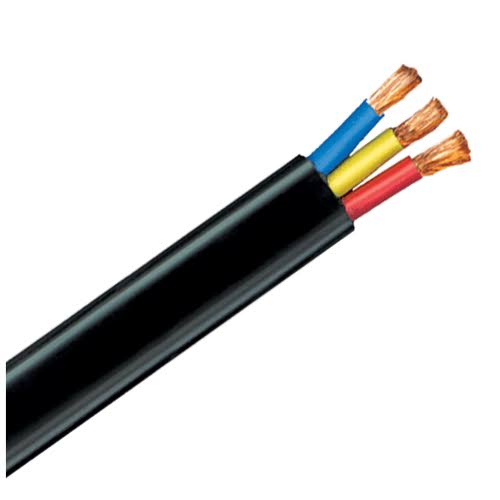
Flat Submersible Cable
Flat submersible cables have conductors arranged in a flat configuration rather than forming a conventional round cable.
Their compact profile can be useful in installations where radial space is limited, such as certain boreholes and deep-well pump systems. The cable can be routed alongside the pump and rising pipe without requiring as much radial space as some round constructions.
Typical considerations include:
- Available installation space
- Pump and pipe configuration
- Cable flexibility
- Cable length
- Mechanical protection
- Required voltage and current rating
A flat design is not automatically the best choice for every well or pump. The actual cable construction and installation method should be checked before selection.
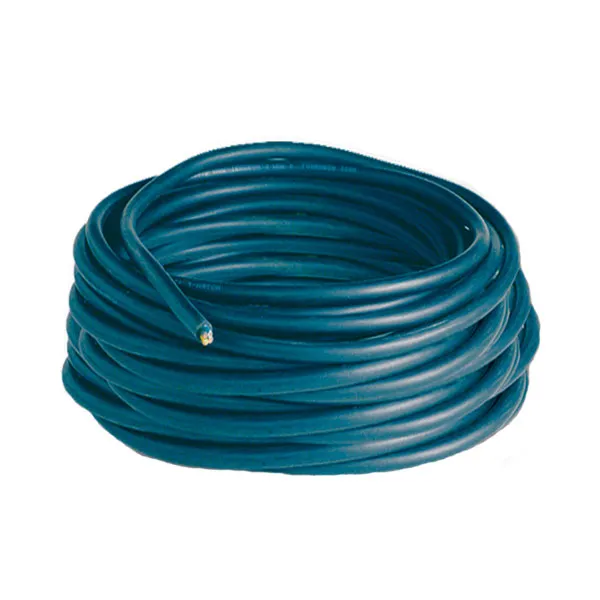
Round Submersible Cable
Round submersible cables have their insulated conductors arranged in a round configuration.
They can be used in a wide range of pump and industrial applications where a round cable construction is preferred. Depending on the design, round cables can also accommodate different forms of mechanical protection or additional layers.
When selecting a round submersible cable, consider the available installation space, bending requirements, cable routing, connection method, and mechanical conditions.
PVC Submersible Cable
PVC is used as an insulation or sheath material in many electrical cable constructions. PVC-based submersible cables can be suitable for applications where the material properties, temperature rating, moisture resistance, and mechanical requirements match the installation.
They may be used in conventional water pumping, irrigation, and other applications, depending on the specific cable design.
However, PVC is not a universal solution. The applicable temperature range, chemical exposure, flexibility requirements, and relevant product standard should always be checked.
Rubber Submersible Cable
Rubber-based cable constructions are often selected when flexibility and resistance to demanding wet environments are important.
Rubber compounds can provide useful flexibility for equipment that moves during installation or operation. Depending on the compound and cable design, rubber cables may also be suitable for applications involving mechanical stress or temperature variations.
This does not mean rubber is always better than PVC. The appropriate material depends on the application, required temperature rating, mechanical conditions, chemical exposure, and applicable cable standard.
Flat vs Round Submersible Cable
Flat and round designs each have practical advantages. The right choice depends more on the installation than on the cable shape itself.
| Feature | Flat Submersible Cable | Round Submersible Cable |
|---|---|---|
| Cable shape | Flat | Round |
| Typical application | Deep wells and space-limited installations | Pumps and general industrial applications |
| Space requirement | Efficient use of radial space | Requires more radial space |
| Routing | Useful alongside pipes and pump equipment | Suitable for conventional cable routing |
| Flexibility | Depends on construction | Depends on construction |
| Mechanical protection | Depends on cable design | Depends on cable design |
| Selection priority | Well space and installation method | Routing, connection and mechanical conditions |
Flat vs. round should not be decided by shape alone. Pump configuration, borehole dimensions, cable routing, bending requirements, mechanical exposure, and manufacturer specifications should also be considered.
3-Core vs 4-Core Submersible Cable
The number of cores is another important consideration when selecting a submersible cable.
3-Core Submersible Cable
Three-core cables are commonly used in three-phase motor and pump applications, although the exact function of each conductor depends on the electrical system and cable design.
The required core configuration should be confirmed from the motor connection diagram and project electrical requirements rather than selected simply because three-core cables are common for pumps.
4-Core Submersible Cable
Four-core constructions can be used where the electrical system requires an additional conductor. In some pump installations, for example, a four-core cable may incorporate a dedicated earth conductor.
However, 4-core does not automatically mean three-phase plus ground. Core functions vary according to the equipment and cable construction.
Before ordering, confirm:
- Motor phase
- Motor connection
- Grounding requirements
- Control system requirements
- Cable manufacturer’s construction
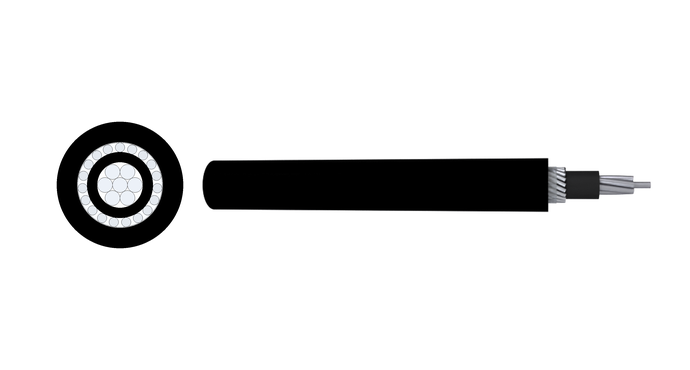
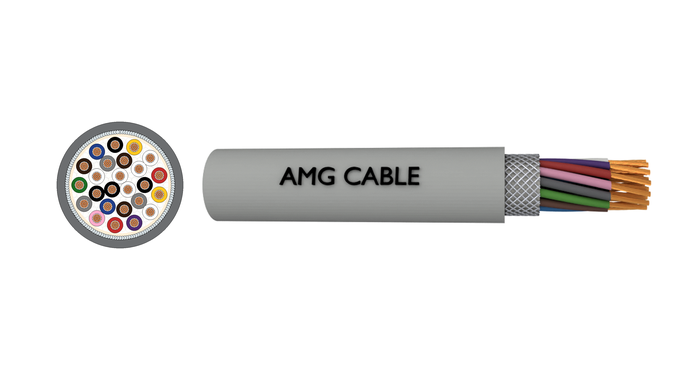
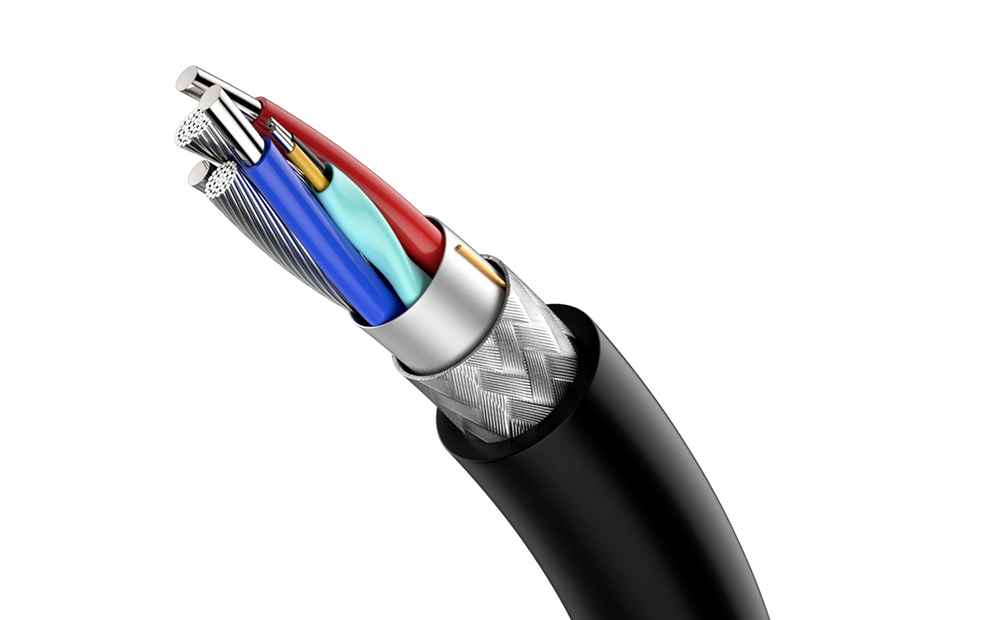
Submersible Cable Construction
A typical submersible cable may contain several layers designed to provide electrical insulation and mechanical protection.
A simplified construction can be described as:
Conductor → Insulation → Core Assembly → Inner Layers/Filler → Sheath → Optional Protection
The actual construction varies by cable type and manufacturer.
Conductor
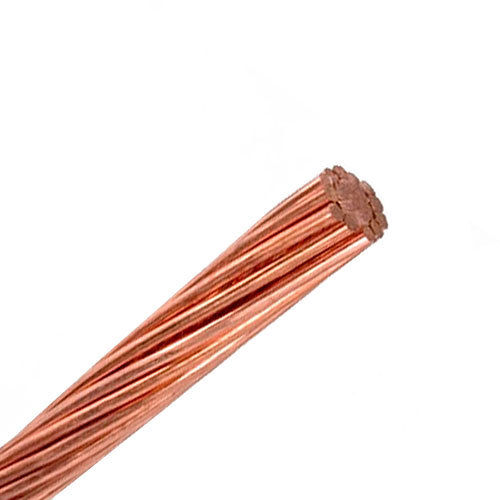
Copper is widely used for electrical conductors because of its electrical conductivity and suitability for flexible stranded constructions.
For submersible applications, stranded conductors can provide the flexibility needed for installation and movement.
Conductor size is normally expressed in mm² or, for some markets, AWG. The appropriate size depends on operating current, voltage, cable length, allowable voltage drop, installation conditions, and applicable electrical requirements.
Insulation
Insulation separates the conductor from other conductors and the surrounding environment.
Depending on the product, insulation materials may include PVC, rubber compounds, EPR, XLPE, or other materials designed for specific electrical and environmental requirements.
There is no single insulation material that is best for every submersible application. The material should be selected according to voltage, temperature, flexibility, water exposure, mechanical conditions, and the relevant product standard.
Outer Sheath
The outer sheath provides an additional layer of protection around the cable.
Depending on the cable construction, sheath materials can be selected for properties such as:
- Moisture resistance
- Abrasion resistance
- Flexibility
- Oil or chemical resistance
- Temperature resistance
- UV resistance
The sheath should be evaluated based on the actual environment rather than treated simply as a waterproof layer.
Additional Protection
Some applications require additional mechanical protection or specialized construction.
For example, where cables are exposed to significant mechanical stress, a suitable armored or reinforced construction may be considered. However, armor is not automatically required for every submersible application.
The cable construction should match the installation conditions and manufacturer’s intended use.
Applications of Submersible Cable
Submersible cables are used across water management, agriculture, industry, mining, and other applications where electrical equipment operates in wet or submerged environments.
Deep-Well and Borehole Pumps
Deep-well and borehole pumps are among the most common applications.
The cable is installed along the pump system and may run a significant distance from the motor to the power source. Cable length, voltage drop, conductor size, mechanical conditions, and installation space are therefore important selection factors.
Irrigation Systems
Agricultural irrigation systems often use submersible pumps to draw water from wells or other sources.
For these installations, cable selection should consider pump power, operating voltage, installation depth, cable length, water conditions, and local electrical requirements.
Water Supply Systems
Submersible pumps are widely used for groundwater and other water supply systems.
The cable must be suitable for the intended water environment and compatible with the pump’s electrical requirements.
Drainage and Dewatering
Submersible pumps are also used to remove water from construction sites, tunnels, pits, and other areas.
Dewatering environments can place greater mechanical demands on the cable. Abrasion, movement, handling, and exposure to surrounding materials may therefore become important factors.
Wastewater Treatment
Wastewater applications can involve moisture, chemicals, suspended solids, and mechanical movement.
The cable material and sheath should be selected according to the actual wastewater environment and the equipment manufacturer’s requirements. A cable designed for clean-water pumping should not automatically be assumed to be suitable for every wastewater application.
Mine Dewatering
Mining and heavy construction projects can require continuous pumping to remove groundwater or accumulated water.
In these environments, mechanical protection and resistance to abrasion can become especially important. Cable selection should take into account the installation method, surrounding surfaces, equipment movement, and potential mechanical damage.
Other Submerged Equipment
Submersible cable may also be used with other electrical equipment designed for wet or submerged environments.
However, applications such as marine, offshore, seawater, and subsea power transmission should only be included when the specific cable has been designed and rated for those conditions.
Submersible Cable Specifications
Understanding the main cable specifications makes it easier to compare products and select a suitable construction.
Voltage Rating
The cable’s rated voltage must be compatible with the electrical system.
The required rating depends on the motor and power system. A higher voltage rating should not simply be assumed to make a cable suitable for every application.
Always compare the cable rating with the equipment nameplate, system voltage, installation requirements, and applicable standard.
Conductor Size
Conductor size affects current-carrying capability and voltage drop.
A larger conductor generally has lower electrical resistance, but the correct size should be determined using the actual installation conditions rather than choosing the largest available cable.
Important factors include:
- Motor current
- System voltage
- Cable length
- Installation conditions
- Ambient or surrounding temperature
- Allowable voltage drop
- Applicable electrical regulations
Number of Cores
Common configurations include 3-core and 4-core designs, but other constructions may also be available.
The correct number of cores depends on the motor, power system, grounding arrangement, and control requirements.
Cable Shape
Flat and round are two common construction options.
The choice should consider borehole dimensions, pump configuration, cable routing, installation method, and mechanical conditions.
Insulation and Sheath Material
Material selection affects flexibility, temperature performance, environmental resistance, and mechanical durability.
PVC, rubber compounds, EPR, XLPE, and other materials can be appropriate for different applications. Always check the specific product construction rather than assuming that all cables using the same material have identical performance.
Operating Temperature
Cable temperature ratings should be considered together with electrical loading and environmental temperature.
A cable’s maximum conductor temperature is not necessarily the same as the surrounding water or ambient temperature. The manufacturer’s technical data should be used to determine whether the cable is suitable for the intended operating conditions.
Cable Length
Cable length is particularly important for deep-well pump installations.
As cable length increases, voltage drop becomes more significant. A cable that is suitable for a short connection may require a larger conductor size when used over a much longer distance.
For this reason, cable sizing should consider the complete electrical run rather than only the motor’s rated power.
How to Choose the Right Submersible Cable
Selecting a submersible cable should start with the equipment and installation requirements rather than the cable itself.
Step 1: Identify the Equipment
First determine what the cable will supply.
Is it a:
- Submersible pump?
- Deep-well pump?
- Borehole pump?
- Drainage pump?
- Industrial water system?
- Other submerged motor?
The equipment type helps define the required cable construction.
Step 2: Confirm Voltage
Check the motor nameplate and electrical system voltage.
The cable’s rated voltage must be suitable for the system. Do not select a cable based only on its physical appearance or conductor size.
Step 3: Check Motor Power and Current
Record the motor’s:
- kW or HP
- Rated voltage
- Rated current
- Number of phases
- Starting method, where relevant
Motor current is particularly important when determining conductor size.
Step 4: Determine Cable Length
Measure the complete cable route.
For a deep-well installation, this may include the vertical distance from the pump to the surface and the additional horizontal distance to the control panel or power source.
Step 5: Check Voltage Drop
Voltage drop becomes increasingly important as cable length increases.
The allowable voltage drop depends on the electrical system, equipment, applicable codes, and project requirements. A practical cable selection should therefore verify voltage drop rather than relying only on current-carrying capacity.
Step 6: Select the Conductor Size
Conductor size should be selected based on current, cable length, system voltage, voltage drop, installation conditions, and applicable regulations.
The final size should be verified against the manufacturer’s technical data and relevant electrical requirements.
Step 7: Choose Flat or Round Construction
Consider:
- Borehole diameter
- Available space
- Pump configuration
- Cable routing
- Connection method
- Mechanical conditions
A flat cable can be useful where radial space is limited, while a round construction may be preferred for certain routing or equipment configurations.
Step 8: Choose the Insulation and Sheath
Consider:
- Water exposure
- Temperature
- Flexibility
- Abrasion
- Chemical or oil exposure
- UV exposure
- Mechanical stress
Material selection should follow the actual environmental conditions and product specification.
Step 9: Check the Applicable Standard
Finally, verify the standard required for the project and market.
The product standard should match the actual cable construction and intended application. Do not assume that a cable complies with a standard simply because another submersible cable on the market does.
Submersible Cable vs Standard Cable
Submersible cable and general-purpose electrical cable should not be treated as interchangeable.
| Factor | Submersible Cable | Standard Electrical Cable |
|---|---|---|
| Intended environment | Wet or submerged applications | General electrical installations |
| Moisture requirements | Designed according to intended application | Depends on cable type |
| Construction | Selected for specific environmental conditions | General-purpose construction |
| Typical applications | Pumps and submerged equipment | Buildings, equipment and power distribution |
| Selection factors | Water exposure, mechanical conditions, voltage, length and temperature | Electrical load, installation method and environment |
A cable should only be used in a submerged application when its construction, rating, and applicable standard are suitable for that installation.
A general cable may have good electrical properties but still be unsuitable for permanent submersion. Conversely, a submersible cable should not be assumed to be suitable for every underwater, marine, chemical, or high-temperature application.
Submersible Cable Standards
There is no single standard that covers every type of submersible cable.
The applicable standard depends on the cable construction, voltage level, application, country, and project specification.
Common standards that may be relevant to cable construction or application include standards from organizations such as:
- IEC
- UL
- BS
- ASTM
- IEEE
- National or regional electrical authorities
For example, IEC 60228 addresses conductor characteristics and classification, while other IEC standards address specific cable constructions and voltage classes.
For specialized applications such as electrical submersible pumps in the oil and gas industry, dedicated industry standards may apply.
The important point is that standards should be selected based on the actual product and application. Buyers should request the manufacturer’s datasheet, declaration or certificate where required, and applicable test documentation before placing an order.
Technical Specifications of Submersible Cable
The exact technical specifications should always be taken from the manufacturer’s datasheet.
A typical specification sheet may include:
| Parameter | What to Check |
|---|---|
| Conductor | Material, construction and size |
| Conductor class | Applicable conductor standard |
| Insulation | Material and thickness |
| Number of cores | 3-core, 4-core or other configuration |
| Sheath | Material and environmental properties |
| Voltage rating | Rated system voltage |
| Temperature rating | Maximum/minimum applicable temperature |
| Cross-section | mm² or AWG |
| Cable shape | Flat or round |
| Flexibility | Relevant construction requirements |
| Application | Pump, well, drainage or other use |
| Applicable standard | Product-specific standard |
| Certifications | Certifications required for the target market |
For an engineering or procurement project, these specifications should be compared directly with the motor requirements and project documentation.
Common Mistakes When Selecting Submersible Cable
Choosing Cable Size Only by Motor Power
Motor power is important, but it is not enough by itself.
Cable length, voltage, current, voltage drop, installation conditions, and temperature can all affect the required conductor size.
Using a Standard Cable for Permanent Submersion
A cable designed for general electrical installations should not automatically be used underwater.
Always confirm that the cable is specifically suitable for the intended level and duration of water exposure.
Ignoring Water and Environmental Conditions
Clean groundwater, wastewater, industrial water, and other environments may place different demands on the cable.
Consider temperature, chemicals, oils, abrasion, and mechanical exposure where relevant.
Choosing the Wrong Core Configuration
The number of cores should match the motor and electrical system.
Check the motor wiring diagram and grounding requirements before ordering.
Focusing Only on Price
The lowest purchase price does not necessarily represent the lowest project cost.
Cable replacement can require pump removal, system downtime, labor, and additional installation costs. A better purchasing decision considers the complete application, cable construction, required standard, and expected operating conditions.
Frequently Asked Questions About Submersible Cable
What is a submersible cable used for?
Submersible cable is mainly used to supply electrical power to equipment operating in wet or submerged environments. Common applications include submersible pumps, deep-well pumps, borehole pumps, irrigation systems, drainage and dewatering equipment, and wastewater systems.
What is the difference between submersible cable and submersible pump cable?
Submersible cable is a broad term for cables designed for submerged applications. Submersible pump cable is more specific and normally refers to cable used to supply power to submerged pump motors.
Is submersible cable waterproof?
A suitable submersible cable is designed for the environmental conditions specified by its manufacturer, including the required level and duration of water exposure. However, “waterproof” should not be treated as a universal property. The cable’s datasheet should be checked to confirm whether it is suitable for continuous or temporary submersion and under what conditions.
What is the difference between flat and round submersible cable?
Flat cable has a flat profile and can be useful where installation space is limited, particularly in some borehole and deep-well pump systems. Round cable has a circular construction and can be suitable for various pump and industrial installations. The best option depends on the equipment, installation space, routing, and mechanical conditions.
Should I use 3-core or 4-core submersible cable?
It depends on the motor and electrical system. Three-core cable is commonly used for three-phase motor applications, while four-core cable can provide an additional conductor for certain system configurations. The correct choice should be based on the motor connection and grounding requirements.
What size cable do I need for a submersible pump?
Cable size depends on motor power, rated current, voltage, cable length, allowable voltage drop, installation conditions, and applicable electrical requirements. The motor’s nameplate information and the complete cable run should be reviewed before selecting the conductor size.
Can submersible cable be used in deep wells?
Yes, suitable submersible cable can be used in deep-well applications when its construction and ratings are appropriate for the installation. Depth, cable length, mechanical conditions, temperature, voltage, and installation method should all be considered.
Can submersible cable be used in wastewater or seawater?
It depends on the specific cable construction and environmental rating. A cable suitable for clean freshwater should not automatically be assumed to be suitable for wastewater, seawater, oils, or aggressive chemicals. The insulation and sheath materials should be verified against the actual environment.
Need Help Selecting Submersible Cable?
Choosing the right submersible cable requires more than matching a cable to the motor’s power rating. Voltage, current, cable length, installation depth, core configuration, cable shape, insulation and sheath materials, environmental conditions, and applicable standards should all be considered together.
For B2B projects, provide the motor specifications, required voltage, cable length, installation environment, cable configuration, and applicable project standard when requesting a quotation. This gives the cable supplier the information needed to recommend a suitable construction and specification.
If you are comparing different cable options for a pump, well, drainage, irrigation, or industrial water project, review the technical datasheet carefully and confirm that the cable is designed for the intended installation before ordering.