

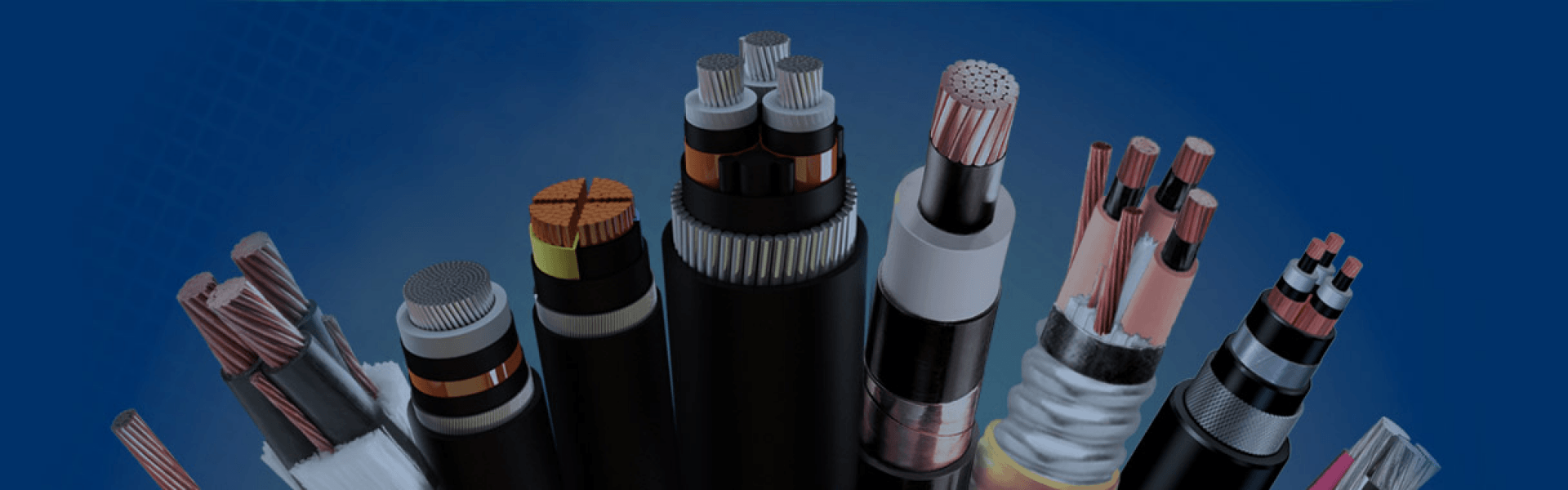
Bare Conductor
A bare conductor is a metal wire or stranded cable designed to carry electric current without any form of insulating jacket. In the power transmission industry, the term applies to a range of products, but the category that dominates every high-voltage grid is the overhead conductor — the wires suspended between transmission towers and distribution poles that form the visible backbone of electrical infrastructure worldwide.
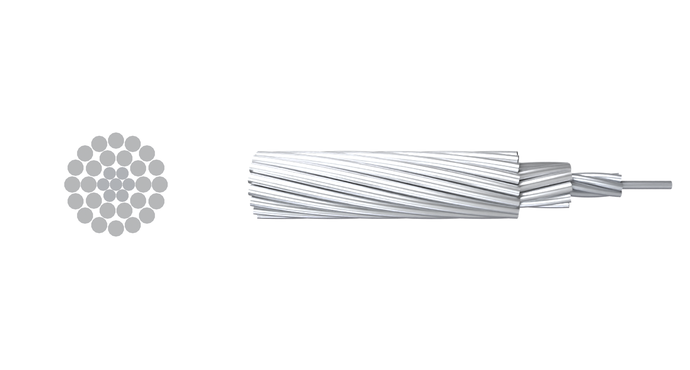
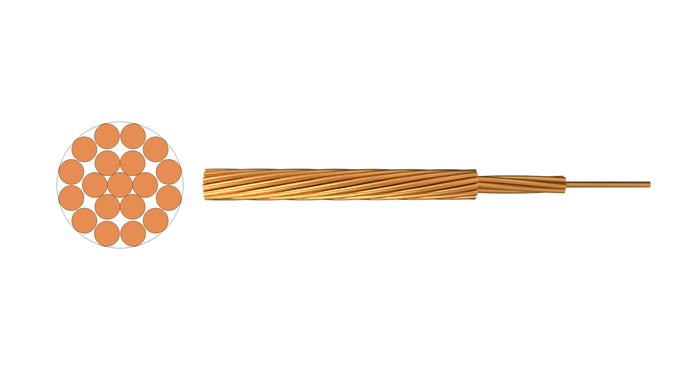
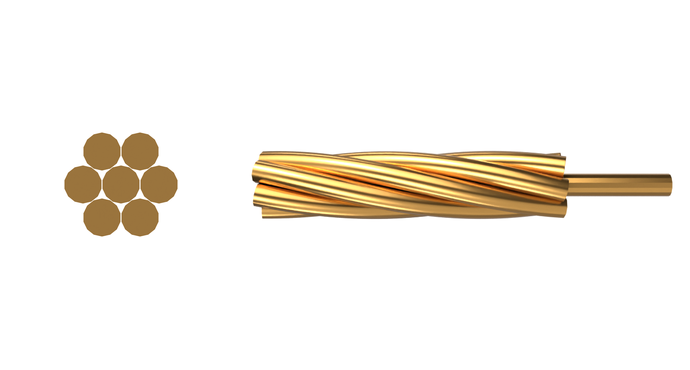
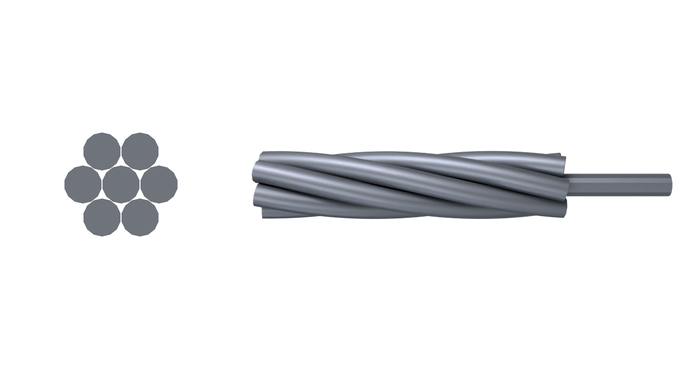
Bare conductors are commonly manufactured from aluminum, aluminum alloy, copper, and steel-reinforced materials. Different conductor structures are selected based on current capacity, tensile strength, corrosion resistance, installation environment, and transmission distance requirements.
Non-Insulated Structure of Bare Conductors
Bare conductors are intentionally designed without insulation because overhead transmission systems rely on air spacing and external insulators mounted on poles or towers to safely isolate energized conductors.
This design provides several practical advantages, including excellent heat dissipation, lower overall cable weight, reduced material and installation costs, improved transmission efficiency, and easier inspection and maintenance. The absence of insulation also allows overhead conductors to perform more effectively under high-current operating conditions.
Bare Conductors in Overhead Power Transmission
Bare conductors are widely used in overhead transmission and distribution systems because they provide an effective balance between electrical conductivity, mechanical strength, operational reliability, and installation economy.
Different conductor structures are designed to meet various transmission requirements. Some prioritize higher conductivity for efficient current transmission, while others focus on increased tensile strength, improved corrosion resistance, reduced sag, or better performance in harsh outdoor environments. This flexibility allows bare conductors to adapt to different voltage levels, span distances, and environmental conditions in modern power transmission systems.
Operating Principle of Bare Conductors
Bare conductors transmit electrical energy through stranded conductive metals, typically aluminum or copper. In overhead systems, the conductors are suspended on transmission towers or utility poles using insulators that prevent electrical leakage to grounded structures.
As electrical current flows through the conductor, heat generated during operation is naturally dissipated into the surrounding air. This open-air installation improves current-carrying capacity and operating efficiency while helping maintain stable transmission performance over long distances.
Certain conductor structures also incorporate reinforced cores to increase tensile strength and support long-span installations under heavy mechanical loads, wind, ice, and other environmental conditions.
Bare Conductor Applications
- High Voltage Transmission Lines
Reliable conductors for long-distance grid power delivery systems. - Urban Power Distribution Networks
Stable power supply solutions for city electrical distribution systems. - Substation Busbar Systems
Efficient current transfer between transformers and switchgear. - Renewable Energy Grid Connections
Power evacuation lines for solar and wind energy projects. - Rural Electrification Projects
Cost-effective overhead wiring for remote power access systems. - Industrial Power Infrastructure
Heavy-duty conductors for factories and industrial plants. - Railway Electrification Systems
Continuous power supply for railway traction networks. - Coastal and Harsh Environment Lines
Corrosion-resistant solutions for high humidity and salt exposure.
Materials Used in Bare Conductors
| Material Type | Key Features | Typical Advantages | Common Applications |
| Aluminum (AAC) | Electrolytic grade aluminum with purity ≥ 99.5%; conductivity approx. 61.2% IACS. | Superior Conductivity-to-Weight Ratio: Extremely lightweight, reducing tower loads; excellent heat dissipation and cost-efficiency. | Urban distribution networks; short-span overhead lines; substation busbar connections. |
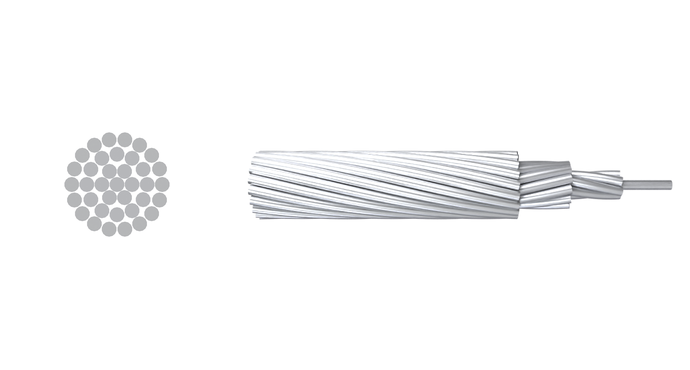
| Aluminum Alloy (AAAC) | High-strength 6201 or 1120series magnesium-silicon aluminum alloy. | Corrosion Resistance & No Magnetic Loss: Higher strength than AAC; eliminates galvanic corrosion and power loss associated with steel cores. | Coastal areas; high-pollution industrial zones; medium to long-span transmission. |
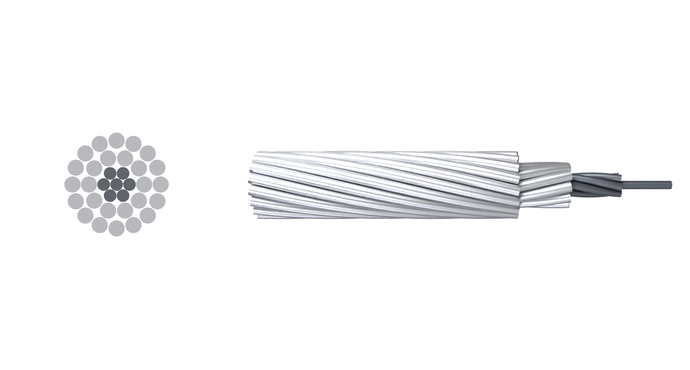
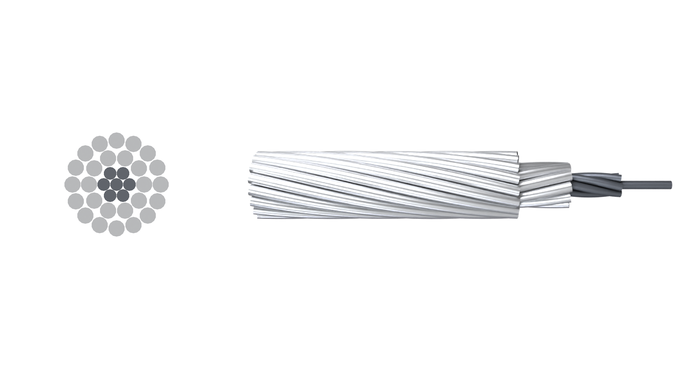
| Steel Reinforced (ACSR) | Aluminum strands concentrically stranded over a high-strength galvanized or aluminum-clad steel core. | Exceptional Mechanical Strength: Steel core provides high tensile strength to resist extreme wind/ice loads and minimize physical sag. | High-Voltage (HV) and Extra-High-Voltage (EHV) long-distance transmission grids. |
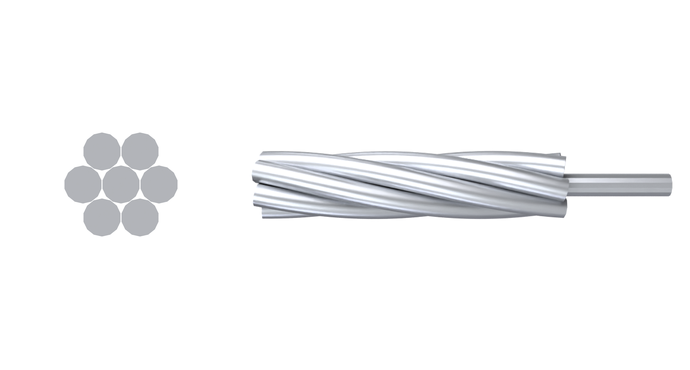
| Copper (Bare Copper) | High-purity electrolytic tough pitch copper; conductivity up to 97-100% IACS. | Maximum Reliability: Excellent electrical conductivity and fatigue resistance; superior natural corrosion resistance in underground environments. | Grounding & Earthing systems; substation busbars; heavy-duty industrial power infrastructure. |
| Steel (GSW / ACS) | Galvanized stranded steel or Aluminum-Clad Steel (ACS) conductors. | Ultimate Mechanical Support: Highest modulus of elasticity for load-bearing; ACS provides enhanced longevity by preventing bi-metallic corrosion. | Shield wires (lightning protection); Guy wires for tower anchoring; long-span support structures. |
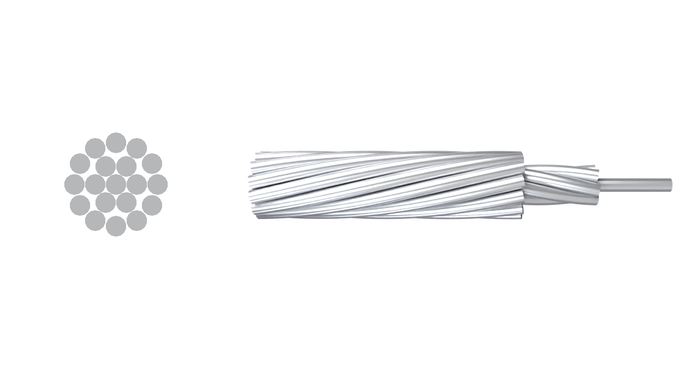
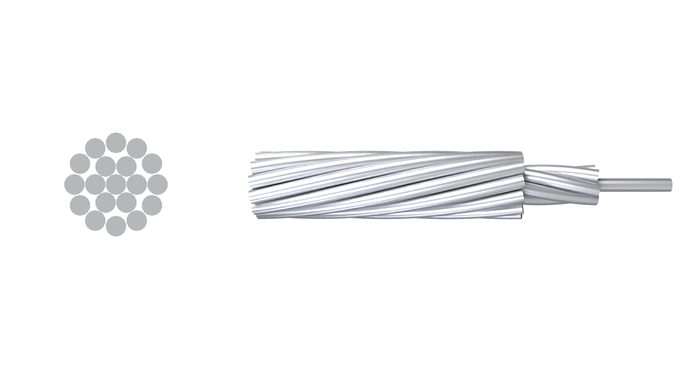
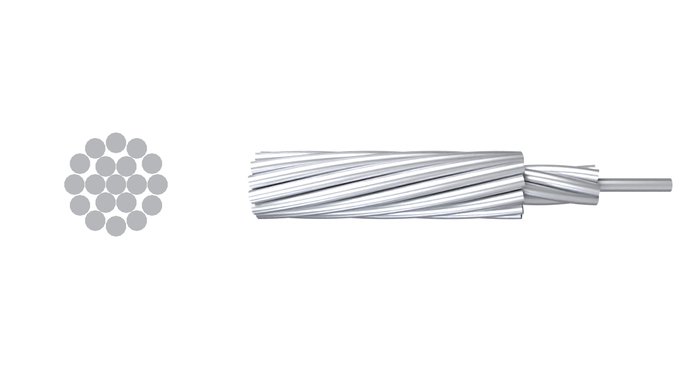
Bare Conductor
Get A Free Quote
Need Help?
Your Trusted Business Partner for Professional Cable Solutions
/ AMG FAQ /
Frequently Asked Questions
Yes, grounded conductors are routinely bare in overhead lines and earthing grids. A bare copper or copper-clad steel wire buried in the earth creates a dependable low-resistance path to ground. In overhead distribution, the neutral conductor is often installed bare below the phase wires, relying on its ground reference for safe, stable system operation.
An overhead conductor is an electrical cable suspended on poles or transmission towers for power transmission and distribution. It operates in open air without insulation, relying on spacing and insulators for safety. Overhead conductors are designed to carry electrical current efficiently over long distances with high mechanical strength and reliability.
Overhead line conductors are stranded to improve flexibility, mechanical strength, and durability. Stranding allows the conductor to withstand vibration, wind load, and thermal expansion without breaking. It also improves handling during installation and reduces the risk of fatigue failure compared to solid conductors in long-span applications.
Aluminum offers a dramatically better conductivity-to-weight ratio. For the same conductance, an aluminum conductor weighs roughly half as much as copper, significantly reducing tower and foundation loads. It is also far cheaper. Combined with its natural oxide layer that resists atmospheric corrosion, aluminum has become the standard material for high-voltage overhead networks.
Proper tensioning is critical; over-tensioning leads to fatigue failure, while under-tensioning creates unsafe clearances. Additionally, avoid dragging conductors across abrasive surfaces, as scratches cause corona discharge and energy loss. Using compatible hardware and correctly sized sheaves prevents “bird-caging” and galvanic corrosion, ensuring the conductor maintains its mechanical integrity and electrical efficiency throughout its service life.

Have Questions?
Get in Touch with Us.
AMG Cable Group support 24*7 service and technical assistance.
Phone /Whatsapp / Wechat
+86 188 3803 6118Address
High-Tech Industrial Development Zone,Zhengzhou City,Henan Province,ChinaSend Us a Message
Please feel free to leave a message. We will reply in 24 hours.
/ AMG WIRE&CABLE /
Your trusted partner in high- performance wire and cables
Our team stands by 24/7, responding promptly to
inquiries and providing most quotations within 24 hours.